 Guide On Map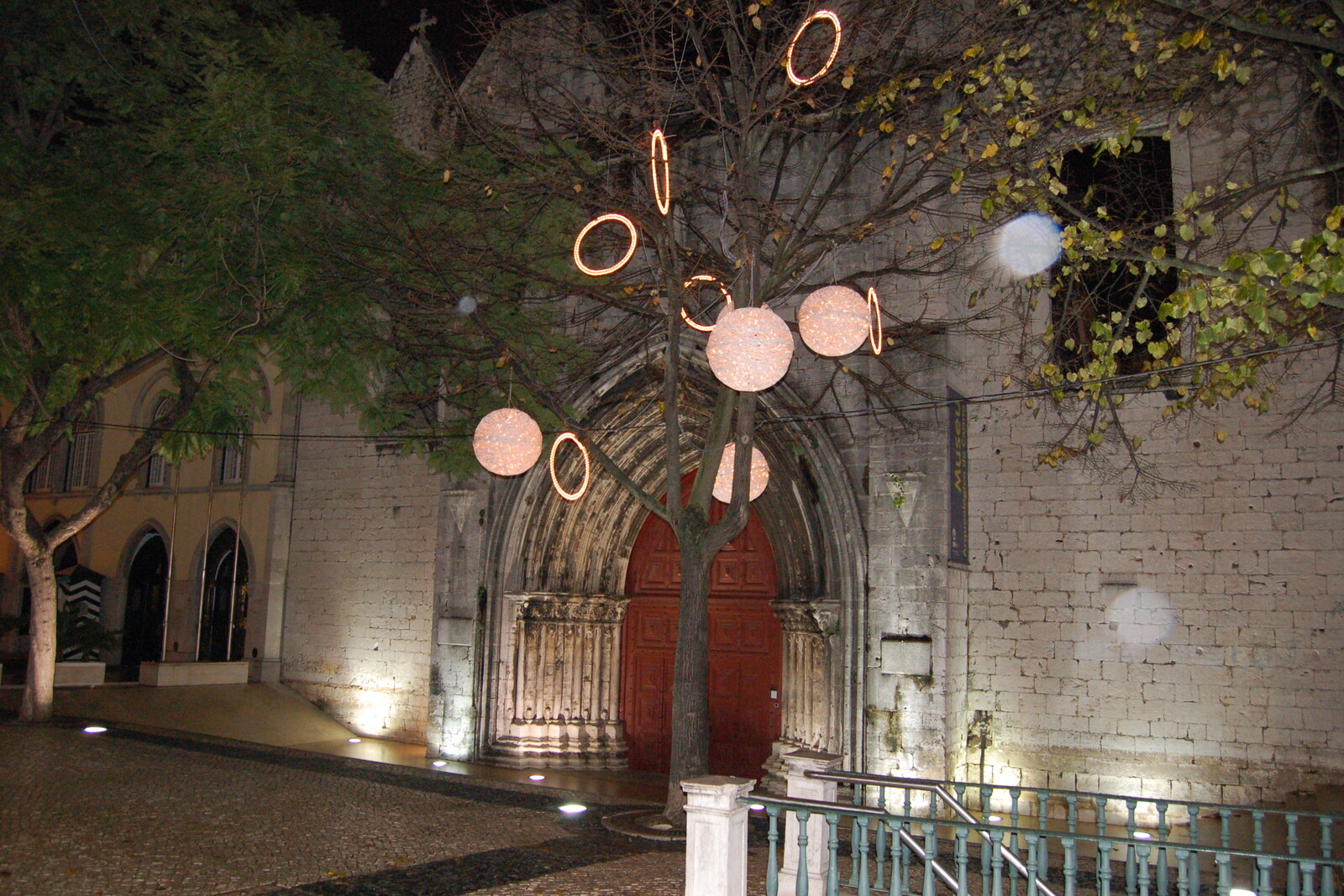
Look around first
What to notice
- Open nave
- Pointed arches
- Northern convent wing
- Facade of the working barracks
The story of the place
The tall pointed arches of the open nave are all that remains of the church of the Carmelite convent begun on this hill by Nuno Álvares Pereira. Opposite the royal castle, he settled the Carmelites here, and their name passed first to the convent, then to the square. After the religious orders were dissolved, the monks were evicted and work on the church stopped. Later, restorers deliberately chose not to build a roof over the nave and set up a museum among the arches.
The southern part of the former Carmo Convent stands without a roof. The northern part is occupied by barracks and the Headquarters of the National Republican Guard. This division explains why, on April twenty-fifth, nineteen seventy-four, this small square became the Portuguese government's final refuge.
Carmo Convent was begun in thirteen eighty-nine by Nuno Álvares Pereira, commander-in-chief to King João I. Four years earlier, he had defeated the Castilian army at Aljubarrota and helped the king retain the Portuguese throne. Nuno chose the hill opposite the royal castle and invited the Carmelites here. The name of their order comes from Mount Carmel in Palestine; the Portuguese name “Carmo” passed from the convent to the square. After completing his military service, Nuno moved into his own convent as a simple brother, Nuno Álvares Pereira. He died here and was initially buried here.
The earthquake of seventeen fifty-five severely damaged the church, and the fire that followed destroyed almost all of its furnishings. Reconstruction began the following year. That is why some of the tall columns and pointed arches in the open nave appeared after the disaster: the builders were trying to reassemble Gothic architecture according to the ideas of the Middle Ages current at the time.
People stopped the work. In eighteen thirty-four, the liberal government dissolved the religious orders and seized their property. The monks were evicted, the church remained unfinished, and the military police housed in the convent buildings kept their quarters. By the middle of the nineteenth century, restorers had deliberately decided not to restore a roof over the nave; the archaeologist Joaquim Possidónio da Silva set up a museum among the arches. Meanwhile, the northern wing became the permanent headquarters of a paramilitary guard.
It was on the reliability of this guard that Marcelo Caetano, chairman of the Council of Ministers and head of the Estado Novo regime, relied. A month earlier, its units had helped suppress an unsuccessful military revolt. When army units again rose against the regime early on the morning of April twenty-fifth, the director of the political police advised Caetano to take refuge in Carmo: the command no longer trusted a significant part of the army, navy, and air force.
For the leaders of the uprising, Caetano's flight here came as a surprise. Around noon, a column commanded by Fernando Salgueiro Maia arrived at the square—a twenty-nine-year-old career captain tasked with securing the head of government's surrender. Townspeople followed behind his armored vehicles, although radio broadcasts urged people to stay at home. Soon the square was filled with a crowd. Inside the barracks were ministers, Guard officers, and civilian employees; any return fire could have started a battle in the confined space.
Salgueiro Maia demanded surrender several times. After a refusal, he ordered bursts of fire at the upper part of the facade, then positioned an armored vehicle so that its gun was aimed directly at the building. No full-scale battle took place. Caetano agreed to leave, but refused to hand over leadership of the country to a young captain. He demanded a senior officer so that it would not, in his words, “fall into the street.”
General António de Spínola had to be called in, as Caetano considered him suitable for a formal transfer. By evening, the general entered the barracks and accepted the surrender. Caetano and two ministers were taken across the square, packed with people, in the armored vehicle Bula. The next day, he was taken to Madeira, then sent into exile in Brazil. The government's surrender ended almost forty-eight years of the Estado Novo regime.
The room where the negotiations took place is preserved inside the working barracks. The Guard Museum displays a book with an edge cut by a bullet—a trace of one of the bursts fired at the facade. And from the square, both parts of old Carmo are still visible: the church arches that were never covered by a vault after the earthquake, and the convent wing from which Marcelo Caetano was taken away after the surrender.
Useful on site
The ruins can be viewed from outside at any time from the square; the museum inside follows a separate schedule, which is best checked on the official website on the day of your visit.
Checked: June 16, 2026. Check the official source before visiting.From the square, you can see the overall outline and grasp the revolutionary context; the archaeological museum and the interior of the nave require separate admission, which is best checked in advance.