 Guide On Map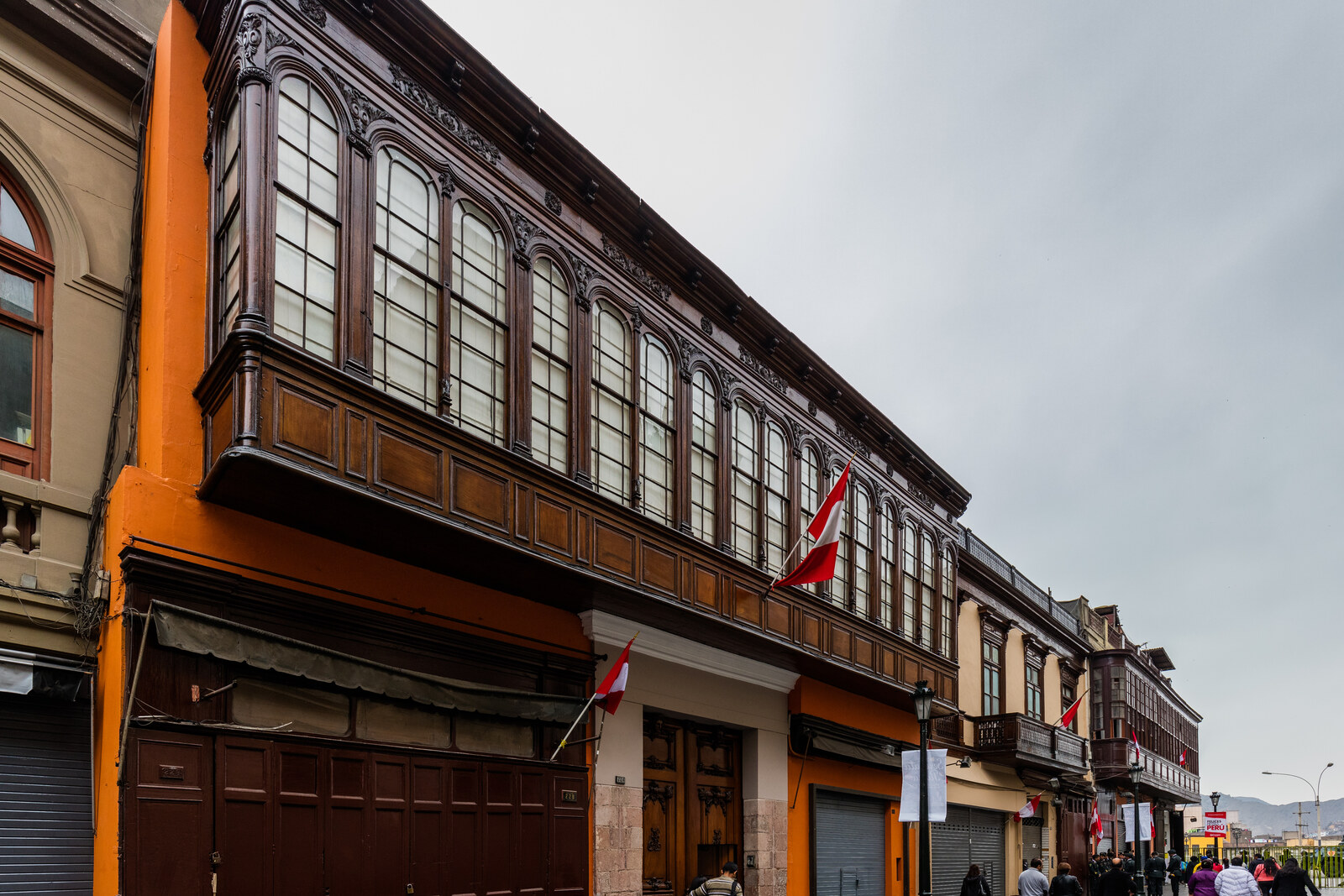
Look around first
What to notice
- The estate façade
- Living rooms
- Traces of later renovations
The story of the place
The estate occupies a plot that was given to one of Lima's conquerors after the city was founded; Taulichusco's estate stood here before it. For many generations, the family's property was not divided among children but passed in its entirety to one chosen heir. Women who received the house kept the family surname before their husbands' surnames, and the descendants continued this custom even after entails were abolished. The living rooms behind the façade and the varied décor belong to different eras: the first house was destroyed by an earthquake, and later owners remodeled the estate more than once.
On June twenty-sixth, fifteen forty-one, while Francisco Pizarro was being killed in the neighboring residence, Captain Jerónimo de Aliaga ran here for weapons. He was the governor's associate and royal accountant: he kept account of gold and silver and set aside the Crown's share. Aliaga acquired his own fortune through participation in the conquest, land grants, and encomiendas—the right to collect tribute from Indigenous communities assigned to him. After his patron's death, he could have lost his positions, property, and life.
Supporters of Diego de Almagro the Younger had already forced the city council to recognize their leader as the new governor. Aliaga shut himself inside this house and resisted until nightfall. He surrendered when the Almagro supporters had brought the city under their control and there was nowhere to expect help from. They took away his weapons and horses, and led the owner away under guard.
From prison, Aliaga managed to pass information about the situation in Lima to Cristóbal Vaca de Castro, a royal judge who was seeking Almagro's removal. When the Almagro supporters left the capital, Vaca de Castro appointed Aliaga as his representative in the city. The man who had been disarmed here and led away as a prisoner returned to the city council in the Crown's name.
By then, the house had stood for only a few years. After Lima was founded, Pizarro granted Aliaga this plot beside his own residence, on the land of Taulichusco's former estate. Here the captain made a home for his family. But it was another of his decisions that kept the Aliaga name on the house.
In fifteen forty-nine, Aliaga established an entail—an inheritance arrangement under which specified property was not divided among the children but passed in its entirety to one chosen heir. In the document, he ordered that the Aliaga surname be retained by every holder of the entail. In the following two generations, women inherited the house; under the founder's condition, they placed the Aliaga surname before their husbands' surnames. When entails were abolished in the nineteenth century, the legal obligation disappeared, yet the descendants continued to keep the estate.
The walls behind which the captain defended himself have not survived to the present day. The earthquake of seventeen forty-six destroyed the house, and the founder's descendant Juan José de Aliaga y Sotomayor spent fifteen thousand nine hundred pesos on its reconstruction. Later owners remodeled the rooms again and changed the décor. What remained here were the same plot, the owners' surname, and the proximity to Pizarro's former house. The seventeenth generation of the Aliaga family lives in the private part of the estate.
Useful on site
For the route, treat this as an exterior stop unless a visit has been confirmed in advance. Official and tourist pages give different visiting hours; entry usually requires a ticket and an organized guided visit.
Checked: July 1, 2026. Check the official source before visiting.This is not an ordinary museum open freely to the public, but a private home with a residential section. Arrange any interior visit separately; without confirmation, limit yourself to the façade and do not linger at the entrance.