 Guide On Map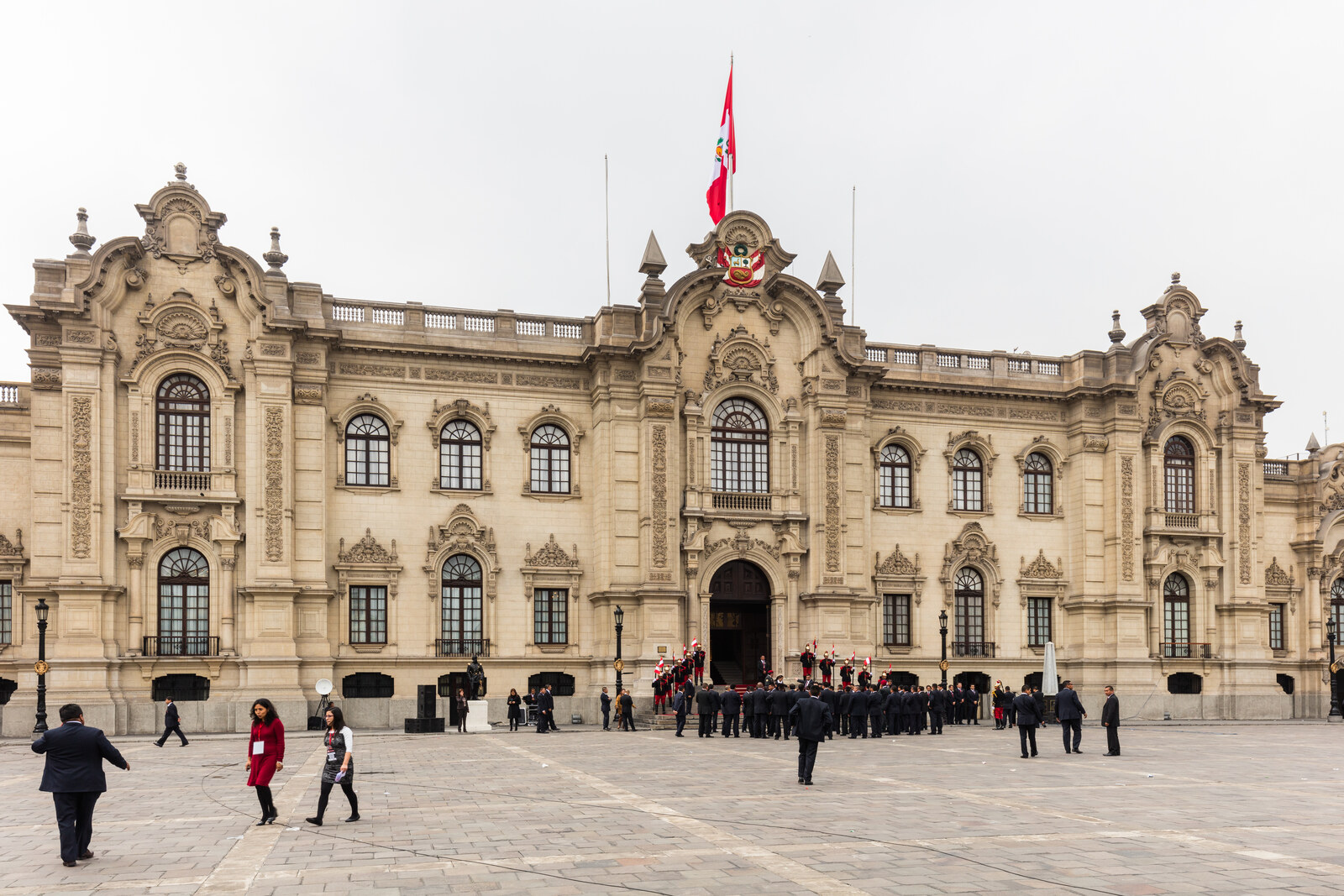
Look around first
What to notice
- The palace's main façade
- The marble staircase
- The ceremonial halls
The story of the place
The main façade conceals the ceremonial rooms, reached by the marble staircase. The modern structure was completed in nineteen thirty-eight, but the staircase repeats the ascent of the former house. The old adobe walls disappeared, and the site had served as the residence of viceroys. After independence, presidents and their administration moved in.
On the morning of June twenty-sixth, fifteen forty-one, Francisco Pizarro did not leave here for Sunday Mass. The governor of New Castile—what the Spanish Crown called the conquered territories centered on Lima—was warned that an attack was being prepared on the square. Pizarro stayed in his home. The house served both as his residence and his administrative office, so the cautious decision merely moved the murder from the square indoors.
The followers of Diego de Almagro came for Pizarro. Almagro had once been Pizarro's companion in the conquest of Peru and his rival in the dispute over Cusco. The army of the Pizarro brothers defeated Almagro, and in fifteen thirty-eight Hernando Pizarro ordered his execution. After Almagro's death, his young son Diego sought the lands, wealth, and office his father had bequeathed to him. Francisco Pizarro reduced the inheritance, rejected the claims to govern, and stripped Almagro's followers of their posts and property.
Some of them lived on alms. A chronicler wrote that the impoverished hidalgos shared a single decent cloak: without such clothing, a man of their estate could not appear in the street. Hence their nickname—the Knights of the Cape. Their leader, Juan de Rada, the guardian of the young Almagro, wanted to put his ward in Pizarro's place.
The king had already sent the judge Cristóbal Vaca de Castro to Peru to settle the feud and take the office of governor if Pizarro died. While the envoy was delayed on the journey, the Almagristas decided to get ahead of him. At first, they planned to attack Pizarro on his way to the cathedral. Learning that the governor had stayed home, Rada led his accomplices across the square straight to Pizarro's residence.
The attackers climbed the broad staircase. Pizarro told Captain Francisco de Chaves to lock the door, but Chaves tried to speak with the arrivals. He was killed on the threshold, and the passage remained open. Pizarro had time to wrap his left arm in a cloak in place of a shield and take up a sword. He defended himself in his rooms until one of the attackers was ordered to throw himself straight onto the blade: the body hung from the weapon, the others surrounded the governor and wounded him in the throat. The records of the subsequent investigation state that Pizarro, already lying down, was struck in the face with a large clay water jug.
That same day, the conspirators forced the city council to recognize Diego de Almagro the Younger as governor and housed him here, in the murdered man's home. The residence immediately showed what they were seeking: to occupy the governor's rooms meant to occupy his office as well.
The royal judge did reach Peru and did not recognize the new appointment. In fifteen forty-two, his army defeated the Almagristas at Chupas. The young Almagro fled, was captured in Cusco, and executed. Juan de Rada did not live to see this outcome: he fell ill during the campaign and died in Jauja.
The house did not go to the victor of the conspiracy either. Royal officials occupied it. In fifteen fifty-five, the treasury paid Pizarro's daughter rent calculated from the day of the murder, then received the plot in payment of her father's debt to the Crown. Viceroys lived here, and after independence, presidents and their administration moved in.
The present palace was completed in nineteen thirty-eight; Pizarro's rooms and the old adobe walls disappeared. Inside, the position of the former staircase was preserved. Now people climb its marble steps to the ceremonial halls where the Knights of the Cape made their way to the unlocked door.
Useful on site
An exterior stop on the route. The visitor inventory describes in-person visits as partially restricted and requiring advance permission; access around the perimeter depends on security and ceremonies.
Checked: July 1, 2026. Check the official source before visiting.View the building only from the authorized public area and comply with security requirements. The story does not require going inside: the rooms of the former palaces have not survived anyway.