 Guide On Map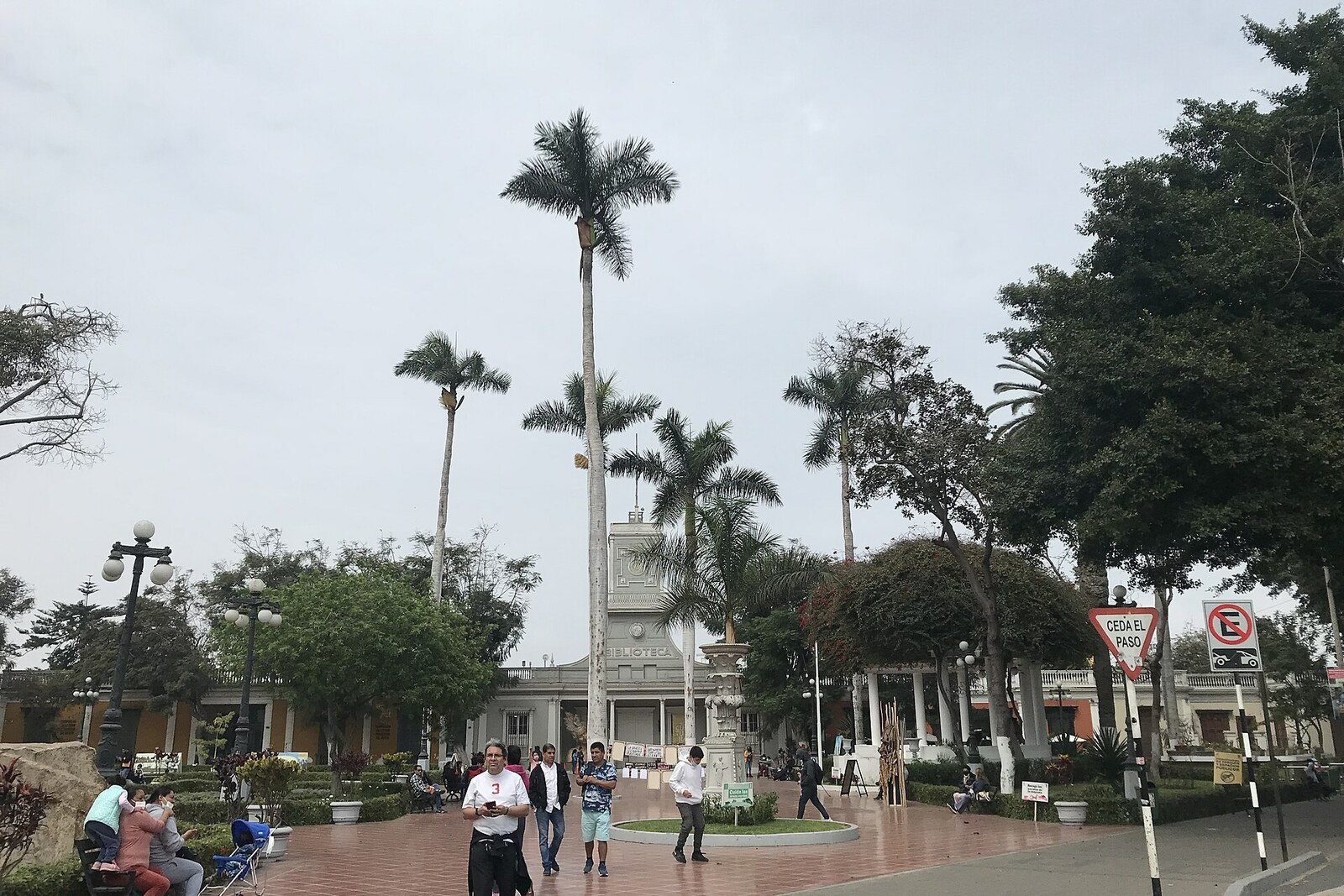
Look around first
What to notice
- Semicircular pergola
- Stage platform
The story of the place
The name Barranco Municipal Park is connected with the Municipal Council of Barranco: it commissioned a central square for recreation here and maintained it. The semicircular pergola with a stage platform stands on the site of a Moorish gazebo that was damaged by an earthquake and then demolished. Concerts, readings, and other city performances are still held on the stage.
At the beginning of nineteen forty, twenty-year-old Clementina Ramírez was assigned to organize a carnival here. She worked in the municipal treasury of Barranco. She had had to work since the age of fifteen: after her father died, someone had to support the family. The new mayor, Manuel Montero, knew that Clementina kept accounts well, and entrusted her with the money, tickets, and admission to the city’s main celebration.
The carnival had a boundary at the time. In nineteen thirteen, four teenagers from affluent families conceived the idea of holding a children’s costume ball in the park. Pedro de Osma Gildemeister, son of the then-mayor Pedro de Osma y Pardo, sought permission. His father provided the square to the young organizers, they sent out the invitations themselves, and the first ball continued until late at night. It grew into annual carnival gala evenings. For nearly two decades, mainly affluent families were admitted inside, while poorer residents watched from behind the rope used to enclose the park.
Montero decided to change the arrangement: now anyone who bought a ticket could enter—a well-known resident, a merchant, or a worker. Clementina turned the mayor’s decision into a working system. The park was surrounded by metal fencing, three ticket booths were set up, and cards of different colors were printed for different evenings. One day was set aside for the formal ball, another for children in costume, and the third for a general nighttime verbena. Clementina organized these three-day celebrations for eight years. While the others danced, she remained at the ticket booth: the proceeds were her official responsibility, and her salary was the family’s income.
In May of that same year, nineteen forty, an earthquake damaged the old Moorish gazebo near which the balls were held. Montero ordered it demolished and the park rebuilt. In its place appeared a semicircular pergola with a platform for orchestras and performers—the very one that stands here now.
The park’s name is also connected with this arrangement. The Municipal Council of Barranco commissioned the central square for recreation as early as eighteen ninety-six; two years later, Mayor Pedro Solari opened it, and in nineteen oh nine the council officially named it Barranco Municipal Park. It is not dedicated to a person: the name indicates who created and maintained the shared city space.
Clementina Ramírez’s Moorish gazebo is no longer here. Its place is occupied by the Montero Pergola, and concerts, readings, and other city performances are still held on its stage.
Useful on site
Daily 06:00–22:00, free admission
Checked: June 19, 2026. Check the official source before visiting.The park is open daily; during concerts, fairs, and ceremonies, the pergola platform and part of the paths may be occupied.