 Guide On Map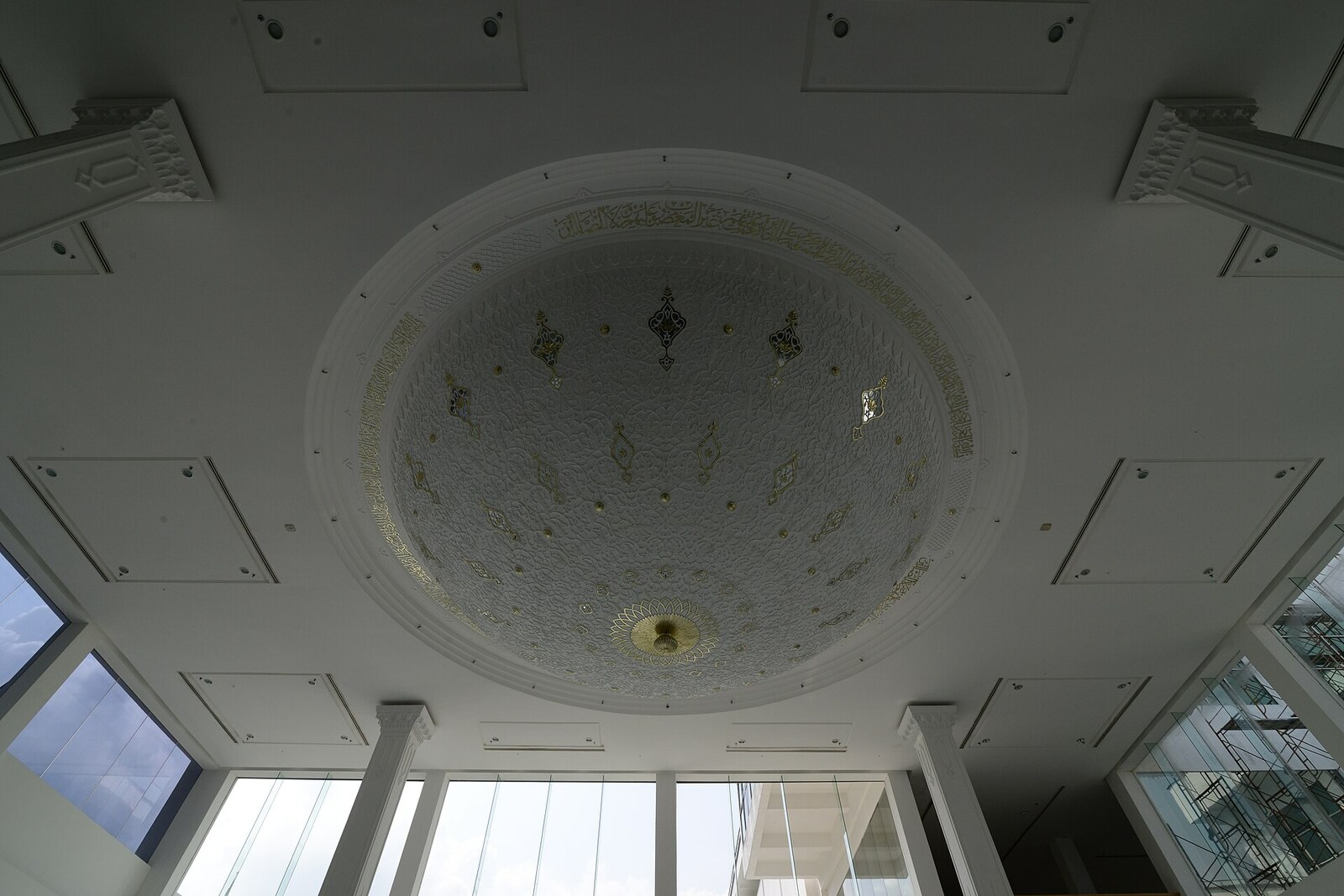
Look around first
What to notice
- Turquoise domes
- Marble halls
- Thirty volumes of a Chinese Quran
- Galleries of China, India, and the Malay World
The story of the place
Greenish-blue domes rise above marble halls that hold more than ten thousand objects. Some galleries are devoted to individual regions of the Islamic world; the rest are organized by the material and former function of the objects. The museum has a scholarly library and its own conservation center. Staff study paints, paper, metal, and wood, selecting preservation conditions for the tropical climate.
When this museum's turquoise domes and marble halls were almost ready, there was still almost nothing to fill them with. Usually, a collection looks for a building of its own. Here, two brothers chose the reverse order: first they built the museum, then they began collecting Islamic art from around the world for it.
The idea belonged to Syed Mohamad Albukhary, the museum's future director. In the nineteen nineties, he lived in Europe and decided to create a collection in which the Islamic world would not end with Persia and the Middle East. Malaysia was especially well suited to this: a Muslim country at an old crossroads of sea routes, where Malay, Chinese, and Indian cultures exist side by side.
The money was provided by his brother, the entrepreneur Syed Mokhtar Albukhary. He included the museum among the first major projects of his charitable Albukhary Foundation. The brothers planned to buy works at overseas auctions, but in nineteen ninety-seven the Asian financial crisis devalued the ringgit. The budget for foreign acquisitions was sharply reduced just when the spacious building already required a collection.
Syed Mohamad did not abandon the project and turned to less expensive objects. On December twelfth, nineteen ninety-eight, the museum opened, still with a relatively small collection. The first purchase after the opening was a Chinese Quran from the Qing dynasty, created in the seventeenth century. They had to compete for it with other collectors who had already noticed the value of Chinese Islamic art.
The Quran has survived intact—in thirty separate volumes. This division allowed several people to read different parts of the sacred text at the same time, while a complete set has rarely survived to the present day. For the new museum, this purchase immediately set the direction: Chinese heritage was to take its own place here, rather than remain a footnote to the art history of other regions.
When the foundation's financial position strengthened, Syed Mohamad returned to major auctions in Europe and the United States. During these trips, he studied how renowned museums were organized, then established a conservation and research center and a scholarly library here. The staff now do more than display objects: they study paints, paper, metal, and wood and decide how to preserve them in the tropical climate.
Today, the collection contains more than ten thousand objects. China, India, and the Malay World have their own galleries, while the remaining halls are organized by the materials and former functions of the objects. The Chinese Gallery still holds that thirty-volume Quran—the first purchase for the building the brothers dared to open before they had managed to assemble a collection.
Useful on site
Open public urban space; choose a viewing point that does not obstruct pedestrian flow.
Checked: date not specified. Check the official source before visiting.A proper visit to the collection requires separate time. If you are not going inside, linger by the building and do not try to replace the museum with a quick pass through a few halls.