 Guide On Map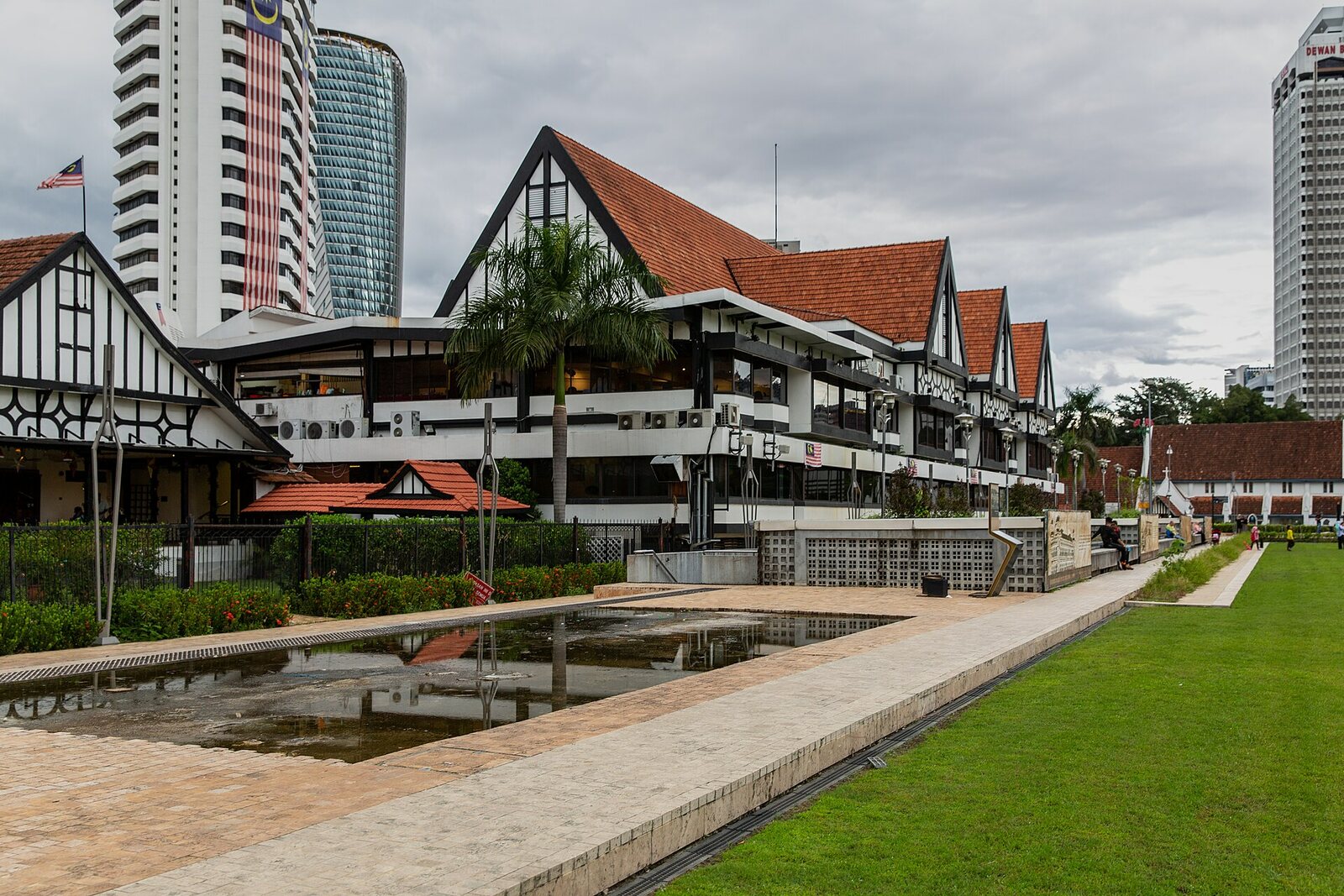
Look around first
What to notice
- The club's main building
- The field of the former Selangor Club Padang
- Hash Bar
- Small museum
The story of the place
Royal Selangor Club remains a private club: its members meet here, dine, and play sports. When the club was founded in eighteen eighty-four, Kuala Lumpur was part of Selangor, which gave the club the first part of its name. The club became “Royal” a hundred years later, when the Sultan of Selangor granted it that status. The building was placed right beside the Selangor Club Padang: officials and entrepreneurs of the British colony could step out of the club rooms onto grounds for cricket, rugby, hockey, and football.
At the end of nineteen thirty-eight, the accountant Albert Gispert lived here. He earned his living through auditing, and he received both an apartment and meals at Club Chambers—an independent two-story building on the club grounds. The ground floor contained a shared dining hall; upstairs were rooms for unmarried clerks and businessmen.
Before his transfer to Kuala Lumpur, Gispert had run in Malacca with enthusiasts of the “paper chase,” and he wanted to organize a similar group in his new home. One or two runners, the “hares,” left scraps of paper in advance; the rest, the “hounds,” searched for the trail. It was a chase with no winner: false branches allowed those who had fallen behind to catch up with the leaders, and after the finish the participants gathered around the table.
Gispert persuaded Cecil Lee, Frederick Thomson, and other acquaintances to give it a try. The first route began at Club Chambers: about a dozen men set off along the paper trail through what were then the outskirts of Kuala Lumpur, where rubber plantations and heaps of waste from tin workings began. The run quickly became weekly.
The name was coined at that same table. The residents jokingly called their dining hall the “Hash House”: in old English slang, “hash” meant a monotonous mixture, although Cecil Lee later insisted that the food here had been quite good. “Harriers” meant participants in a run governed by the rules of “hares and hounds.” Thus a joke about the club menu became the name “Hash House Harriers.”
By August nineteen forty-one, the group had held its hundredth run. After Japanese forces invaded Malaya, the meetings stopped. Gispert, who served as a volunteer, was killed in the battle for Singapore in February nineteen forty-two. His companion Ronald Bennett resumed the runs in nineteen forty-six—in Gispert’s memory. A few years later, the group was officially registered, and then its chapters appeared in thousands of cities around the world.
Club Chambers was later demolished to make way for the Jalan Kuching flyover: it stood opposite the entrance to the old wing, a little farther on than the present building. At Royal Selangor Club itself, the Hash Bar and a small museum remain, and the local chapter still holds runs.
Useful on site
For this route—an exterior visit. The club remains a private club space; the square and street provide enough material for reading the facade and its relationship to the field.
Checked: June 30, 2026. Check the official source before visiting.View the building from the public side of the square: the club operates by its own rules, and visitor entry is not guaranteed.