 Guide On Map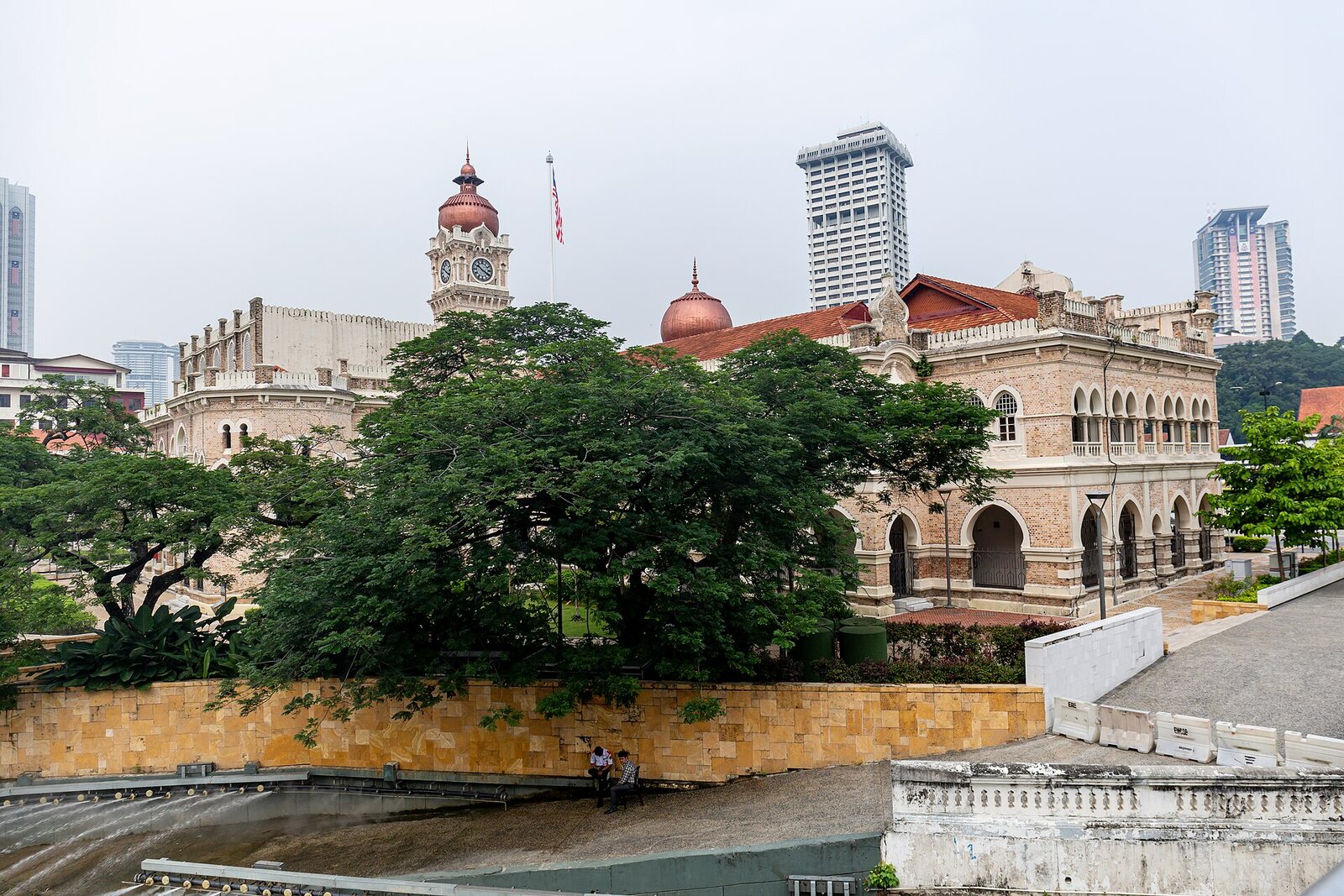
Look around first
What to notice
- Long façade
- Red-brick walls
- Clock tower
The story of the place
The long red-brick building with its clock tower once brought together in one place the administration of the growing city and state: land, mines, taxes, post, and sanitation were handled here. Before this, visitors went to separate offices on Bluff Hill; after the move, papers passed through the premises first called the New Government Offices and then the Secretariat. Its current name appeared only in nineteen seventy-four, when state institutions moved to Shah Alam and the vacated building was made a memorial to the ruler under whom the administration came to Kuala Lumpur. After restoration, exhibition halls and the Kuala Lumpur City Gallery opened inside, while the clock in the tower is still wound by hand.
In April eighteen ninety-seven, Selangor's state engineer, Charles Edwin Spooner, was handing the new building over to officials. He had to prove that the treasury had received a usable headquarters for the money promised. At the ceremony, they directly recalled an official rule: a chief would receive only part of the credit for success, but would be held fully accountable for failure.
The reason for that remark lay underfoot. Test borings showed firm ground, but while excavating the foundation pit, workers found old wells and pits filled with city refuse. On ground like this, Spooner had to erect towers and long brick walls near the river. He reinforced the foundation and the lower part of the building, and set stricter standards for the bricks than at construction sites in India that he had studied. A special factory in the Brickfields district produced about four million bricks.
The estimate was one hundred fifty-two thousand Straits dollars. The final bill reached one hundred fifty-three thousand, excluding the cost of the land. Frank Swettenham, the General Resident who accepted the building for the administration, called such a difference almost a miracle.
Nine departments moved here at once. Behind one façade, the State Council met, officials recorded revenue and expenditure, handled land and mines, and ran the post and municipal sanitation. Before this, visitors had to go up to scattered offices on Bluff Hill, now Bukit Aman. Now papers concerning land, taxes, mines, and urban development passed through the rooms of this building. Officially, it was called the New Government Offices, and later the Secretariat.
The sultan's name was not on the building then. Abdul Samad had ruled Selangor since eighteen fifty-seven and agreed to move the state capital from Klang to rapidly growing Kuala Lumpur. Under him, the State Council was established on the British model; in time, the sultan himself was left chiefly with the right to advise on Malay customs and Islam. Construction began during his reign, but the name appeared only in nineteen seventy-four.
Then another Sultan of Selangor, Sultan Salahuddin Abdul Aziz Shah, agreed to transfer Kuala Lumpur to the federal government. State institutions began moving to Shah Alam, the former Secretariat was vacated and named the Sultan Abdul Samad Building—in memory of the ruler under whom the administration came to Kuala Lumpur.
After restoration, exhibition halls and the Kuala Lumpur City Gallery opened here. The mechanical clock installed in the tower in eighteen ninety-seven is serviced by specialists and is still wound by hand.
Useful on site
The Sultan Abdul Samad Building complex lists daily access 08:00–22:00; entry to the grounds and buildings is free, while individual galleries and events may have their own ticket arrangements.
Checked: June 30, 2026. Check the official source before visiting.For this chapter, the façade is enough. Access to the interiors depends on the current cultural program and may be arranged separately.