 Guide On Map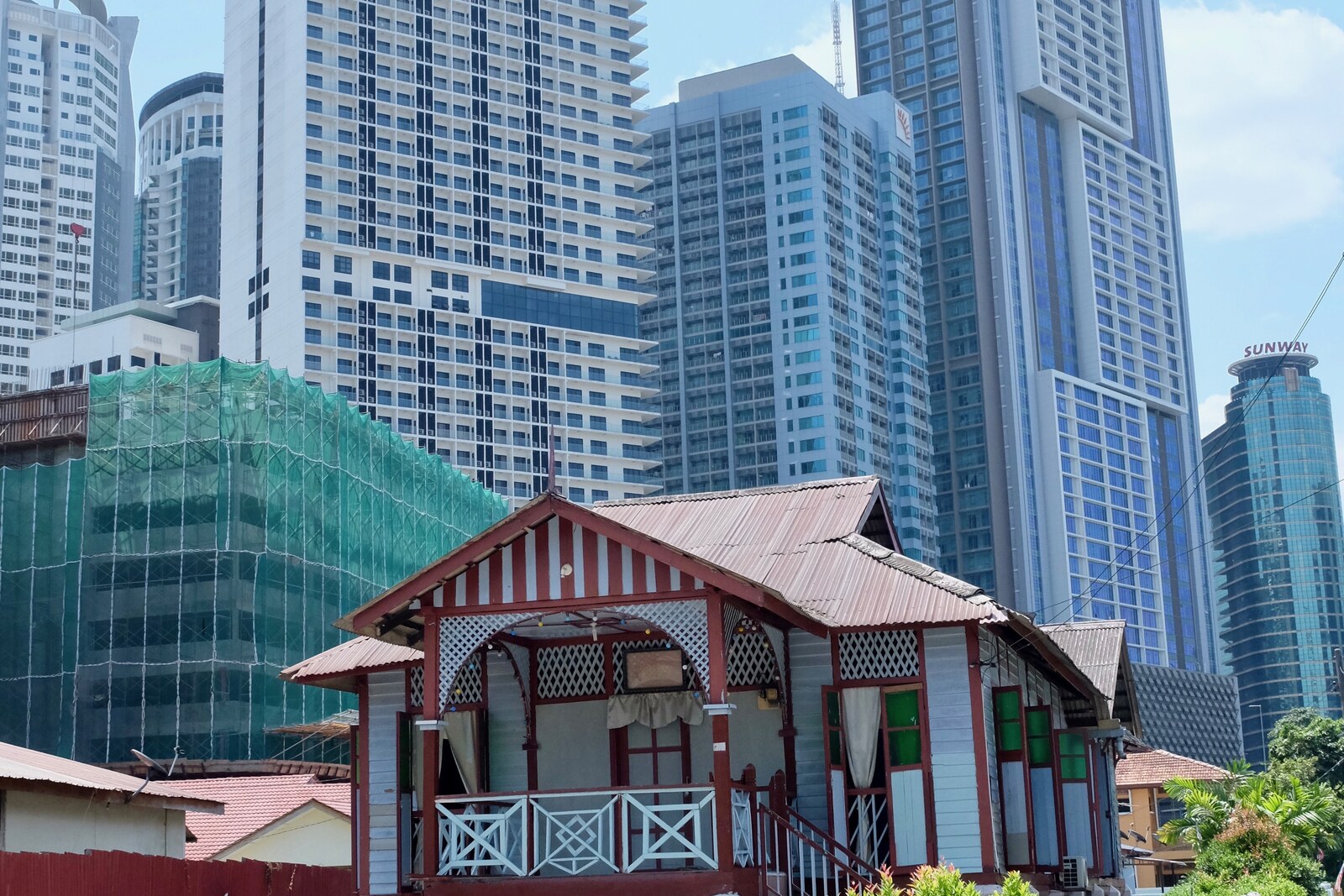
Look around first
What to notice
- Five-sloped roof
- High supports
- Wooden walls
- Carved screens
The story of the place
In Kampung Baru, a Malay wooden house survives on a high stilt floor: five roof slopes converge at an upper ridge, and carved screens cover the walls. This form is called Rumah Limas; it is known in several Malay states. Craftsmen assembled the house from chengal and meranti, expecting floodwater to pass below the living rooms. In time, the wooden floor gave way to tile because of termites, but the roof and the living section raised above the ground have preserved the original design.
Mohd Noor Muhd Amin, the third-generation heir to this house, once received an offer: five million ringgit for the family estate. He refused the buyer. Selling it would have made him very wealthy, but it would have deprived his children and grandchildren of the house their great-grandfather and grandfather built for them.
The first version of the house was built in nineteen thirteen. Mohd Noor's grandfather was a carpenter and designed the structure himself, while his father took part in the construction. They chose durable chengal and meranti tropical hardwoods and raised the living quarters on high supports: Kampung Baru experienced floods, and the water had to pass beneath the floor.
Local residents called the house Rumah Limas. In Malay, “rumah” means “house,” while “limas” means a roof with five ridges: one at the top and four descending to the eaves. This is the name of an architectural type widespread in Selangor, Johor, and Terengganu.
In nineteen forty-nine, the house was rebuilt to the original design. Later, the family nevertheless had to alter part of the grandfather's structure: the wooden floors were replaced with tile because termites damaged them after floods. The roof, wooden walls, carved screens, and elevated living floor were preserved.
The descendants of the builders still live here. Beneath the house remain the very same high supports that Mohd Noor's grandfather laid against the water; above them stands the house whose sale his grandson refused for the sake of the next generation.
Useful on site
Private residential property; view it only from the public street and only without entering beyond the gate. Visibility is lower in the evening, and respect for the residents matters more than a photograph.
Checked: June 29, 2026. Check the official source before visiting.View and photograph the house only from a publicly accessible place; do not enter the yard or look through the windows. Private reception of individual guests does not mean free access.