 Guide On Map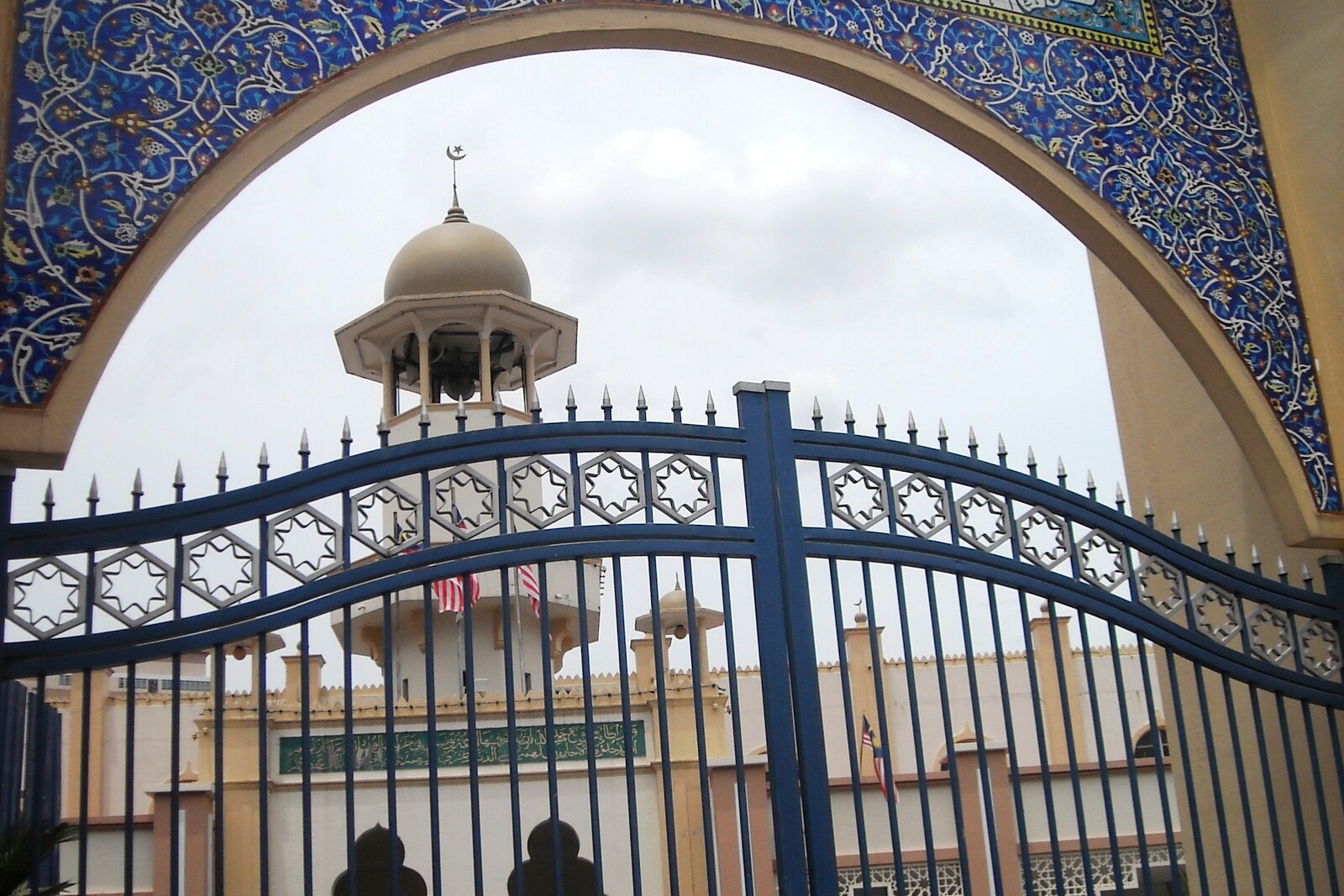
Look around first
What to notice
- Prayer hall
- Place for ablutions
- Wooden elements
- Expanded wings
The story of the place
The word jamek in its name indicates its purpose: this is where the community gathers for collective Friday prayer. People gather in the prayer hall, and a separate place for ablutions has been arranged beside it; later additions and renovations enlarged the original structure. A small open prayer house once stood on this land, with a plank floor and posts made from nibong palm trunks. The wooden posts can no longer be seen, but the present expanded wings show just how cramped the former hall had become.
In the eighteen eighties, the Malaccan merchant Haji Bachik bin Abdullah gave four plots of land he owned for a prayer house. He lived by trade and led the Malays of neighboring Kampung Ujong Pasir: from his own property, Bachik set aside a place where they could gather together.
Kampung Baru, “New Village,” would only emerge as an official Malay settlement in nineteen hundred. Several villages would gradually be united under a shared administration, and at the end of the nineteen twenties the donated land would be transferred to that administration as a waqf—a plot permanently assigned to the religious community.
The residents built the first prayer house themselves. It was an open wooden hall with a plank floor and posts made from nibong palm trunks. It was enough for daily prayer, but the population grew, and on Fridays the small hall could no longer hold everyone who came.
In the nineteen fifties, Kampung Baru families decided to raise money for a large building. Each family was asked to contribute sixty ringgits, at once or in installments. The option of paying in installments was important: the mosque was built with household money, not the funds of one wealthy patron. By nineteen fifty-five, thirty thousand ringgits had been collected, but fundraising was moving too slowly, and construction could have stopped. The residents then created a separate donation committee. It brought the total to two hundred fourteen thousand: the Selangor government provided ninety thousand, while private contributions and the mosque's savings made up the rest.
The building was designed by architect Lee Yoon Thim, and construction was overseen by contractor Chan Khiew. In place of the hall on palm posts came a spacious prayer room and a separate place for ablutions. Later, the mosque was expanded and renovated several more times.
The old wooden floor and nibong posts are no longer here. What remain are the four plots Bachik gave and the purpose recorded in the word “jamek”: a congregational mosque, where the community gathers for collective Friday prayer.
Useful on site
This is an active mosque, not a tourist attraction with guaranteed visiting hours. You may look around freely from outside; entry to the prayer hall is only with permission, in modest clothing, and outside prayer times.
Checked: June 29, 2026. Check the official source before visiting.This is an active mosque: dress modestly, speak quietly, and enter only where and when permission is given. During prayer, listen to the story from outside.