 Guide On Map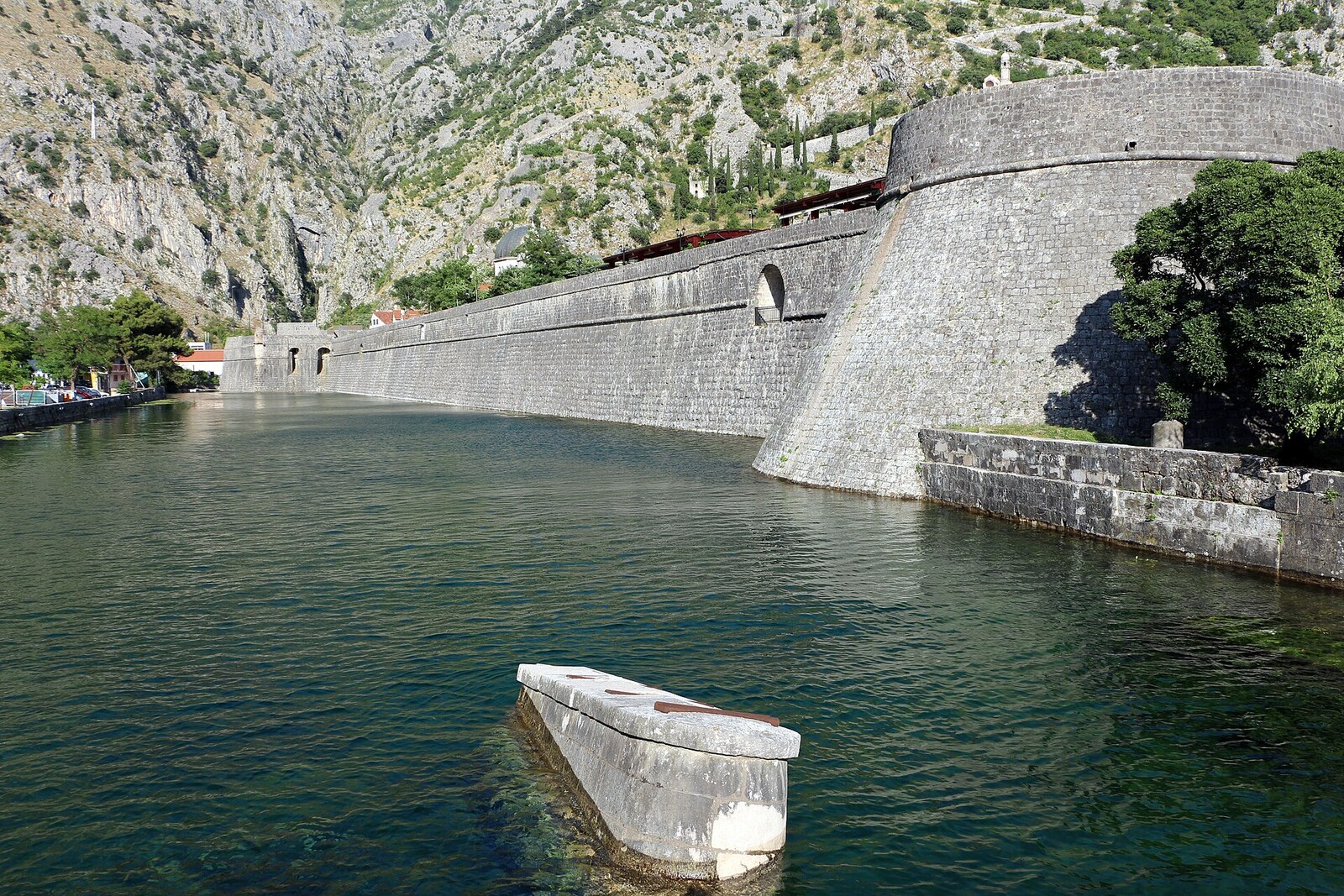
Look around first
What to notice
- Rounded citadel structure
- Two embrasures above the Škurda
- Vaulted galleries
- Upper artillery platform
The story of the place
At the junction of the lower walls, Campana links the line along the Škurda with the fortifications facing the bay. Its rounded stone structure noticeably widens toward the base; it once stood separately and remained the garrison's last shelter. Inside, two vaulted gun positions were built, from which guns fired along the river. Two embrasures survive above the Škurda, and the old vaults are visible beside the Citadela restaurant.
In sixteen forty-five, Francesco Davilla proposed filling in Campana's two expensive gun galleries with earth. They had been built only a little over thirty years earlier. Davilla was a military specialist of the Republic of Venice: at the beginning of the war with the Ottoman Empire over Crete, he was assigned to assess whether Kotor could withstand an attack. His job was to identify dangerous decisions before foreign guns put them to the test.
For such an assessment, Campana was the key place in the lower town. This is where the wall along the Škurda meets the wall on the bay side. At first, the tower stood separately and served as a citadel—the garrison's last refuge if the enemy had already entered Kotor. Campana means “bell” in Italian; its stone structure is rounded and widens toward the base.
In sixteen thirteen, two vaulted artillery galleries were fitted out inside the citadel. Guns fired from them along the river, while soldiers practiced with weapons nearby. Davilla found that both heavy vaults rested on a single central wall and considered the entire structure unreliable. The open sides of the position also remained vulnerable to enemy artillery.
He proposed abandoning the covered galleries. The military filled the vaults with earth and gained a continuous gun platform above them. Along the edges they placed gabions—large baskets packed with earth and stone. The garrison lost two relatively new rooms but gained a solid battery from which it could answer fire coming from the shore and the bay.
The earth remained inside the vaults for several centuries. In nineteen ninety, builders removed it while converting the citadel into a tourist and restaurant complex. Beneath the fill, they found both galleries and a stone slab bearing the name of the artillery position and the year of its creation. The two embrasures above the Škurda and the vaults near today's Citadela restaurant are that very expensive structure which Davilla ordered turned into a mass of compacted earth.
Useful on site
Exterior viewing is unrestricted. Access to individual sections of the wall and bastion may be limited by the condition of the site or by works.
Checked: date not specified. Check the official source before visiting.Keep your distance from the water and the edges of the masonry; the accessible exterior platforms are enough to understand the bastion.