 Guide On Map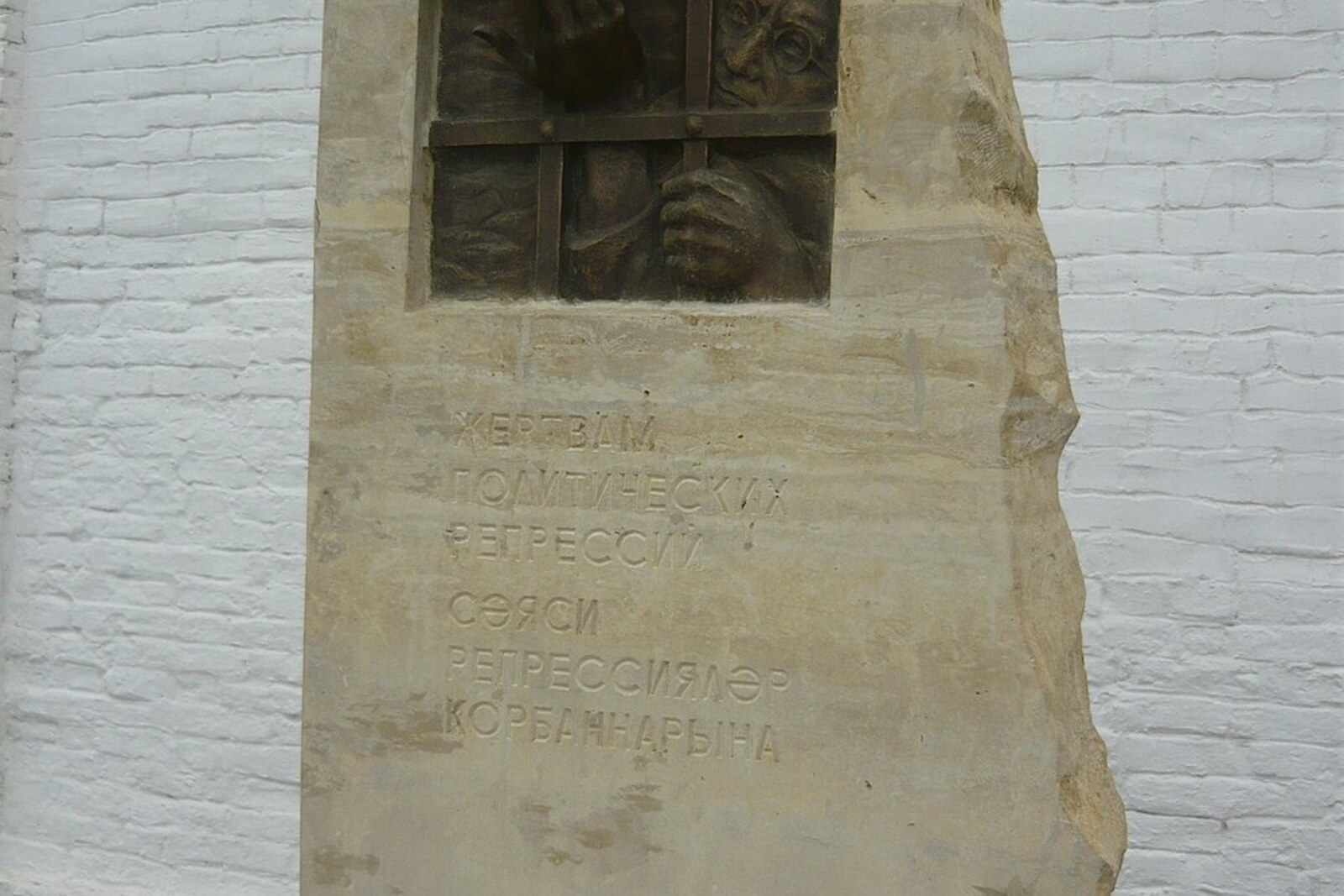
Look around first
What to notice
- The western monastery wall
- The trace of the bricked-up gates
- The stone composition by the wall
- The well behind the wall
The story of the place
Behind the stone composition runs the western wall of the Assumption Monastery. In the middle of the nineteenth century, it divided people over the most everyday of matters—a trip for water.
There are no naturally flowing springs on Sviyazhsk’s high hill. Water was drawn from deep wells, and one of them stood opposite the western porch of the Assumption Cathedral. It was fourteen sazhen deep—about thirty meters. According to monastery tradition, Herman, the founder of the monastery, found the water-bearing spot and dug the well himself. This is precisely a tradition; documents cannot confirm his work with a shovel.
Town residents also used the well. The route to the water passed through monastery grounds: people walked and rode in carts past the cold—that is, unheated—Assumption Cathedral. The brethren needed to preserve access to the water while moving the town traffic out of the monastery’s inner area.
By eighteen fifty, the long brick enclosure was already cracking. The monastery authorities submitted a repair plan to Vladimir, Archbishop of Kazan: to mend the damage, whitewash the wall again, and cut separate gates by the well. The report called the former passage by the cathedral “most improper.” The archbishop was to authorize the work, after which carts gained a direct route to the water and the monastery courtyard ceased to serve as a town road.
In nineteen oh two, the brethren covered the well with a stone chapel with an iron roof and painted decoration. The old chapel has not survived to the present day; later, the monks restored the well itself. It lies on the other side of the western wall, while outside there remains a strip of land along which people once approached the new gates for water.
Useful on site
An open area by the outer wall, accessible around the clock.
Checked: date not specified. Check the official source before visiting.The wall can be viewed from outside at any time; no separate entrance is required, and there is almost no shade along the strip beside the enclosure.