 Guide On Map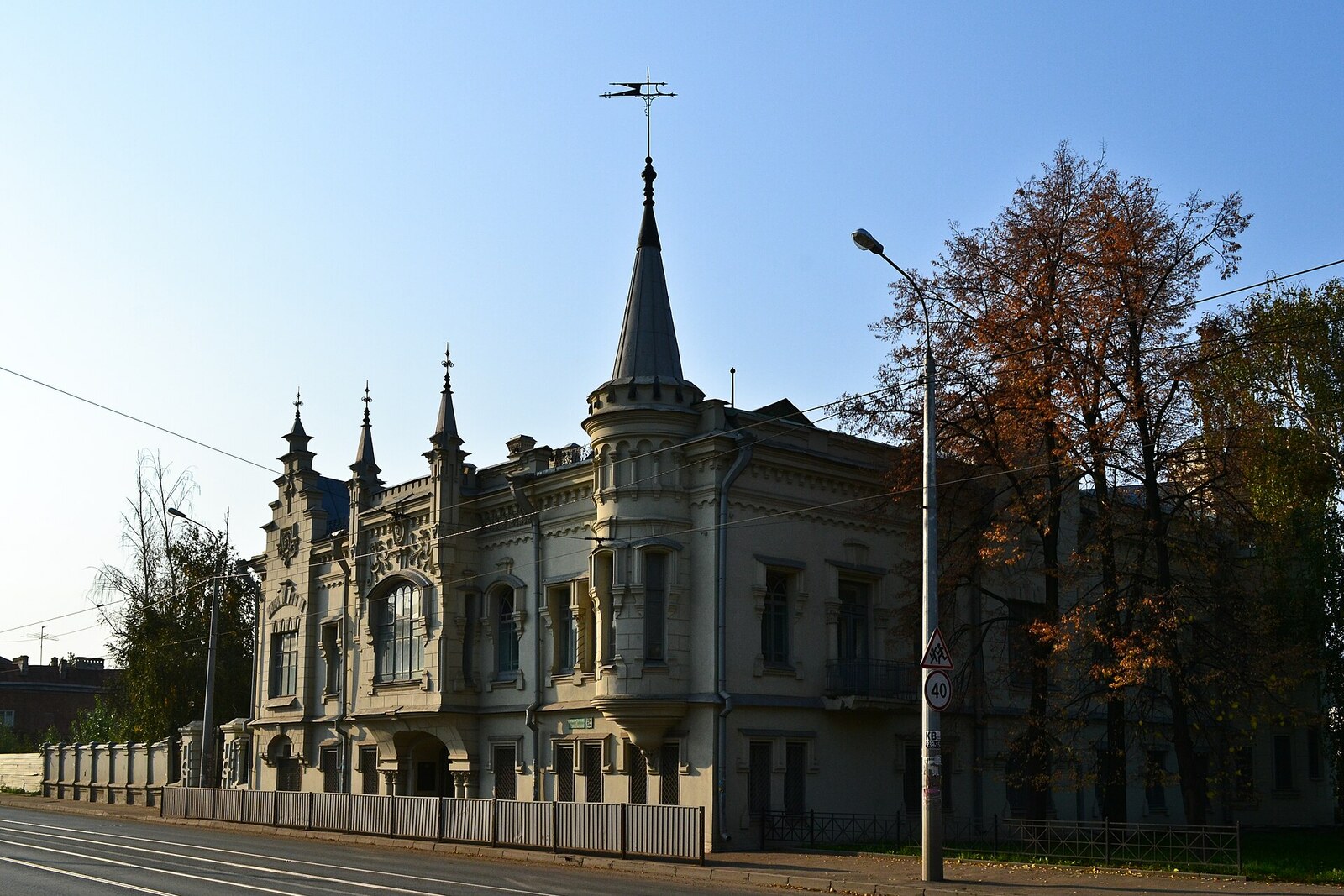
Look around first
What to notice
- Heavy bay window above the entrance
- Small turrets
- Round side tower
- Grand staircase beneath a glass dome
The story of the place
The heavy bay window with small turrets and the round side tower give the stone mansion an unusual silhouette. After the major fire, the estate was rebuilt, with a spiral staircase installed in the tower and the grand staircase covered by a glass dome. Later, the rooms housed a confectionery production, a chess club, and communal apartments. Now this is the Tukay Museum, where Room Forty of the Bulgar Hotel, the poet's travel basket, silver cufflinks, and death mask are kept.
In eighteen eighty-four, the Kazan millionaire merchant Ibragim Apakov was giving his only daughter in marriage. Eighteen-year-old Bibimaryambanu became the wife of forty-five-year-old widower Muhammadshafi Shamil, son of Imam Shamil, who led the resistance of the mountain peoples of Dagestan and Chechnya to the Russian Empire. After his father's capture, Muhammadshafi himself joined Russian military service and rose to the rank of major general.
Apakov gave the newlyweds a stone house near Yunusov Square. Yet the owner named in the documents was not the famous groom, much less his father. An archival entry names “Madam M. Shamil”—Bibimaryambanu. Kazan residents turned her surname into the name of the house.
The spouses had their own, very different sources of income. Muhammadshafi received an annual pension of six thousand rubles; Bibimaryambanu received twenty-five thousand from leasing real estate that belonged to her. This money determined the building's fate in nineteen oh two, when a major fire destroyed more than three hundred houses in the Old Tatar Settlement and damaged the Shamil estate.
Bibimaryambanu commissioned Heinrich Rusch and Fyodor Amlong to rebuild it. A year later, the architects erected the present mansion: a heavy bay window with small turrets appeared above the entrance, a round tower with a spiral staircase stood at the side, and inside was a grand staircase beneath a glass dome. What stands before us is chiefly the result of her decision after the fire, rather than Apakov's original house of the eighteen sixties.
The family did not use the renovated estate for long. In nineteen oh six, Muhammadshafi died while receiving treatment in Kislovodsk. Bibimaryambanu sold the house to the young merchant Valiulla Ibragimov and left for St Petersburg with her daughters. Ibragimov opened a confectionery production here. Later, the rooms housed a chess club and communal apartments—about thirty families lived here at the same time. The owners changed, but Kazan residents continued to say: House of Shamil.
Gabdulla Tukay did not live in this mansion. There is no reliable information that he visited it either. The museum's creators chose the house because of what happened around it. On what was then Yekaterininskaya Street, now Tukay Street, stood the editorial offices of Tatar newspapers and magazines with which the poet worked. Nearby, he appeared at Sharyk Club. And in April nineteen thirteen, on Yunusov Square near the house, almost six thousand people recited a funeral prayer for Tukay—the janazah namaz—after which the procession continued toward the Tatar Cemetery.
For the centenary of the poet's birth, restorers prepared the former Shamil mansion, and in June nineteen eighty-six the museum welcomed its first visitors. Its staff do not present these rooms as Tukay's home. Inside, Room Forty of the Bulgar Hotel, where the poet really lived, has been recreated, and among the originals are his travel basket, silver cufflinks, and plaster death mask.
Useful on site
Tuesday, Wednesday, Saturday, Sunday — 10:00–18:00; Thursday — 13:00–21:00; Friday — 10:00–17:00; Monday — closed.
Checked: date not specified. Check the official source before visiting.Check separately whether it is possible to enter the museum. Even without visiting the interior, the facade clearly reveals the contrast between a family palace and Tukay's fate.