 Guide On Map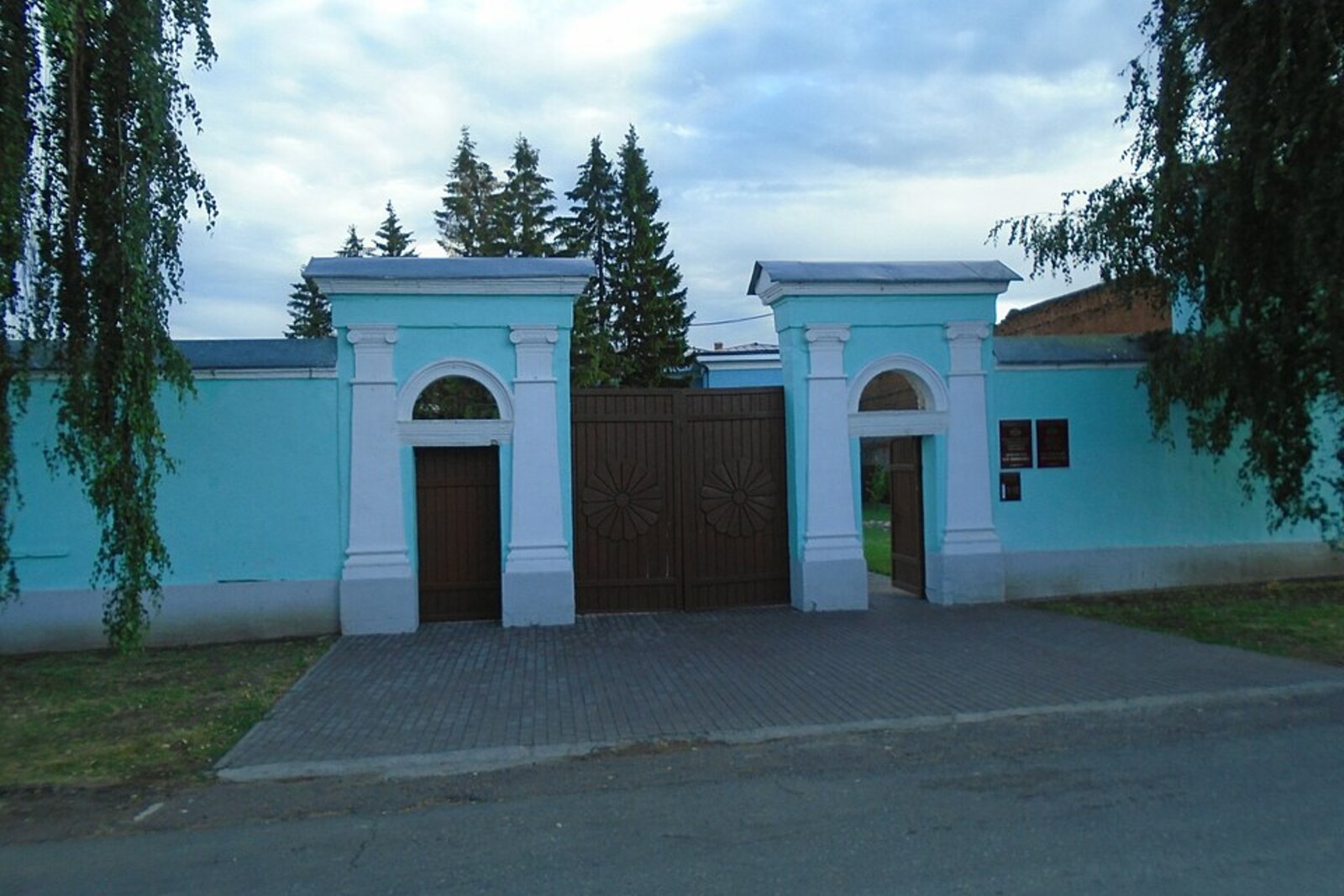
Look around first
What to notice
- Two-story merchant house
- Second-floor windows
- The Toyma River and floodplain meadows
The story of the place
In the summer of eighteen forty-eight, sixteen-year-old Ivan Shishkin returned from the First Kazan Gymnasium to this house and told his family that he would not continue his studies: he did not want to become a civil servant. Ivan Vasilyevich Shishkin, a merchant and the owner of the house, had sent his son to Kazan for a secure future. The family lived on its mills and its trade in flour and grain; in time, the elder son Nikolai Shishkin continued the business. Ivan chose an occupation that his mother, according to family recollections, called “paper daubing.”
He was given a room upstairs. For four years, Shishkin lived in his parents’ home, studied on his own, and drew from life. From the high bank came views of the Toyma River, the floodplain meadows, and the road to the Kama, but a view alone was not enough to turn a hobby into a profession. There was no art school in Yelabuga, and the family did not know where or to whom to send a young man who had left the gymnasium.
A way forward appeared in eighteen fifty. Ivan Osokin, a graduate of the Stroganov School in Moscow, came to town after being commissioned to paint the cathedral iconostasis. He saw Shishkin’s drawings and told him about the Moscow School of Painting and Sculpture. Ivan was now asking his father not for permission to draw at home, but for consent to leave and make drawing his livelihood.
Ivan Vasilyevich let his son go. In eighteen fifty-two, Shishkin left this house for Moscow. At the school, his first drawings from life passed from hand to hand among teachers and admirers. Some teachers still advised him to abandon landscape painting, which they considered an inferior genre of painting. Shishkin did not abandon it. He then graduated from the Academy of Arts, and in eighteen sixty-five he received the title of Academician for “View in the Environs of Düsseldorf.” His father lived to see the time when the son he had once drawn away from a familiar merchant future had already become a renowned artist.
Ivan Vasilyevich’s study has been reconstructed on the first floor of the museum. Upstairs is his son’s room, the part of the house where the four years between the gymnasium and his departure for Moscow passed. The furnishings have not survived untouched: museum staff recreated the interior from Shishkin’s own drawing, “View of a Room in Yelabuga,” made in the eighteen fifties. The room was restored on the basis of a drawing made by the man who learned to draw in it, while beyond the windows the Toyma River remains, with the high bank descending toward it.
Useful on site
Tuesday–Sunday 09:00–18:00; Monday — closed. Changes are possible on public holidays.
Checked: date not specified. Check the official source before visiting.Even without visiting the museum, stop by the house and take a separate look at the river landscape. Inside, do not rush to look only for the famous paintings.