 Guide On Map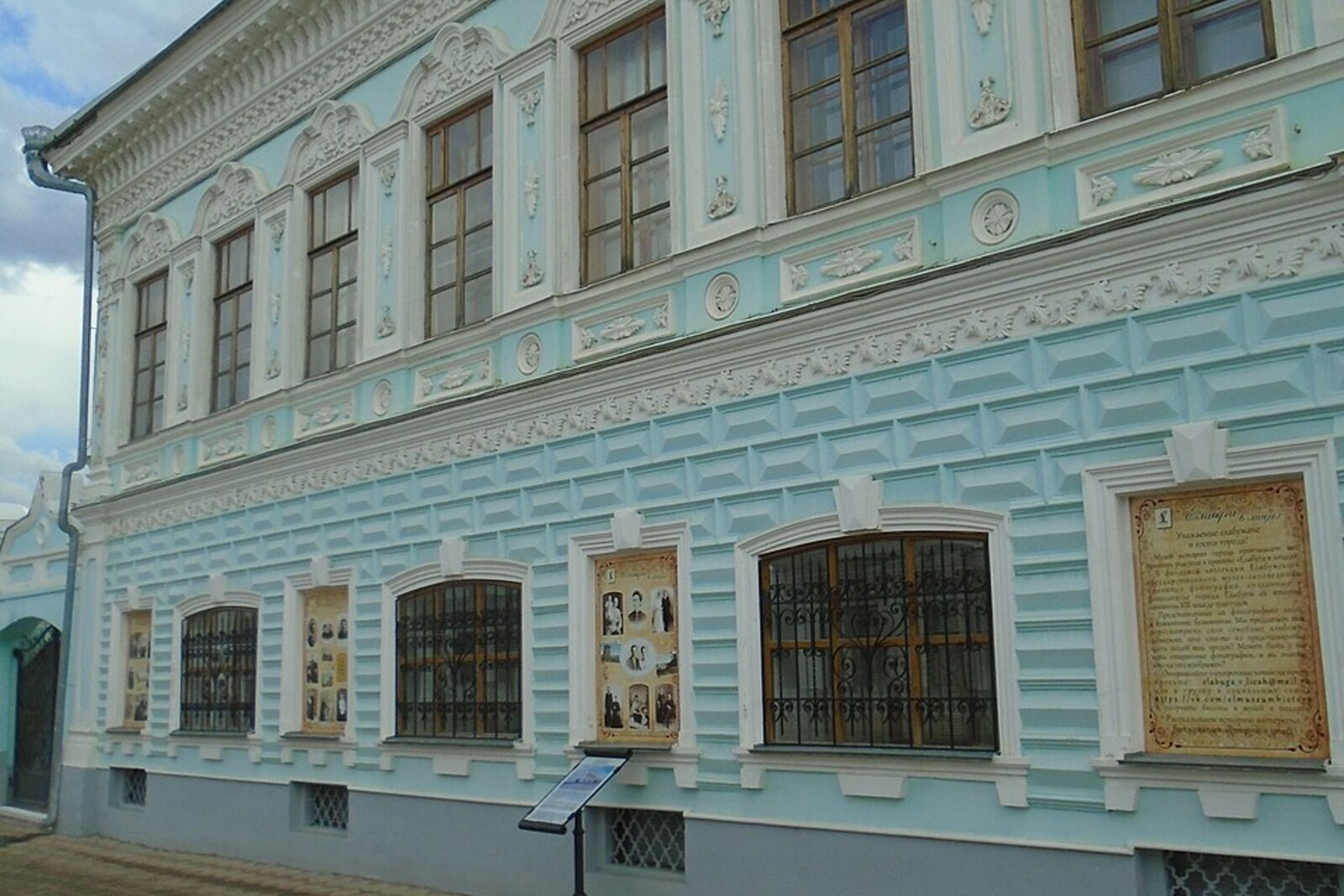
Look around first
What to notice
- Stucco facade
- Former shop
- Outbuildings
The story of the place
The doors in the stucco facade lead into six museum halls arranged in the former residential house. A separate former shop serves as an exhibition hall, where new exhibitions replace one another. In the courtyard nearby, craft workshops, a small animal corner, and the Traktir Museum-Theatre are in operation.
The Nikolaev surname in the name belongs to Alexei Nikolaev, a Yelabuga merchant who earned his living trading in hardware goods. This was the name for locks, door hinges, bolts, nails, and other metal supplies for the home, construction, and workshop. In the eighteen sixties, he owned an entire estate here: a two-story residential house with a basement and mezzanine, shops, and outbuildings. Customers came to the main commercial Kazanskaya Street for everyday iron goods, while the merchant's family lived within the same household.
Nikolaev remained the owner of the estate until the Revolution. Then his trade disappeared from here. The official register now dryly calls the landmark a “Residential House,” yet the surname of the man whose shop income supported these rooms and the ornate stucco facade has remained attached to the address.
The Museum of Yelabuga History had existed since nineteen eighty, but it was moved to this house later. Before Yelabuga's thousandth anniversary, Gulzada Rudenko, director of the Yelabuga State Museum-Reserve, and her staff were preparing a new local-history complex. They needed to complete it by the appointed date and place within one courtyard a historical exhibition, craft workshops, a small animal corner, and the Traktir Museum-Theatre.
The layout of the Nikolaev Estate suited this plan, since the living quarters, trade, and service rooms had already been separated there in the merchant's time. Rudenko's team reconstructed the buildings, and on August twenty-fifth, two thousand seven, the complex received its first visitors.
Today, six museum halls occupy the former residential house. An exhibition hall has been arranged in the former shop: where Nikolaev sold locks and door hinges, museum staff now hang rotating exhibitions.
Useful on site
Tuesday–Sunday 09:00–18:00; Monday — closed. Changes are possible on public holidays.
Checked: date not specified. Check the official source before visiting.From outside, read the layout of the house through its facade and entrances. If the museum is open, view the rooms as work areas within a large household, rather than as a frozen formal interior.