 Guide On Map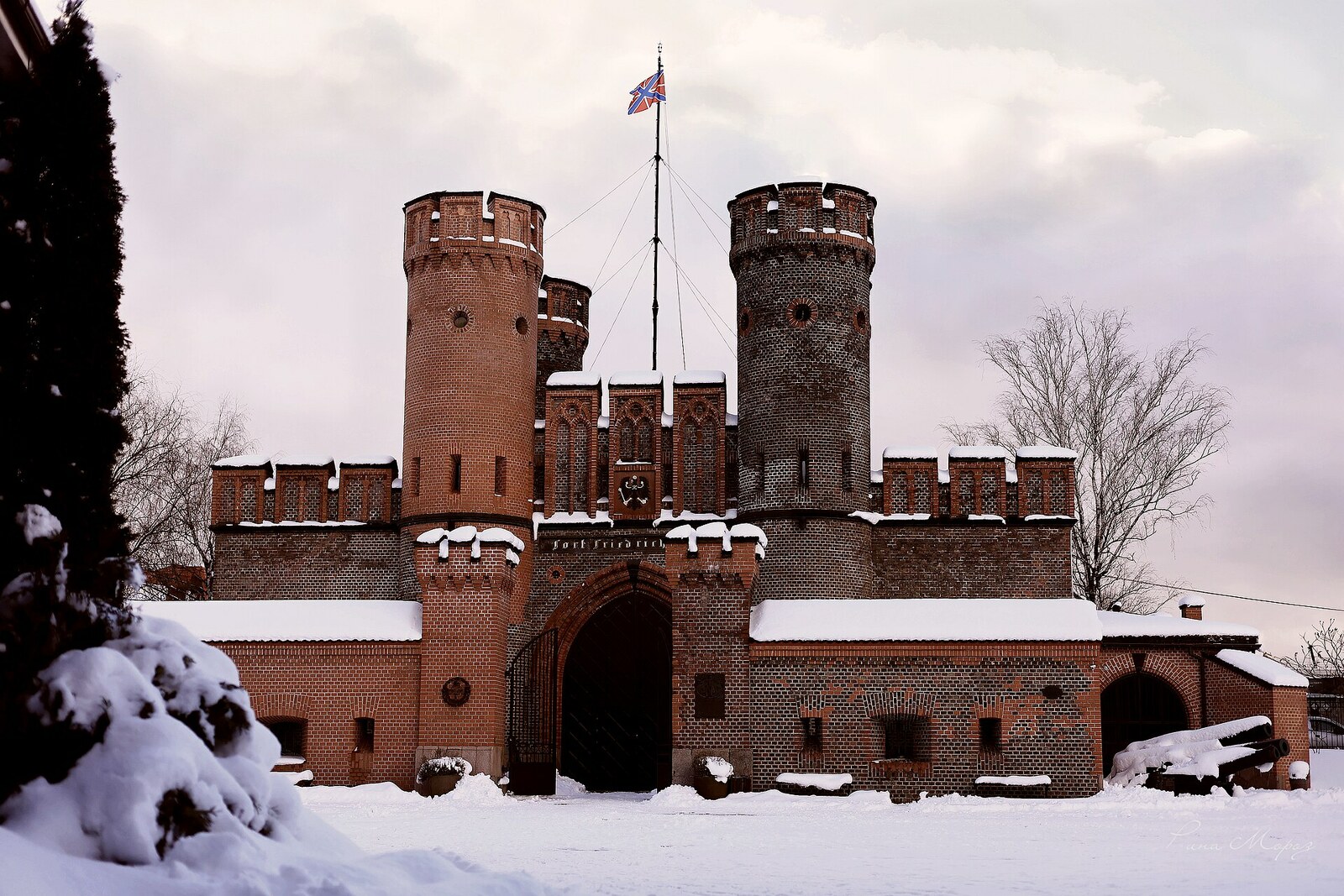
Look around first
What to notice
- Red-brick facade
- Central portal
- Round towers
- Crenellated parapets
The story of the place
The red-brick gate with round towers and crenellated parapets remains from Friedrichsburg Fortress, a four-bastion citadel that once occupied this site. The present structure appeared later than the fortress itself. After nineteen ten, railroad workers leveled its earthworks, filled in the moats, and laid tracks here. Of the entire fort, only the name and this brick entrance have survived.
In the mid-nineteenth century, this gate served as the entrance to a separate fort at the western river approach to Königsberg. It now houses a branch of the Museum of the World Ocean devoted to shipbuilding and Peter the Great. The tsar really did visit the former fortress and receive artillery training here and in Pillau. However, the key decision that explains Friedrichsburg Fortress’s location was made forty years before his arrival.
In sixteen fifty-seven, Elector Friedrich Wilhelm ordered the court mathematician and fortification engineer Christian Otter to build a square citadel here with four bastions. The Northern War was under way, and the fortification was meant to block enemy ships from traveling upstream along the Pregolya. Its position made one more thing possible: its guns commanded the river route by which Königsberg traded with the sea.
The elector’s lands lay on both sides of Prussia, and a standing army was needed to defend them. The estates of Königsberg agreed to provide money and soldiers only with their own approval. Friedrich Wilhelm wanted to dispose of them himself. To build the citadel, he took a plot belonging to the Kneiphof community. The merchants were outraged: their income depended on river trade, and now the passage to the sea was controlled by the elector’s garrison. Friedrich Wilhelm replied that, for the sake of the fortress, the interests of the state permitted the expropriation of municipal and private land.
“Friedrichsburg Fortress” means “Friedrich’s fortress.” According to the historical version accepted in Kaliningrad, the elector dedicated the name to his son Friedrich, who was born at Königsberg Castle in that same year, sixteen fifty-seven. This child later became the first king of Prussia. The citadel, meanwhile, carried out his father’s plan.
The elector’s chief opponent among the townspeople was Hieronymus Roth, a Kneiphof merchant and Schoeppenmeister—the head of the city judges. Roth’s business was doing worse and worse, but the guilds and townspeople continued to regard him as their representative. He sought to ensure that taxes and meetings of the estates would continue to depend on the consent of the Prussians themselves. When Friedrich Wilhelm demanded a new excise tax—a levy on everyday goods—Königsberg refused to pay. Roth secretly traveled to the Polish king Jan II Kazimierz, Prussia’s former suzerain, and asked him to intervene. He received no help.
In the autumn of sixteen sixty-two, Friedrich Wilhelm brought about two thousand soldiers to Königsberg. The guns of Friedrichsburg Fortress were aimed at the city. The elector’s men blocked the street near Roth’s house with carts, seized him, and carried him away. The townspeople submitted, and a year later the Prussian estates swore allegiance to Friedrich Wilhelm.
Roth was offered freedom if he admitted that he was a traitor and asked for pardon. He refused. He was sent to Peitz Fortress, far from Königsberg, where he spent sixteen years and died in sixteen seventy-eight.
The brick towers did not yet exist in Roth’s time: the present gate was built in eighteen fifty-two. After nineteen ten, railroad workers leveled the bastions, filled in the moats, and laid tracks across the former fort. Of the citadel whose guns were once aimed at Königsberg, only its name and later entrance remain.
Useful on site
Wed–Sun 10:00–19:00; Mon–Tue closed.
Checked: September 24, 2026. Check the official source before visiting.The entire fortress-like appearance of the gate is visible from outside. Add the Peter the Great Center and spaces connected with boats and shipbuilding separately after checking visiting conditions.