 Guide On Map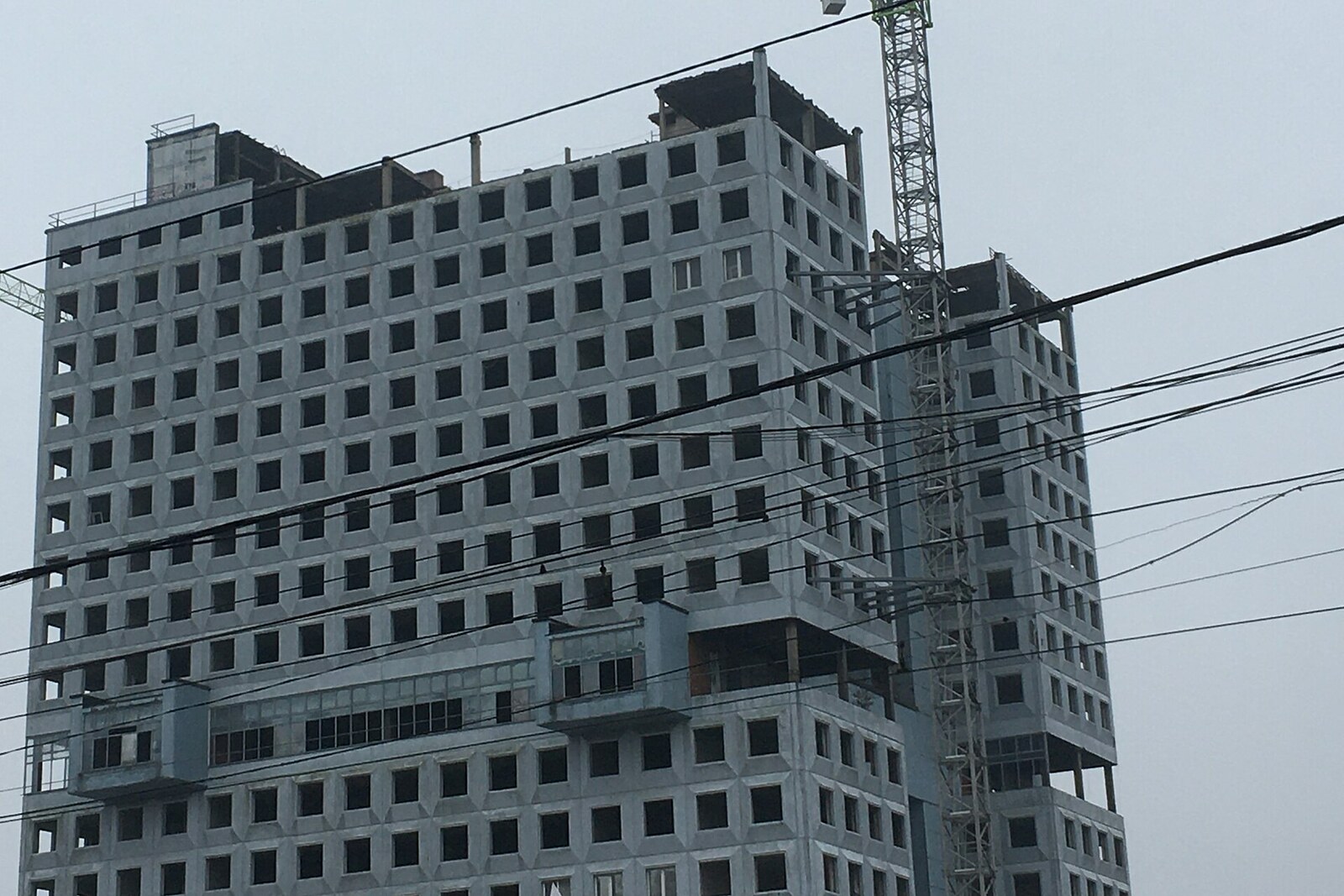
Look around first
What to notice
- Open site
- Fence around the conserved excavations
- Line of Leninsky Prospekt
- Bank of the Pregolya
The story of the place
The word “Royal” attached to this site is older than the Kingdom of Prussia. The fortress, founded by the Teutonic Order in twelve fifty-five, was named Königsberg—“Royal Mountain”—in honor of the Czech king Přemysl Otakar II. He took part in the Order’s campaign into the lands of the Prussians and helped the knights establish themselves by the Pregolya River.
Four and a half centuries later, there was another, now literal, reason to call the castle royal. Friedrich III, Elector of Brandenburg and Duke of Prussia, decided to obtain a crown. An elector was a German prince entitled to take part in choosing the emperor. Friedrich already ruled several separate lands, collected taxes from them, and maintained an army, but at European courts he still ranked below kings. Other monarchs might simply refuse to recognize a title he had assumed on his own.
The opportunity came from Emperor Leopold I. He needed allies for the approaching War of the Spanish Succession. In November seventeen hundred, the two sides concluded an agreement: the emperor would recognize Friedrich’s future crown, and Friedrich would send him eight thousand soldiers.
All that remained was to find a place where the agreement could be turned into a coronation. In Brandenburg, Friedrich was within the Holy Roman Empire and could not declare his principality a kingdom. The Duchy of Prussia lay beyond its borders, and Friedrich was considered an independent sovereign there. So he went not to Berlin, but to Königsberg—the Prussian capital and the city of his birth.
Even the title had to be chosen carefully. Part of historical Prussia belonged to the Polish king, so Friedrich called himself “King in Prussia,” rather than “King of Prussia.” That single letter showed the limits of the deal.
On the morning of January eighteenth, seventeen hundred and one, a throne was placed in the castle hall. Friedrich entered wearing a crown that he had placed on his own head, took the scepter, and received the oath of the courtiers. He then personally crowned his wife. Only after that did the couple proceed to the Castle Church, where two specially appointed bishops performed the anointing. So Friedrich did not receive the crown at the altar: he entered the church already a king. In this way, he showed that the clergy consecrated what had already taken place, but did not grant him the title.
The emperor kept his promise and recognized Friedrich I as King in Prussia. The elector’s wife became queen, and their son later inherited the new title. Friedrich, for his part, provided the agreed eight thousand soldiers; during the war, they were sent to the Lower Rhine.
The Castle Church stood in the complex’s western wing. Construction of the House of Soviets began in nineteen seventy, east of the main part of the castle, above the site of the former moat. Its name meant a building for regional institutions: the regional party committee and the executive committee of the regional Soviet were to be moved there. Officials never began work here—the building was never put into operation. Its above-ground section was dismantled in two thousand twenty-four; the remaining underground foundations are now being dismantled.
Nothing of the castle remains above ground either. The fragments of foundations uncovered by archaeologists have been conserved and are closed to viewing. But the coronation objects from seventeen hundred and one have survived: the frames of two crowns, the scepter, and the orb are in Charlottenburg Palace in Berlin. What remains here is the address of the hall where Friedrich placed the crown on his own head.
Useful on site
View the site from the public sidewalk. Observe any current barriers and do not enter work areas.