 Guide On Map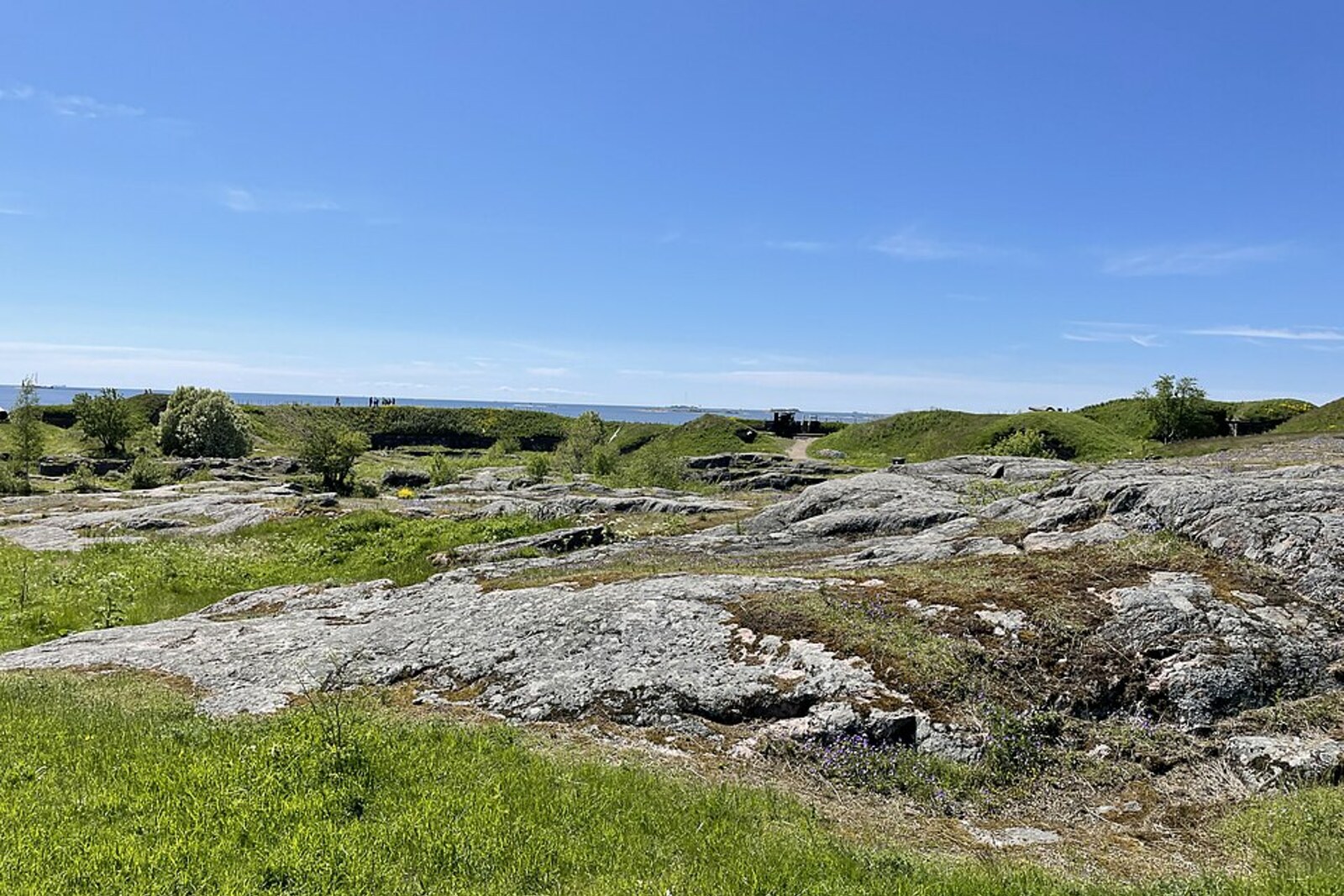
Look around first
What to notice
- The flagstaff
- The low breastwork
- Fourteen gun embrasures
- The vertically cut rock
The story of the place
A low breastwork with fourteen gun embrasures runs along the vertically cut rock. It was one of four bastions at this height that kept the strait toward Vallisaari and the approaches from the open sea under fire. One of them served as the flag bastion: the flagstaff set up here made the flag visible above the entire fortress.
Kustaanmiekka means “Gustav’s sword.” In seventeen forty-nine, the leaders of the construction named the fortification here after the three-year-old heir to the Swedish throne, the future King Gustav III. At the same time, the neighboring bastions were given the surnames of senior officers. Zander was Daniel Johan Zander, a lieutenant general who took part in directing the Finnish fortification works and discussed them with Augustin Ehrensvärd.
The builders cut the rock away vertically and topped it with a low breastwork containing fourteen gun embrasures. Four bastions atop Kustaanmiekka could fire on the strait by Vallisaari and on ships approaching from the open sea. The southern Bastion Zander was also chosen for the fortress flagstaff: a flag raised here could be seen above the entire fortification.
On June twenty-seventh, seventeen fifty, Captain Carl Tersmeden, a naval officer serving on the construction of Sveaborg, raised the Swedish flag over Bastion Zander for the first time. The artillerymen fired a salute in its honor. After that, Bastion Zander remained the flag bastion under every subsequent garrison.
One hundred sixty-eight years later, the flagstaff was needed by Pehr Evind Svinhufvud, chairman of the Senate of Finland. Finland had already declared independence, but Viapori—the Finnish name for that same Sveaborg—was still held by a Russian garrison. The Russian military left the fortress on April twelfth, nineteen eighteen. A month later, the government held a ceremony at Bastion Zander intended to establish the transfer of the fortress to Finland.
The first official assignment of the newly created Finnish fortress artillerymen was to fire a salute here. At exactly one o’clock in the afternoon, they fired eight shots from two remaining Russian field guns, and a red-and-yellow flag bearing the Finnish lion was raised over the bastion. Svinhufvud announced to those assembled that the fortress belonged to the Finnish state and would henceforth be called Suomenlinna. The next day, the Senate established the new name by decree, and the artillery unit was renamed after the fortress.
The flag used in that ceremony looked different from today’s one: parliament approved the blue-and-white flag with a cross only sixteen days later. What remained from the event were the flagstaff and the exact pair of names. In Finnish, the fortress became Suomenlinna, while the Swedish name Sveaborg, authorized by the same decree, remained.
Useful on site
Open outdoor site without a ticket. The flag is raised seasonally from 12 May to 29 September; access to the rocks and ramparts depends on the weather and the safety of the surfaces.
Checked: June 30, 2026. Check the official source before visiting.The wind is stronger at this height, and the rocks and earthen slopes can be slippery. Stay on the paths, and skip the climb in bad weather.