 Guide On Map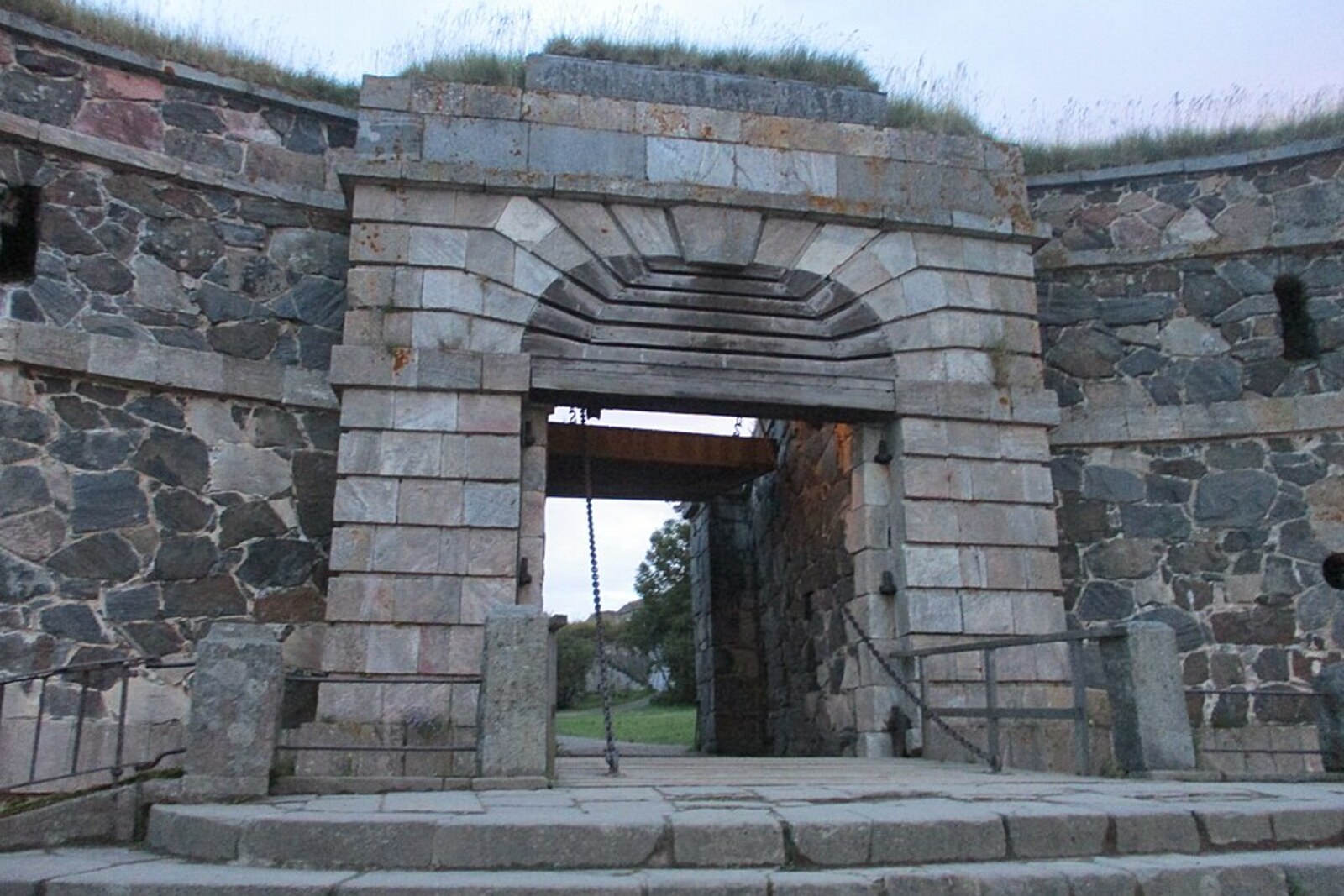
Look around first
What to notice
- Curved façade
- Round and oval embrasures
- Marble plaques with inscriptions
- Passage between the fortifications
The story of the place
The ship for which King’s Gate is named approached the island when the gates themselves did not yet exist. In the summer of seventeen fifty-two, the Swedish king Adolf Frederick dropped anchor here. He had come to inspect the construction of Suomenlinna and understand why, after four years of work, the vast fortress was still far from complete.
The construction was led by Colonel Augustin Ehrensvärd. Representatives of the estates supported his plan and allocated funds, but his opponents accused the colonel of launching work on several islands at once and completing none of the sections. Several such opponents accompanied the king. Ehrensvärd understood what was at stake: a failed inspection could cost him the work to which he had already devoted four years.
The colonel handed the arriving king a note. Many difficulties still lay ahead, Ehrensvärd acknowledged, but he had managed the fortress funds with “clean and unstained hands.” During the inspection, Adolf Frederick expressed satisfaction. Returning to Stockholm, he wrote a very different report. The king wrote that Ehrensvärd had undertaken too much, built without a proper sequence, and spent funds on excessively expensive fortifications. In his view, work should have begun on Vallisaari, the present-day island across the strait. This high island would have protected the galley harbor better than the fortifications built here first.
The royal report triggered an inquiry. The council summoned Ehrensvärd to Stockholm and demanded answers to eighteen questions about expenditure, construction, and the choice of islands. The colonel gave his explanations, the council found them satisfactory, and the king could not continue the accusation without its support. In the spring of seventeen fifty-three, Ehrensvärd returned to Suomenlinna and continued construction. Later, a new commission again approved his plan and secured further funding for it.
It was then that construction began on a ceremonial entrance at the site of the royal landing. The builders placed the gate between the low shore fortifications of Kustaanmiekka and the tall Bastion Lantingshausen. Its curved façade was intended for the ceremonial reception of arrivals from the water, while round and oval embrasures allowed marksmen to cover the approaches to the passage.
Ehrensvärd ordered words addressed to posterity to be placed on a marble plaque: to stand on their own foundation and not rely on others’ help. It is tempting to connect this inscription with his victory over royal criticism, but no document confirms such an intention. Another detail, however, is certain: Adolf Frederick’s name does not appear on the plaques.
The king departed, his proposals were rejected, and in seventeen fifty-three and seventeen fifty-four the builders fixed in stone the place where his inspection had begun. Adolf Frederick landed on an unfinished fortified shore; the gates appeared only after him. They are called King’s Gate because his ship stood exactly here.
Useful on site
An open outdoor point with no ticket required. The seasonal water bus to King’s Gate requires a separate ticket and checking the schedule; the final movement field in the data must remain exactly “-”.
Checked: June 30, 2026. Check the official source before visiting.By the water, the stone may be wet and the waves and wind strong; do not leave the safe platform for a photograph. The gates are viewed from the outside.