 Guide On Map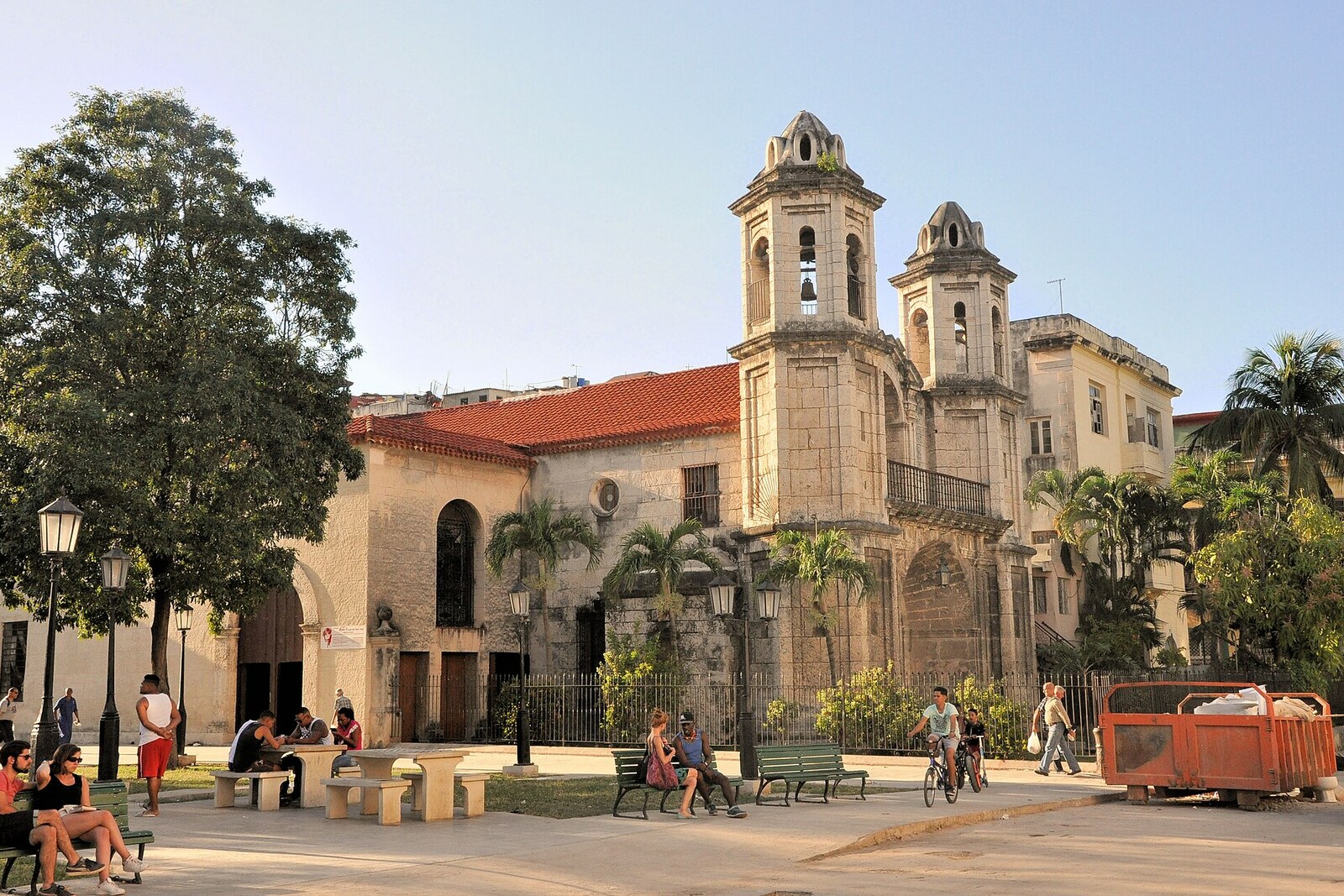
Look around first
What to notice
- Church of the Holy Christ of the Good Journey
- Park trees
- Benches
The story of the place
On the western edge of old Havana, a Franciscan chapel marked the end of a procession retracing Christ's path to Golgotha. Beside it, the city authorities preserved an open plot that grew into a square. Wooden stalls here were later replaced by stone trading rows, but a fire destroyed them, and the site was turned into a small park. The church stands at the edge of the greenery, while trees and benches occupy the former market.
In the mid-nineteenth century, women who earned a living by doing laundry came to the seven o'clock Mass at this church in groups. After the service, they did not disperse. Servants from wealthy families came to the square and hired a laundress for their employers' household.
Among Havana's free laundresses, almost four out of five were recorded in the colonial census as Black or mulatto women. Some washed laundry in the customer's home. Others carried bundles away to their own homes, then returned the clothes washed and ironed. Their work depended on orders, and the morning gathering by the church gave them a chance to get them. The square was therefore also known as Plaza de las Lavanderas—the Laundresses' Square.
The women gathered here precisely because of the combination of church and market. As early as sixteen oh four, the Franciscans erected a small chapel on the western edge of Havana as it then was. The procession that retraced Christ's path to Golgotha ended here. In sixteen forty, the city council left an open space nearby and laid out a square.
The official name came from the Church of the Holy Christ of the Good Journey. Christ in this name is the crucified Jesus Christ, before whose image travelers and sailors asked for protection before setting out, while those who returned came to give thanks. That is where the words “of the Good Journey” come from.
By the beginning of the nineteenth century, trade took place in the square without permanent structures. In eighteen thirty-six, Captain General Miguel Tacón ordered the wooden stalls replaced with stone rows. The market brought sellers and buyers here, while the Mass gave the laundresses a regular time to meet those seeking their services. The women turned the church square into a place of daily hiring as well.
About a quarter century later, a fire destroyed the trading rows. The remains were dismantled, and in eighteen sixty-five a small park was laid out here. The church still stands at its edge. The stone stalls are gone: trees and benches occupy the place where laundresses were hired after the seven o'clock Mass.
Useful on site
This is an active urban space, so choose a place to listen that does not disturb parishioners or local residents. Access to the church may change; the historic market and literary scenes here should be imagined from the story, not sought as a preserved display.