 Guide On Map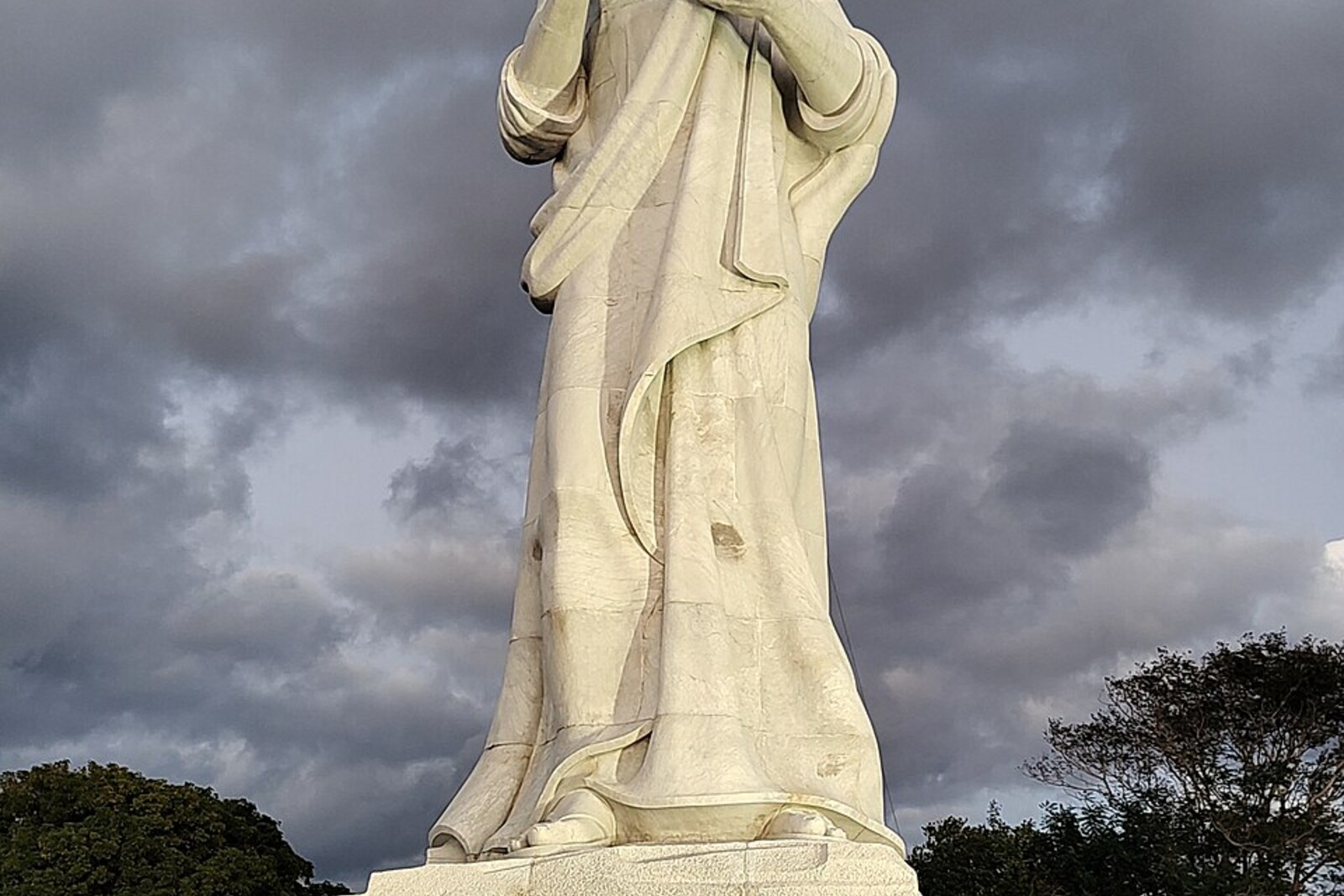
Look around first
What to notice
- The figure's marble blocks
- Raised hand
- Hand on the chest
- Havana Bay
The story of the place
On the hill of Casablanca above the bay stands a twenty-meter figure of Christ, assembled from sixty-seven parts of Carrara marble. The blocks are assembled around an iron framework, and the interior space is filled with concrete. From the opposite shore, the statue is visible above the entrance to the harbor, where it greets arriving ships. One of its hands is raised in blessing, the other rests on its chest.
In nineteen sixty-one, the sculptor Hilma Madera heard on television that lightning had pierced the head of the Christ of Havana. The next morning, she came here and saw a hole in the sixty-seventh, highest block—at the back of the head. Rain could get inside, corrode the iron framework, and split the marble from within. Firefighters gave Hilma a truck with an extendable ladder. The repair, which she supervised herself, took about five months.
The stone for it was already in Havana. When she sent the sculpture from Italy, Hilma added a spare block of Carrara marble to the shipment, in case one of the parts was damaged during transport or installation. At the time, this seemed excessively cautious. Three years later, the spare was needed for the back of Christ's head.
The beginning of the project acquired another story. It is often repeated that Marta Fernández Miranda, the wife of Cuban President Fulgencio Batista, promised to erect the statue after an attempt on her husband's life in March nineteen fifty-seven. This legend does not match the chronology: the competition had already been announced in early nineteen fifty-six. Marta did indeed chair the board of trustees that raised money for the enormous figure above Havana Bay, but the project existed before the attack on the Presidential Palace.
Hilma Madera, a Cuban sculptor seeking the right to carry out the commission, presented a three-meter plaster model and won the competition. She spent the two hundred thousand pesos she received on Carrara marble. Then she went to Italy for almost two years, where she supervised the transformation of the model into sixty-seven separate parts. She insured each part before sea transport—and placed that same spare block beside it.
On the hill of Casablanca, these parts were assembled around an iron framework, and the structure was filled with concrete. The height of the hill itself allowed the twenty-meter figure to be visible from the opposite shore of the bay and to greet ships at the entrance to the harbor. Christ faces Havana: one hand is raised in blessing, the other rests on his chest.
The statue was unveiled at Christmas nineteen fifty-eight. A few days later, Batista and Marta left Cuba. At the ceremony, Hilma said of her work: “I made him so that he would be remembered, not worshipped: it is marble.”
The builders left a tall iron rod inside, but did not install a lightning rod. After Hilma's repair, lightning struck the head again in nineteen sixty-two, then once more in nineteen eighty-six. Only after the third strike did repair workers install protection. In the back of the current figure's head is an insert of spare marble that Hilma Madera brought across the Atlantic Ocean together with the original sixty-seven parts.
Useful on site
Open viewing point; come in daylight and check local restrictions on site.
Checked: June 25, 2026. Check the official source before visiting.Walk around the statue from several sides: the expression on its face and the direction of its gaze change with your vantage point.