 Guide On Map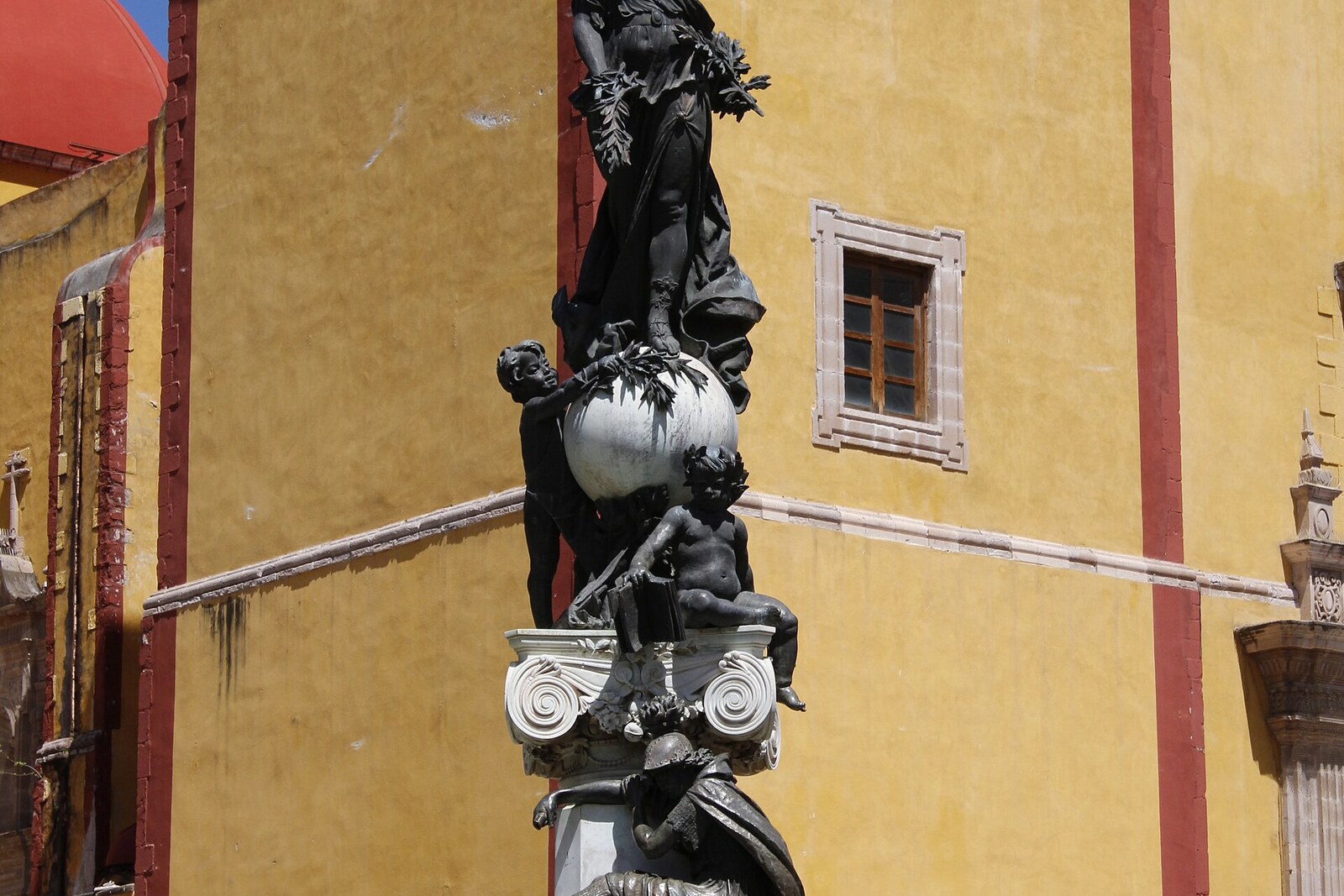
Look around first
What to notice
- Bronze figure of Peace
- Base of stone and marble
- Triangular garden
The story of the place
On March twenty-fourth, eighteen twenty-one, Colonel Anastasio Bustamante emerged from the city council chamber onto Plaza Mayor—the name then used for what is now Plaza de la Paz. Soldiers stood in formation before him. Bustamante had come to secure Guanajuato's joining the plan for independence. He had spent almost the entire war in the royal army: fighting insurgents, taking part in their pursuit, and receiving rank and pay for it. Now the colonel intended to withdraw his own regiment from obedience to the Spanish Crown.
Over ten years of war, constant requisitions and looting had devastated the province's roads and economy. Some mines had been abandoned or flooded, equipment had been smashed, and silver production had fallen sharply. In February, the former royal commander Agustín de Iturbide proposed the Plan of Iguala: separation from Spain while preserving the Catholic religion and equality between residents born in Europe and America. This agreement allowed royal officers to join the side of independence together with their units. Bustamante hesitated at first, then supported the plan and led his soldiers toward Guanajuato.
Pedro Antonio Yandiola Garay, commander of the city garrison, promised to defend the city against Bustamante and ordered barricades and trenches built. The very next day, Yandiola left his post and also joined the supporters of independence. Residents dismantled the prepared fortifications. The city council gathered clergy, representatives of the mining industry, and prominent townspeople to decide how to receive the approaching colonel. Envoys set out to meet him, but Bustamante had already entered the city.
After negotiations, he went out to the square to the soldiers and proclaimed the three promises of the Plan of Iguala: religion, independence, and unity. A rifle salute followed, and the city's bells rang out. Then an improvised procession passed through the streets, joined by residents. The nationwide war had not yet ended that day, but in Guanajuato the Spanish administration had lost the troops ready to defend it.
Four days later, Bustamante ordered the heads of Miguel Hidalgo, Ignacio Allende, Juan Aldama, and Mariano Jiménez removed from the Alhóndiga de Granaditas. After the insurgent leaders were executed, their heads were brought to Guanajuato and first displayed beneath the gallows right here on Plaza Mayor. Here, too, a proclamation was read declaring those executed to be criminals. Later, the heads were placed in iron cages and hung at the corners of the Alhóndiga de Granaditas. Now the cages were taken down, the remains were placed in wooden boxes, a mass was said, and they were buried in San Sebastián Cemetery. Two years later, they were declared heroes of the country and moved to Mexico City.
In September, the army of supporters of the Plan of Iguala entered Mexico City, and the war ended. In memory of this outcome, the sculptor Jesús Contreras created for Guanajuato City's main square a bronze allegory of Peace on a base of stone and marble. The work was completed in eighteen ninety-eight, and President Porfirio Díaz unveiled the monument on October twenty-seventh, nineteen oh three. It gave the square its current name.
The trenches, gallows, and formations of soldiers have long been gone. A bronze figure of Peace stands at the center of the triangular garden, and beneath it remains that same open space where the royal colonel announced to his men that they no longer served the Spanish Crown.
Useful on site
Open urban space, accessible without a ticket.
Checked: date not specified. Check the official source before visiting.View the monument from several sides without obstructing movement through the square; no separate visit to an interior is needed here.