 Guide On Map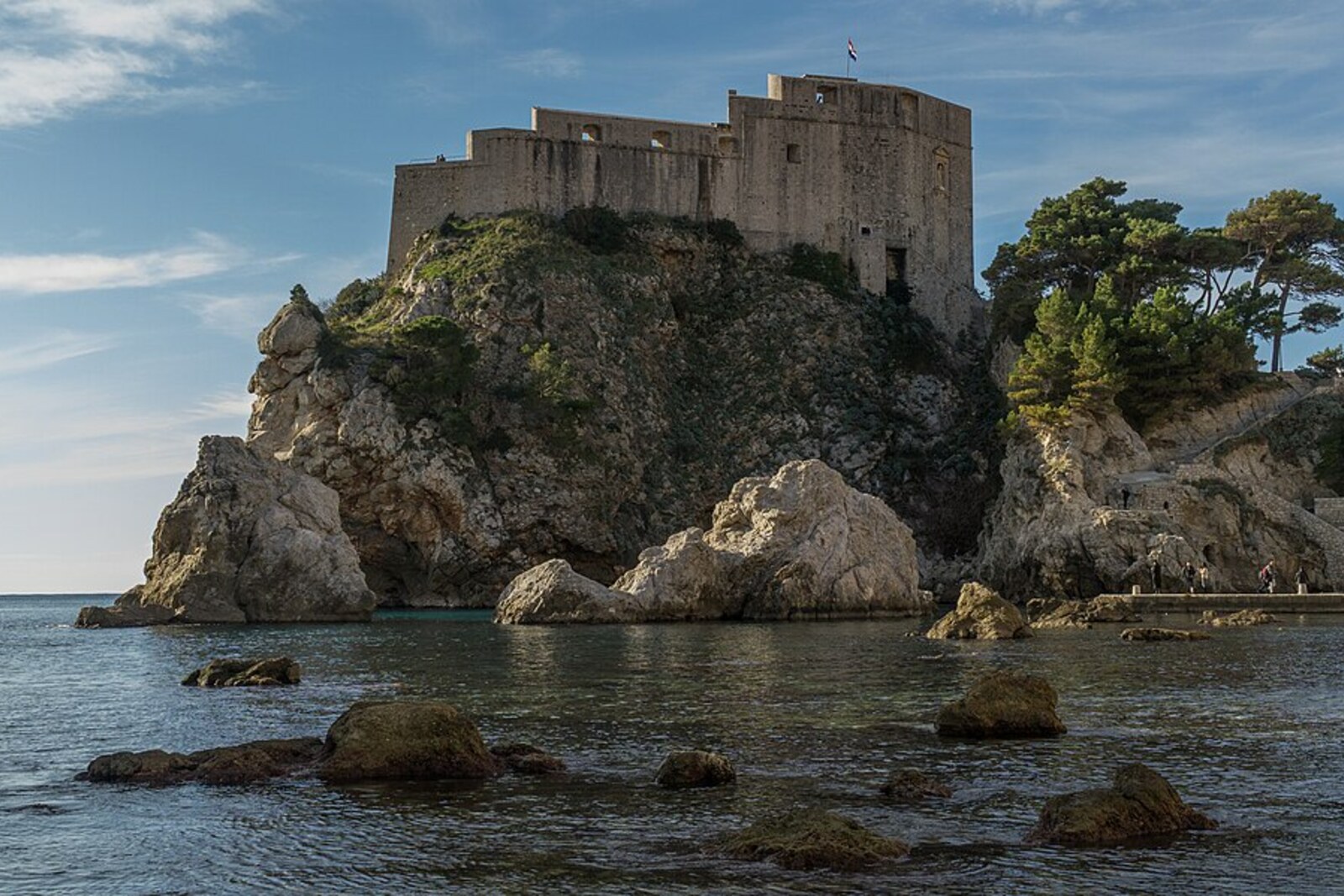
Look around first
What to notice
- Inscription above the entrance
- Upper artillery platform
- Wall on the seaward side
- Wall on the city side
The story of the place
Fort Lovrijenac stands on a separate rock above Kolorina Bay, west of the old town. From here, the garrison watched Dubrovnik's western entrance and ships approaching from the sea; a heavy bronze cannon was kept on the upper platform. The fortress's name comes from St. Lawrence: a small church stood in the early fortification, and women living nearby kept its lamp lit. Carved words about freedom, which cannot be bought with any gold, remain above the entrance.
On the sixth of April, sixteen sixty-seven, an earthquake destroyed most of Dubrovnik. Many patricians died, the Dubrovnik City Walls were breached, and surviving residents fled. The usual order of government collapsed.
For thirteen days, the patricians had to admit wealthy townspeople, previously excluded from the councils, to decision-making. Three hundred armed men were recruited to defend the ruined city, and six captains were placed over them. Five belonged to patrician families. The sixth was Pero Ohmučević, a townsman from a family of sailors and shipowners who lived from trading voyages. He was entrusted with Fort Lovrijenac.
This appointment was exceptional. The fortress stands apart from the Dubrovnik City Walls and, from its height, controls Dubrovnik's western entrance, Kolorina Bay, and the approach from the sea. Whoever held this rock could defend the city or bombard it. Therefore, in peacetime, the commander was chosen from among the patricians for only one month. The wall on the seaward side was made up to twelve meters thick, while the one facing Dubrovnik was about sixty centimeters thick: if the garrison betrayed the Republic of Ragusa, Bokar Fortress's cannons could destroy this wall.
Here Dubrovnik legend begins. It says that after the earthquake, two Venetian galleys approached the damaged fortifications and began landing men. Ohmučević ordered a shot from the Lizard, Fort Lovrijenac's largest cannon. The galleys moved aside toward Gruž, then left for Venice.
The earthquake itself, the temporary council of patricians and townspeople, and Ohmučević's appointment are confirmed by documents. The Lizard's shot and the galleys' flight belong to legend. It preserves the memory of a rare moment when a non-patrician was entrusted with a fortress that the republic normally did not allow one person to command for longer than one month. After thirteen days, the patricians again assembled their councils without the townspeople.
The Lizard was cast in fifteen thirty-seven by Ivan Krstitelj Rabljanin. The bronze cannon, more than three meters long and weighing over three tons, stood on the upper platform. The origin of its nickname has not been reliably established. The fortress is named after St. Lawrence: a small church dedicated to him stood inside the early fortification, and pious women living nearby looked after it and kept its lamp lit.
After the republic disappeared, the Austrian command began removing Dubrovnik's cannons: some were sent to Vienna, others were melted down. They attempted to lower the Lizard from Fort Lovrijenac and, according to the most widespread version, dropped it into the sea. No one has established the exact place where it fell.
The words carved above the entrance are still there: “Freedom cannot be bought with any gold.” The Lizard is not on the upper artillery platform. Searches below the rock in nineteen thirty-nine and nineteen sixty-five found nothing.
Useful on site
The official Fort Lovrijenac website showed 08:00-19:30 on 2026-06-25; check ticket coverage, seasonal hours, and events.
Checked: June 25, 2026. Check the official source before visiting.A separate climb up steps leads to the fortress; assess your strength after the walls and confirm access in advance. On wet stone or in strong wind, it is safer to limit yourself to the view from below.