 Guide On Map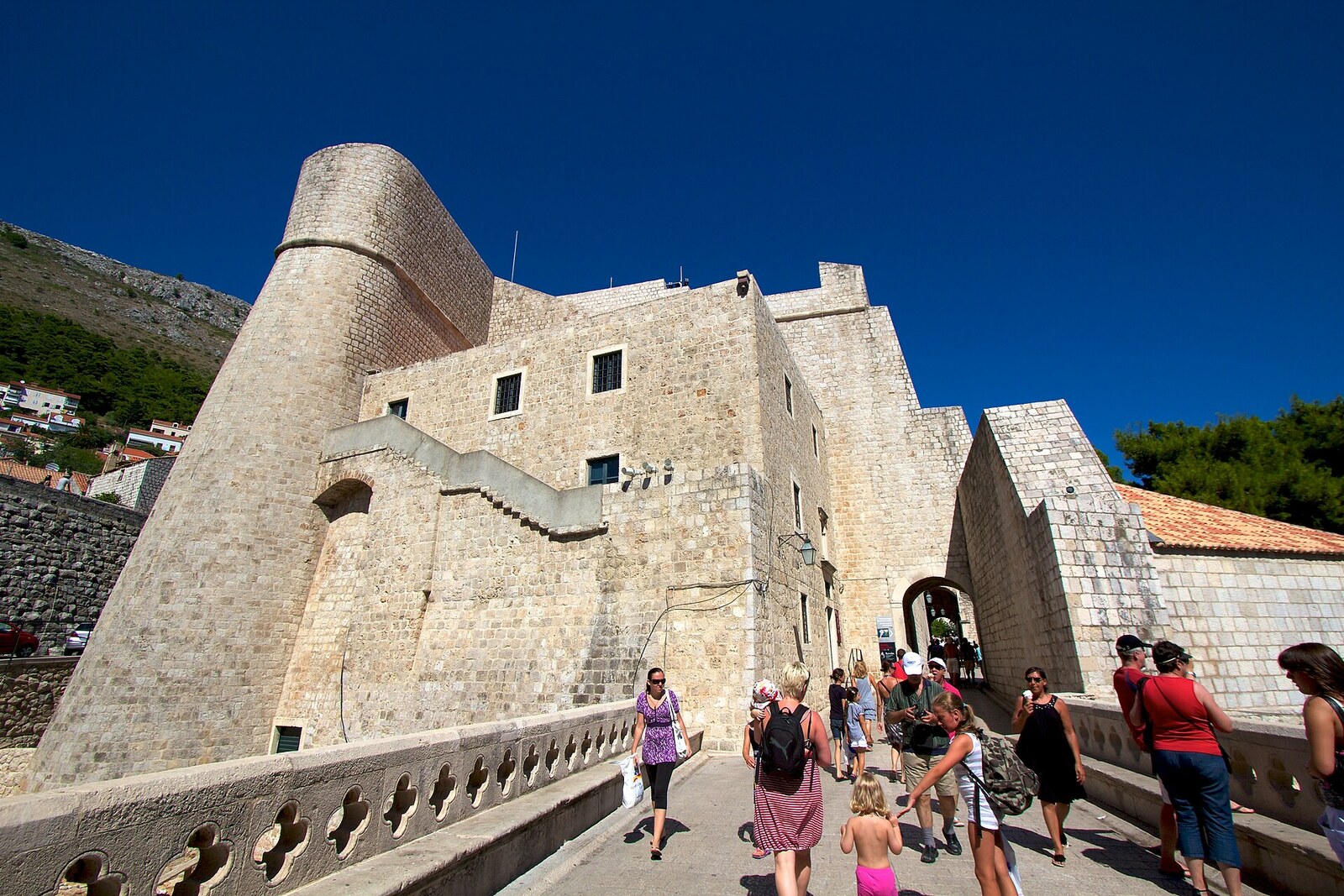
Look around first
What to notice
- The stone structure of the fortress
- The lower casemates
- The remains of the casting furnace
The story of the place
Beneath the lower floor of the stone Revelin Fortress, archaeologists found a large casting furnace and the rooms of a craftsman who cast cannons and bells for the republic. These remains belong to the fifteenth-century fortification that stood here earlier. The present fortress was built in front of the eastern entrance to the city: Ploče Gate could be approached only after passing its bridges. When an attack from Venice was expected, all other public and private building projects were halted for almost eleven years for its construction.
On April tenth, sixteen sixty-seven, Senator Luka Zamanja gathered the surviving Ragusan patricians at Revelin Fortress. He had entered the Great Council—an assembly of men from noble families that governed the republic—when he was only twenty, forty-five years before this meeting. Now Zamanja sought one thing: the leaders had to remain in Dubrovnik and restore the administration, although fleeing offered a better chance of saving their lives.
Four days earlier, an earthquake had destroyed the city, and Dubrovnik chronicles called it the Great Earthquake of 1667. The rector—the republic's head, elected for one month—and many councillors died. The tremor was followed by fire, looting began, and some residents left the city. For four days, there was no one to make decisions. For Zamanja, everything he had served throughout his adult life was vanishing: the councils, the treasury, trade agreements, and the very capital of the maritime republic.
They managed to gather here precisely because of this place. The word “Revelin” in the name Revelin Fortress derives from “rivellino,” the term for a separate forward fortification in front of a gate. The Senate of the Republic of Ragusa erected it on the eastern approach, between the road and Ploče Gate, so that attackers would first find themselves before this fortress and its bridges. Construction of the present stone structure began in fifteen thirty-eight, when an attack from Venice was feared. For its construction, all other public and private building projects in the city were halted for almost eleven years.
During the earthquake, the structure of Revelin Fortress remained usable for people, although the roof of the armory collapsed, with forty-two chests of gunpowder beneath it. While houses were still burning in the city, the chests were moved into the lower casemates. Rescued money, munitions, and relics from the ruined cathedral were brought to the fortress. The separate fortification at the gate became the only place where people, the state treasury, and the road into the city could all be guarded at once.
After Zamanja's meeting, decisions followed one after another. On April eleventh, the surviving patricians prohibited anyone from leaving the territory of the republic and began recruiting a militia. On April twentieth, at Revelin Fortress, together with several townspeople, they appointed people responsible for food supplies, restoring the water system, and safeguarding the treasury. Three days later, they elected the Council of Twelve here—a temporary body with extraordinary powers. The usual Ragusan order required many elected offices and short terms of service; after half the officeholders had died, there was no one to maintain it. The Council of Twelve held the city administration together, and the republic preserved its independence and began a long reconstruction.
The Archaeological Museum occupies only part of the lower floor of Revelin Fortress and still has no full permanent display here. Its most precise exhibition remains at the site where it was found: beneath the present fortress, archaeologists uncovered a large casting furnace and the rooms of a craftsman who cast cannons and bells for the republic. They belonged to the first Revelin Fortress of the fifteenth century. Above the remains of this workshop stand the walls into which Dubrovnik residents brought gunpowder, the treasury, and cathedral relics after the Great Earthquake of 1667, and where Luka Zamanja gathered the people who decided not to leave the city.
Useful on site
Summer season: 09:00–16:00, Friday 10:00–15:00, Wednesday — closed. Winter season: 09:00–16:00, Wednesday — closed.
Checked: June 17, 2026. Check the official source before visiting.From outside, the fort's form and position are easy to read. The furnace, archaeological layers, and carved stone are in the museum section; check access to it separately.