 Guide On Map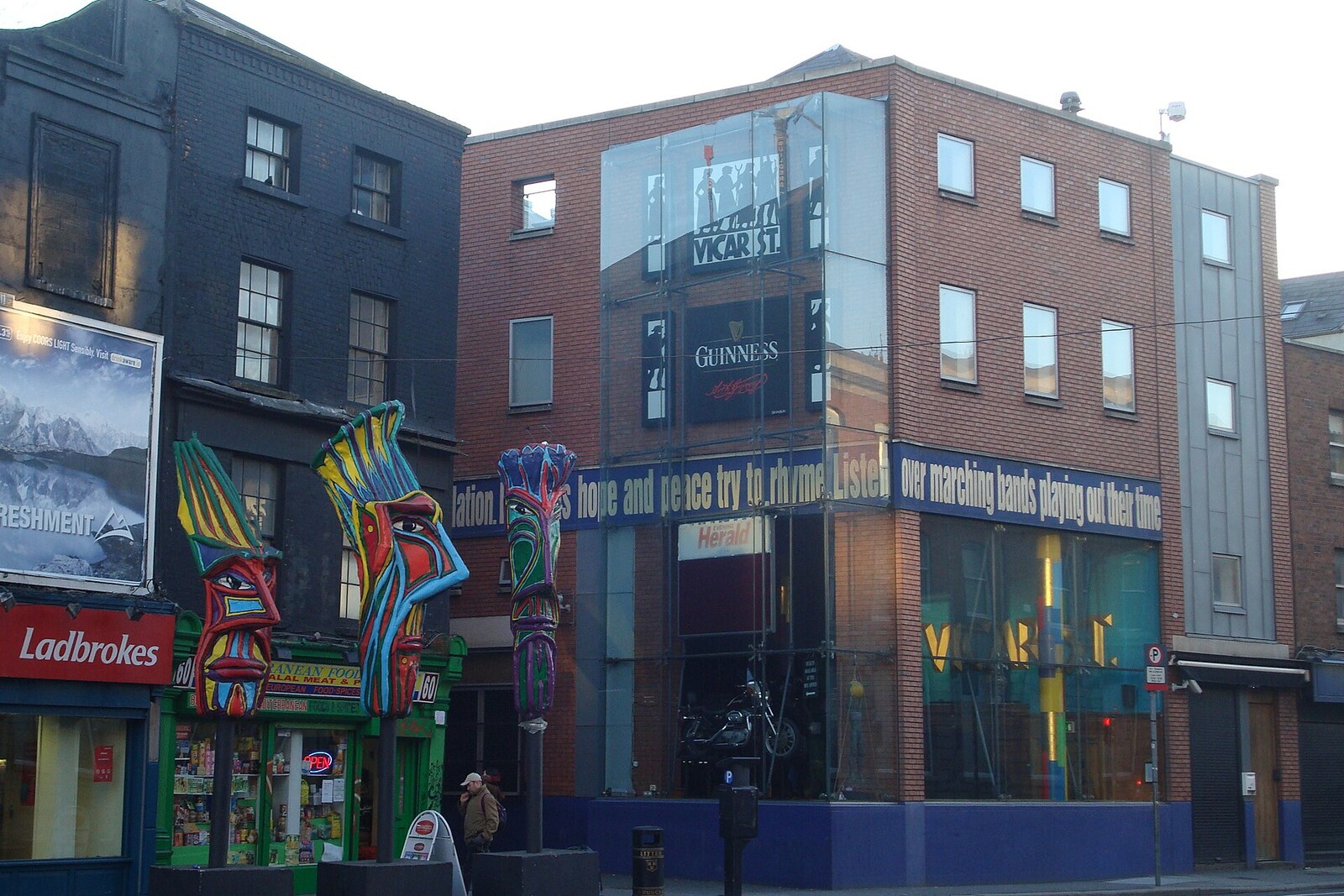
Look around first
What to notice
- The concert hall facade
- The “Vicar Street” sign
- The converted warehouse building
The story of the place
The hall got its name from a narrow neighboring street that existed here long before the neighborhood's concert life. Behind the facade of the former warehouse building is a space with flexible seating: chairs and tables are removed for dancing, and the room can also function as a television studio. After the expansion, it holds a little more than one thousand seated spectators, and the program brings together music, comedy, and theater.
Irish folk singer Christy Moore was looking in Dublin for a small venue for regular concerts. He planned to perform every evening for a whole month, then return once a week. Developer Harry Crosbie undertook to build such a venue for him on Thomas Street.
The location was considered risky: concert audiences preferred going to the city center, while on this side of the city Crosbie could have put up warehouses more profitably. On paper, the project, costing three and a half million Irish pounds, paid for itself only because of tax breaks. But Crosbie had watched concerts for years and decided that audiences wanted, above all, to be close to the stage. A seven-hundred-sixty-seat hall was created in a converted warehouse building: originally, even the most distant spectator was about thirteen and a half meters from the performer. The tables and chairs could be removed, turning the space into a dance hall or a television studio.
Just before the opening, Moore withdrew from the month-long run of concerts. The venue lost the artist it had been built for. Then concert promoter Peter Aiken inspected the new hall with Crosbie and agreed, right on the sidewalk by the entrance, to run it. The first months were difficult: competitors called the venue a cabaret club, and Aiken had to assemble a program without the promised regular performer.
The breakthrough was brought about by comedians John Kenny and Pat Shortt of the duo D'Unbelievables. In nineteen ninety-nine, they performed here six nights a week for eight weeks. The long run brought the press and a new audience; other artists began booking the hall after them. For Aiken, this proved that people were willing to come here specifically, and comedy took up as much space in the program as music.
Christy Moore did return to the stage intended for him. Recordings of his performances here were released in two thousand two as a separate live album bearing the venue's name.
“Vicar Street” is neither the owner's surname nor a stage name. Crosbie named the hall after a narrow side street that had borne this name long before the construction. After the expansion in two thousand two, it holds one thousand fifty seated spectators or one thousand five hundred standing. Concerts, stand-up, and theatrical performances still take place here—a program Aiken had to assemble after the first artist withdrew.
Useful on site
The venue operates according to its event schedule. Officially: 1050 seated / 1500 standing, opened in 1998 and expanded in 2002; check door-opening times and tickets for the specific show.
Checked: June 26, 2026. Check the official source before visiting.Without an event, Vicar Street primarily serves as an outdoor stop on the route. Do not expect to see the hall during the day; a separate ticket is needed for a concert or comedy night.