 Guide On Map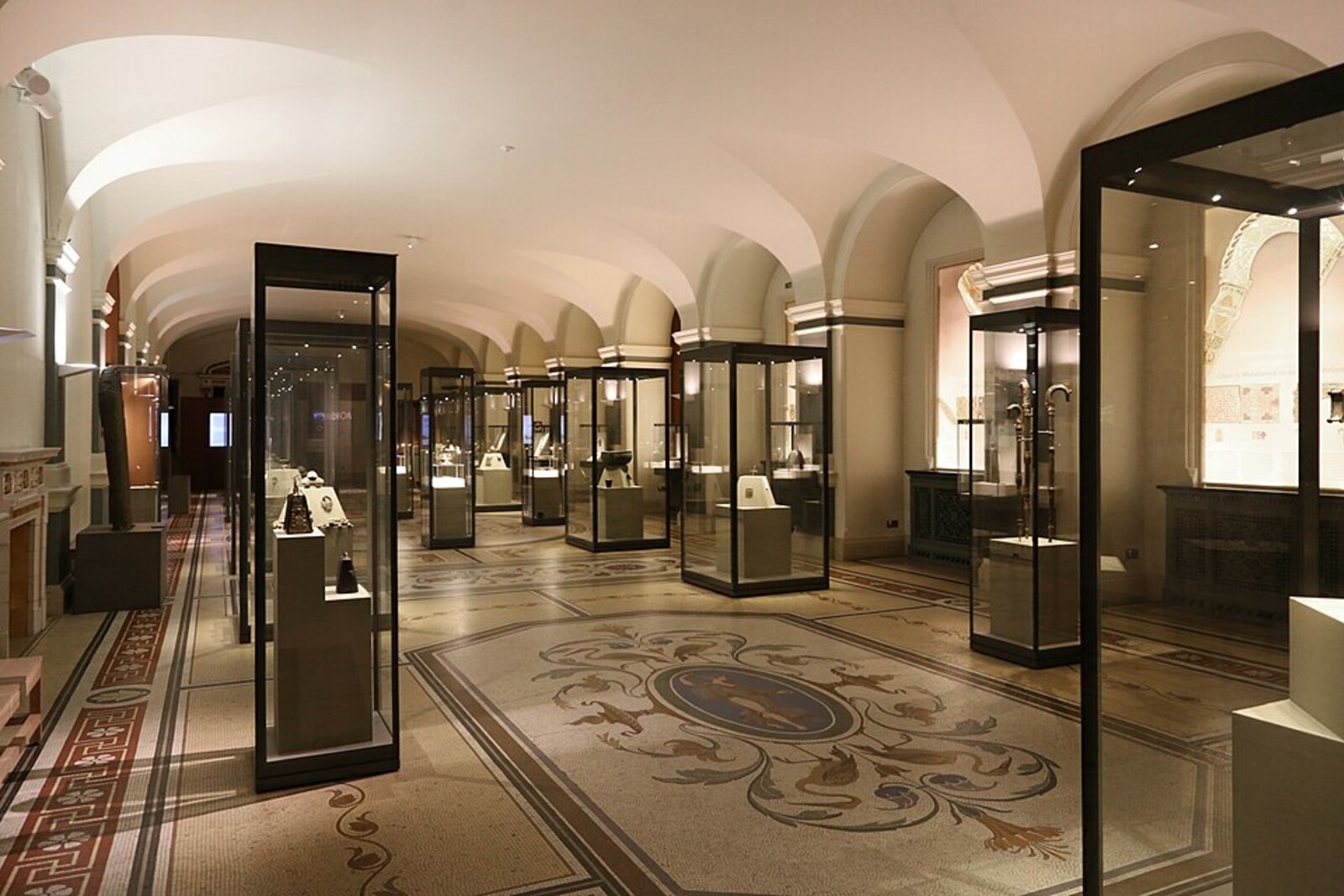
Look around first
What to notice
- The museum’s name on the façade
- The central rotunda
- The Tara Brooch
- The Ardagh Chalice
The story of the place
The word “National” appeared in this museum’s name even before Ireland’s independence. George Noble Plunkett, its director and an art historian, pressed for it because he wanted to give Irish antiquities the institution’s finest rooms.
The building opened in eighteen ninety as the Dublin Museum of Science and Art. Collections from the Royal Dublin Society, the Royal Irish Academy, and Trinity College Dublin were brought here: minerals, works by contemporary craftspeople, items from Captain Cook’s voyages, coins, and archaeological finds. Casts of Greek and Roman statues stood in the central rotunda, while Irish antiquities were displayed on the floor above. The museum was intended to teach crafts and industrial design; Ireland’s own past was only one part of that program.
Plunkett took charge of the museum in nineteen oh seven. He secured a new arrangement of the exhibits, brought Celtic antiquities to the forefront, and the following year oversaw a renaming: the Dublin Museum of Science and Art became the National Museum of Science and Art. In an official report, Plunkett explained the choice by saying that this was the museum of all Ireland and the repository of its Celtic antiquities.
For Plunkett, the word was also connected with a personal choice. In the spring of nineteen sixteen, his son Joseph, one of the organizers of the Easter Rising, who was seeking an independent Irish Republic, admitted his father to the secret Irish Republican Brotherhood. The museum director agreed to seek German assistance and the Pope’s support for the planned uprising.
After the uprising’s defeat, Joseph was executed by firing squad. Plunkett was dismissed from the museum and, together with his wife, exiled to Oxford. Losing the director’s post had very material consequences: as early as July and August, he wrote to the secretary of the Museums Association, asking for help in finding a new position. He never returned to the museum; afterward, the institution was run for nearly two decades by temporarily appointed directors. Plunkett himself returned to Ireland clandestinely, won the election of nineteen seventeen, and later became minister for foreign affairs and minister for fine arts.
In nineteen twenty-one, the name was shortened to the National Museum of Ireland. The branch on Kildare Street still holds the Irish archaeological finds for which Plunkett sought first place: the Tara Brooch, the Ardagh Chalice, and prehistoric gold. His director’s office has long since gone; the word “National,” introduced under him, remains on the façade.
Useful on site
National Museum of Ireland - Archaeology: Tue-Sat 10:00-17:00; Sun/Mon 13:00-17:00; free admission. Recommended last entry 16:30.
Opening hours by day
All the key details of the story are in the exhibition; seeing them requires a separate museum visit. Do not try to cover every room: choose the named objects and leave time to look closely.