 Guide On Map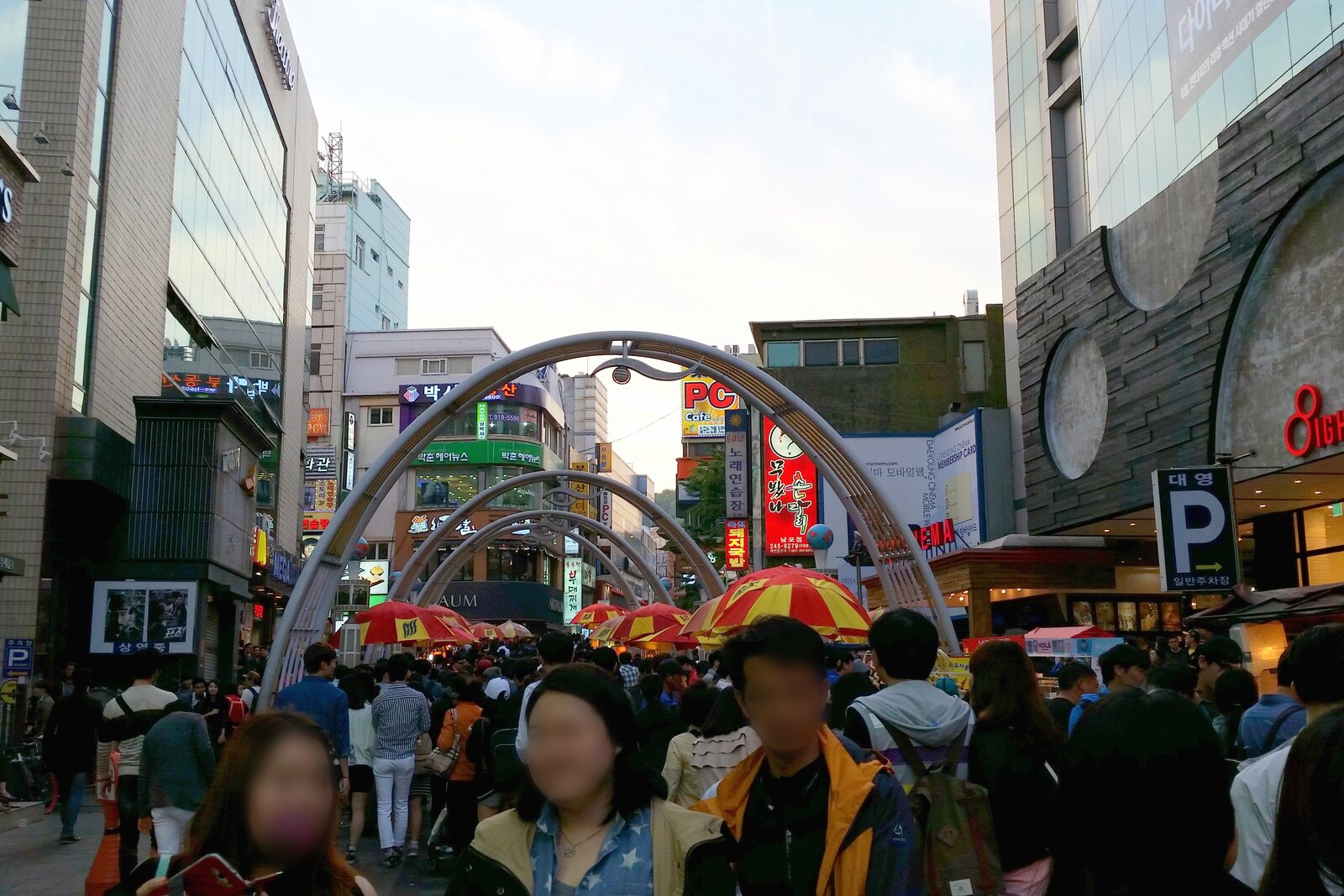
Look around first
What to notice
- Handprints
- Cinema facades
- The name “BIFF Square”
- Street market stalls
The story of the place
BIFF Square is the street between former commercial cinemas. In nineteen ninety-four, the Busan film critic Kim Ji-seok was trying to raise money for an international film festival. Together with the film instructor Jeon Yang-jun and the film critic Lee Yong-kwan, he wanted to show Korean audiences films that almost never reached regular distribution, and to give Asian directors a chance to meet foreign colleagues and distributors. All three made their living from teaching and criticism; they had no experience of running a large festival. They did not find the money then.
A year later, the managers of Paradise Hotel Busan proposed returning to the idea. It soon became clear that the sides imagined different events. The hotel owners expected an awards ceremony like that of the American film academy, while the organizers were preparing a noncommercial festival of Asian auteur cinema without competition for a top prize. The hotel withdrew its support.
Kim Ji-seok and his companions then invited Kim Dong-ho, a former culture official and head of the Korean Motion Picture Promotion Corporation. After thirty years of government service, he had already retired; at the age of fifty-nine, he was offered the chance to begin a second career with an event that might end after its first edition. Kim agreed, secured the city's participation, and went to Cannes to invite guests. At one dinner, he brought together fifteen representatives of European and North American festivals and persuaded them to come to Busan.
The city allocated two hundred million won, although the total budget required was almost ten times that amount. Kim Dong-ho looked for the remaining funds, while his younger colleagues selected films, ordered subtitles, and rented ordinary commercial theaters. The festival had no building of its own. That was why Nampo was needed: cinemas had stood side by side here since the first half of the twentieth century, and by the nineteen sixties there were about twenty of them. For the first festival, they managed to secure five cinemas with seven screening rooms. The street between them became a shared lobby, ticket office, and meeting place.
By September nineteen ninety-six, the street had been reconfigured and named BIFF Square—after the former abbreviation of the Busan International Film Festival. The opening ceremony took place at the Suyeongman Yacht Center, but the festival's daily life began here, among Nampo's cinemas.
The organizers hoped to attract fifty thousand viewers. On the very first day of regular screenings, people filled the theaters and the street. Tables and chairs for resting were set out in front of the Daeyoung Cinema, which was under construction, but during meetings with directors and actors they had to be removed because of the pressure of the crowd. The ticketing system could not cope. Over nine days, one hundred eighty-four thousand seventy-one people attended festival screenings—more than three times the most ambitious projection. Foreign guests saw that young viewers made up the main queue, and the first international reviews of Busan spoke of an unusually young festival. The organizers had grounds to prepare a second edition.
Since nineteen ninety-eight, filmmakers have left handprints here. Later, the English spelling of the city began with the letter B rather than P, and the square became BIFF Square. Over time, the main screenings and meetings moved to Haeundae, and in two thousand eleven the festival acquired its own Busan Cinema Center. For most of the year, this street is occupied by shops and market stalls; before the festival, a stage is set up here again, and the opening evening and public screenings are held. In front of the former commercial cinemas remain the name BIFF and filmmakers' handprints—on the very street where the first festival's ticketing system could not withstand the number of viewers.
Useful on site
The open street area is accessible year-round; shop, cinema, and food hours vary by location.
Checked: June 27, 2026. Check the official source before visiting.Watch where you step, but do not linger in the middle of the flow. The street stalls and the noise are part of the place, not a hindrance to its history.