 Guide On Map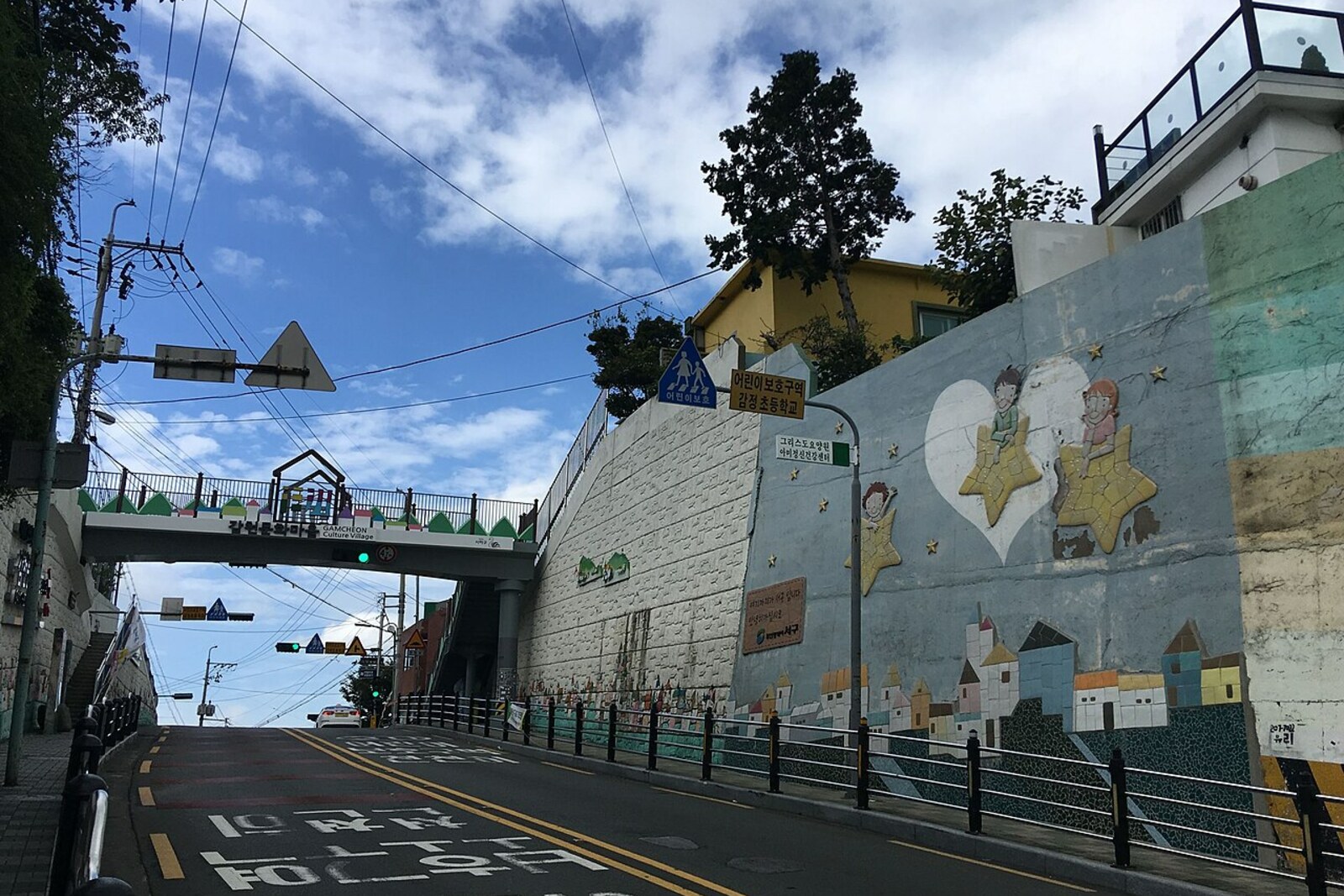
Look around first
What to notice
- The counter with maps
- Postcards and notebooks
- A map of Gamcheon's alleys
The story of the place
Behind the counter at the Gamcheon Culture Village Information Center, Gamcheon residents sell maps and postcards, tourist guides answer questions, and luggage can also be left here. There is a reason for this trade: the center was created as a village enterprise, and the money from each map was meant to return to those whose homes were marked on it.
In two thousand nine, residents and local artists won the government competition Dreaming of Machu Picchu in Busan. The funds they received were used to install the first artworks in the alleys. Visitors spread photographs of Gamcheon across the internet. In two thousand eleven, twenty-five thousand people came here, and two years later there were already more than three hundred thousand—about thirty times the village's population at the time.
For homeowners, this success was quite tangible. Strangers mistook residential alleys for exhibition halls, entered courtyards, and even climbed onto roofs for a photograph. In February two thousand ten, residents created a management council for the culture village. Its members began planning routes themselves, leading groups, and selling maps, postcards, and notebooks. The map directed people through selected alleys, and the council kept the proceeds in the village.
In two thousand thirteen, the residents registered their association as a nonprofit organization. With city support, an information center, a café, a restaurant, and workshops appeared; together they provided steady work for forty-three local residents. Within the association, they assembled a team of fourteen craftspeople. With money earned by the village, they replaced mosquito screens and wiring, plastered walls, painted houses, and repaired stairs and alleys—including for low-income neighbors.
This fund is still operating today. In February two thousand twenty-six, the association directed part of the shared income from village enterprises toward market certificates for all three thousand fourteen households in Gamcheon. Maps and postcards are still sold at the counter—the very goods from which the residents' council began raising its own money for the village.
Useful on site
Information Center: March–October 09:00–18:00, November–February 09:00–17:00; a duty tourist guide and luggage storage are advertised. Checked 2026-07-01.
Checked: July 1, 2026. Check the official source before visiting.Take a map if one is available, but consider only public places to be marked. Keep passageways and stairs clear.