 Guide On Map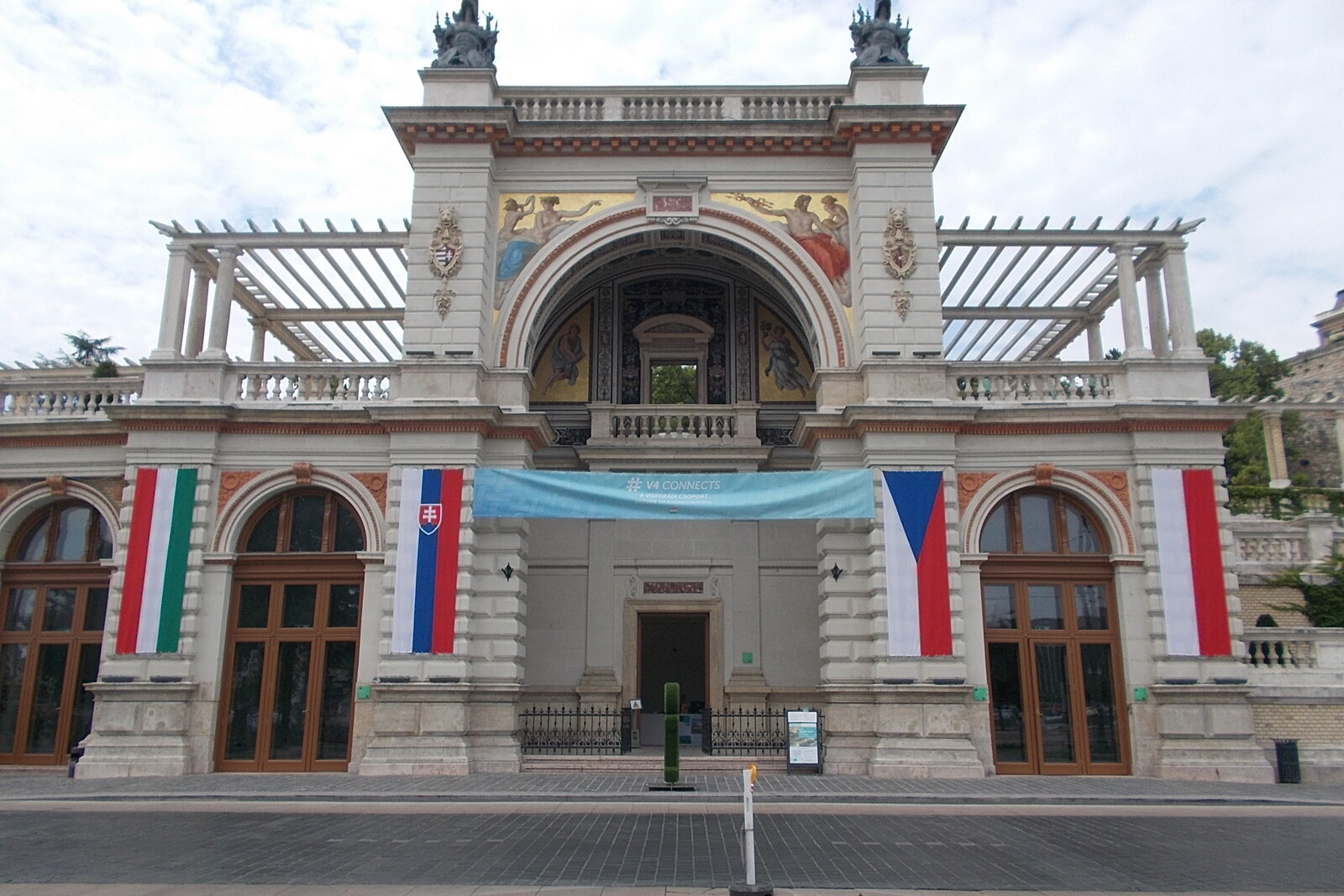
Look around first
What to notice
- The retail arcades
- The symmetrical ramps
- The restored pavilions
- The garden terraces
The story of the place
In the summer of nineteen sixty-one, László Rajnák, a former wrestler and the new director of Buda Youth Park, was given a clear task: young people could have fun here as long as they looked and behaved as the organizers required.
The park occupied the terraces behind the arcades of Várkert Bazár. The name denotes a bazaar of the Castle Garden. Architect Miklós Ybl completed this complex in eighteen eighty-three. The clients did not permit tall buildings at the foot of the hill: the Danube had to remain visible from the royal palace. Ybl hid retail premises beneath a garden terrace, with stairs and sweeping symmetrical ramps leading to the palace.
Trade failed almost immediately. There were not enough customers on the Buda bank, tenants left the shops, and within a year sculptors' workshops began to be set up in them. After the fighting of the Second World War, the damaged pavilions and the abandoned garden went to the city committee of the Hungarian Communist Youth League. Its leaders decided to gather the capital's young people here outdoors—with music, dancing, and checks of the audience at the entrance.
The rules of nineteen sixty-two required young men to wear a light-colored shirt, jacket, and tie. Girls had their skirt lengths measured. Those in linen trousers could be refused entry, and those with long hair were turned back. Rajnák personally watched the dancers, stopped performances, and dealt out slaps to those whose behavior he considered unacceptable.
He also controlled the music. In nineteen sixty-two, Rajnák chose the tidy jazz ensemble Bergendy over the young group Omega and made Bergendy the park's permanent ensemble. However, listeners demanded beat music and rock ever more insistently. The organizers began inviting the very groups they had previously tried to keep away from. Omega also took this stage. At first, young musicians were paid in beer and a sausage; later, they received one hundred or one hundred fifty forints, but performing here brought an audience of many thousands and a chance to make it onto a television broadcast. A group hoping to become known throughout Hungary had to play at Ifipark—the way young people shortened the park's official name.
Rajnák lost his post neither because of the music nor because of his slaps. In nineteen seventy-four, an investigation uncovered ticket and buffet fraud involving the leaders. Rajnák was sentenced to six years in prison.
Concerts continued without him, while the buildings deteriorated. In May nineteen eighty, during a performance by Edda, the stone railing of the entrance stairs collapsed onto young people standing in line. Five were injured. The park was closed as unsafe, then briefly reopened in a smaller area. In nineteen eighty-four, P. Mobil gave a farewell concert here called Electric Funeral.
After that, Várkert Bazár stood empty for almost thirty years. Today, exhibitions occupy the restored pavilions, a new hall is hidden below garden level, and concerts take place in the complex's courtyards. Terraces have once again been laid out where Ifipark's open-air venue stood: its stages and service buildings are no longer on the slope.
Useful on site
Officially: the Neo-Renaissance garden daily 06:00—24:00, information points daily 09:00—17:00; individual events and works may change access routes.
Checked: June 28, 2026. Check the official source before visiting.First view the whole complex from the Danube side, then approach the arcades. The accessible outdoor spaces are enough for this account; keep clear of closed areas and barriers.