 Guide On Map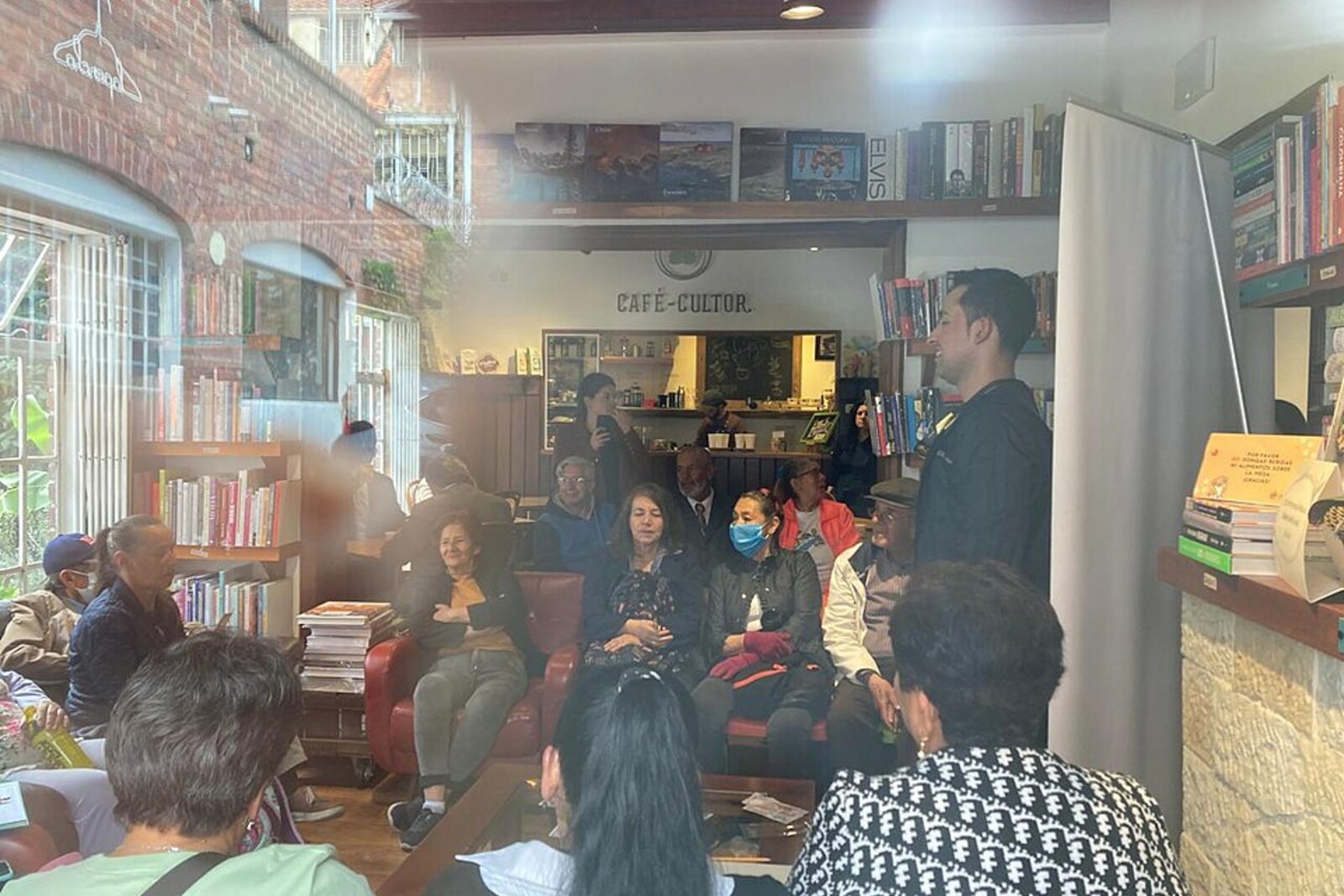
Look around first
What to notice
- Tudor façade
- Wooden details
- Bookshelves
- Opening between floors
The story of the place
The Tudor motifs of the façade and the wooden elements have been preserved from the house built in the year one thousand nine hundred forty-three. One owner possessed it for almost three decades before agreeing to give the building a new life. During the conversion, bookshelves, reading areas, a café, and a meeting room were installed here, and an opening linked the floors with the attic. Now all these spaces are occupied by books, conversations with authors, and children's activities.
Once, Yolanda Auzza stopped in front of this house and read the address again: Seventy-first Street, number ten—forty-seven. She was already preparing a bookshop here but had not yet thought of a name for it. Auzza combined the two parts of the number into the year one thousand forty-seven and began looking into what had happened then.
That is how she found Wiborada, a recluse at the Swiss Abbey of Saint Gall. According to medieval saints' lives, in the year nine hundred twenty-six Wiborada warned the abbot of an approaching Hungarian raid. The monks had time to remove the manuscripts and monastery valuables. The recluse herself refused to leave her walled-up cell: the vow she had taken bound her to that room until death. The attackers tore open the roof of the cell and killed Wiborada, while the books saved at her warning survived.
In the year one thousand forty-seven, Pope Clement II canonized her. Wiborada is considered the first woman to undergo formal papal canonization and the patron saint of librarians and booksellers. According to Auzza's account, in one of the texts she found, the name had been misspelled as “Wilborada.” She liked that form: the saint, the rescued manuscripts, and the number of the Bogotá house came together in the name.
By then, Auzza was not risking the savings of her youth. She had worked as a systems engineer for thirty years and was preparing to retire. She had carried the dream of a bookshop for more than a decade, but she herself admitted that she knew nothing about bookselling. So she first went to Buenos Aires for two months to learn the day-to-day work of a shop: purchasing, the catalog, and editorial selection.
After returning, she found this house, built in the year one thousand nine hundred forty-three. Its former owner had possessed it for about thirty years and agreed to sell after learning that Auzza intended to open a bookshop here. Architects adapted the heritage-protected building to its new use, preserving the Tudor façades and wooden details. Inside, bookshelves, reading areas, a café, a meeting room, and an opening linking the floors with the attic appeared.
In October of the year two thousand fourteen, Wilborada 1047 opened with several thousand selected titles. Books are sold here, visitors are helped to choose them, and there are readings, club meetings, conversations with authors, and children's activities. The address is still divided into ten and forty-seven; inside the house, that combination now occupies three floors and the attic.
Useful on site
Wilborada 1047: Mon–Sat 10:00–19:00, Sun 12:00–16:00, holidays closed according to the official page.
Checked: June 28, 2026. Check the official source before visiting.This is a bookshop, not a public library. Entry, the café, and events depend on its current operations; check book exchanges and meetings in advance.