 Guide On Map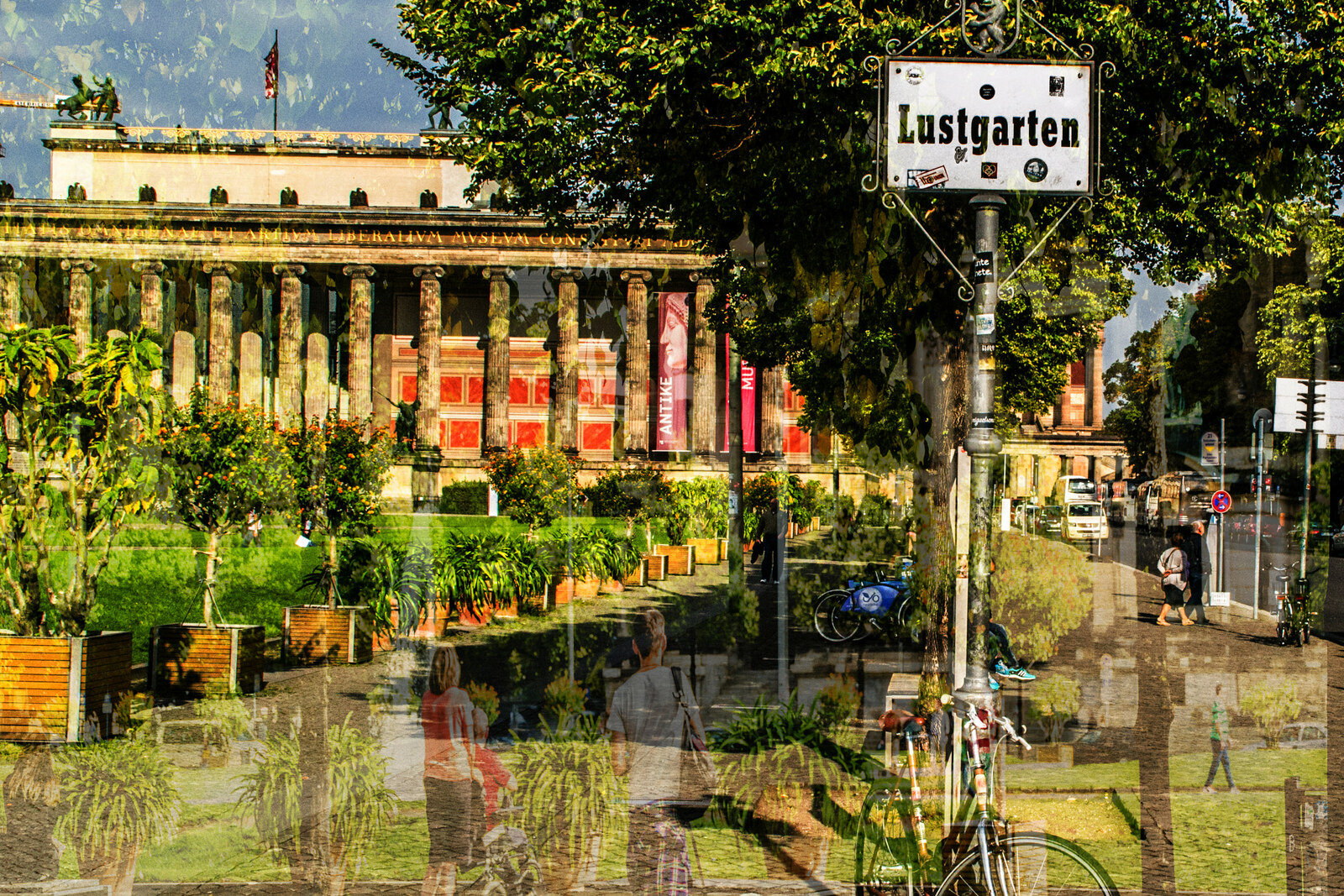
Look around first
What to notice
- The Lustgarten lawn
- The granite bowl
- The stone memorial cube
- Transparent panels with inscriptions
The story of the place
On the evening of May eighteenth, nineteen forty-two, Herbert Baum and ten of his comrades entered the exhibition pavilions in Lustgarten as ordinary visitors. Ten days earlier, Nazi propagandists had opened an exhibition here called “Soviet Paradise.” It accompanied the war against the Soviet Union and presented selected exhibits and sets as a truthful picture of life in the enemy country.
Lustgarten had already been prepared for such a spectacle. Its name means “garden for pleasure”: from the sixteenth century onward, the palace garden stood here, later opened for walks. In the mid-nineteen thirties, organizers of Nazi marches removed the plantings from the central section, moved the granite bowl, and covered the square with stone slabs. A space appeared in front of the museum steps for grandstands, gatherings of many thousands, and temporary pavilions.
Herbert Baum was a thirty-year-old electrician, a Jewish forced laborer at ELMO, and the leader of an underground group of young Berliners. They printed leaflets, held secret study sessions, and supported people threatened with deportation. Some gave one-fifth of their weekly wages to this work. Baum decided to damage the exhibition precisely here, in the city square that its organizers used for war propaganda.
The participants hid an explosive device and incendiary charges in the pavilion, then left together with the visitors. The fire was quickly extinguished. Material damage was minor, eleven people sustained light injuries, and the exhibition reopened the very next day.
Four days later, arrests began. Baum was tortured; on June eleventh, he died in prison. The exact circumstances of his death could not be established: it was declared a suicide, but a number of historical accounts link his death to the consequences of torture. Twenty-two members of the group were sentenced to death and executed; others were sent to prisons and camps, where many were killed.
The arson was also used as a pretext for reprisals against people who had not taken part in the action. At the end of May, the Gestapo and SS men arrested hundreds of Jewish men. Two hundred fifty of them were shot at Sachsenhausen concentration camp; the rest were held as hostages and sent to camps.
The exhibition pavilions and the stone-paved square are gone. In the southern part of Lustgarten, in front of the cathedral, stands a low stone cube. Transparent panels added to it state the date of the arson and the fate of the Herbert Baum Group. The word “here” on the panel refers to the square, now once again covered with grass.
Useful on site
The park is open around the clock, admission is free; individual areas may be cordoned off during city events.
Checked: June 28, 2026. Check the official source before visiting.It is best to listen from the edge of the lawn, where the surrounding buildings are visible at the same time. If the space is occupied by an event or cordoned off, do not enter the service area—the layout is easy to make out from the paths.