 Guide On Map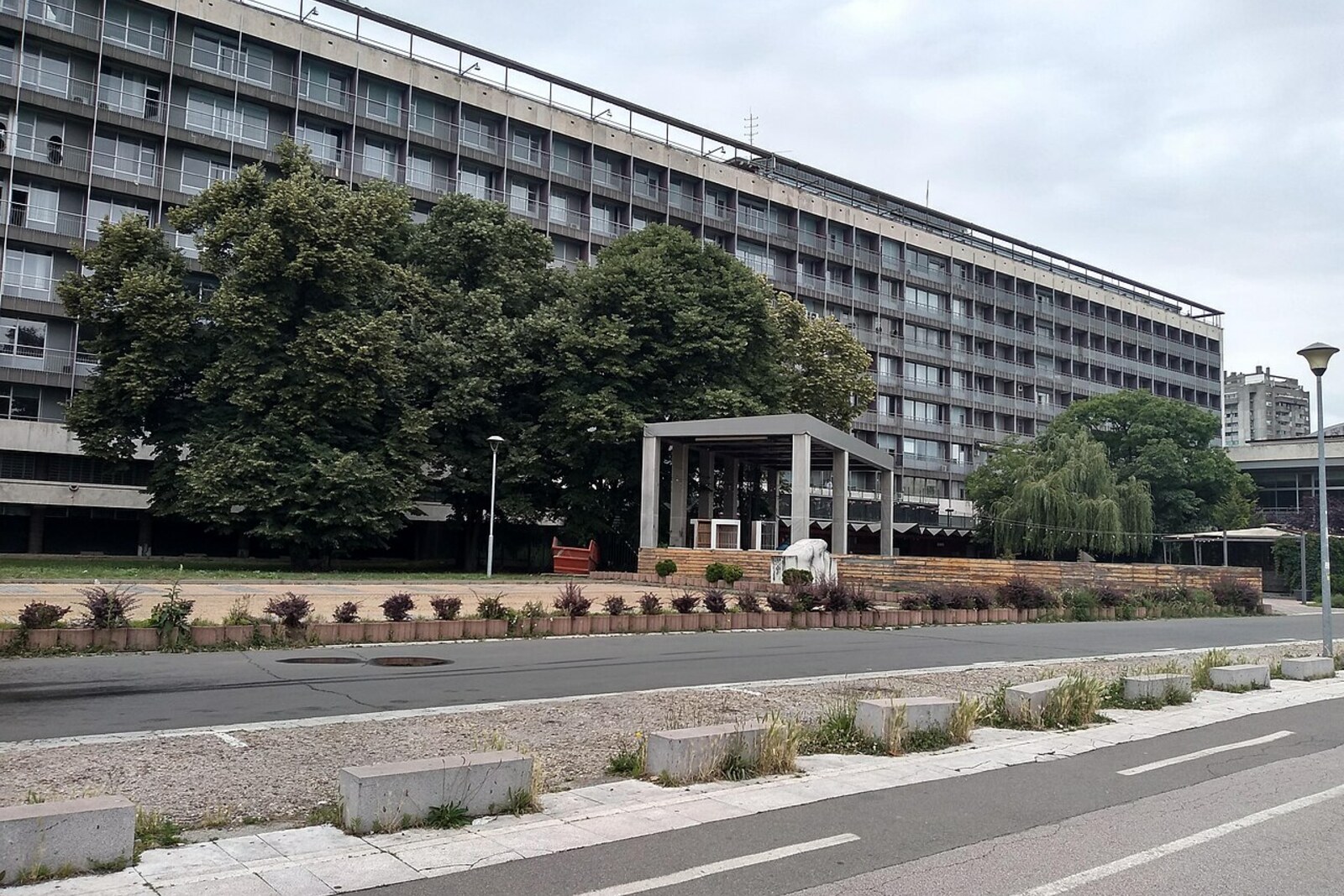
Look around first
What to notice
- Fenced site
- Line of the Danube waterfront
The story of the place
Behind the fence is the site where Hotel Yugoslavia stood until January two thousand twenty-five. Its first residents were people who were not meant to have hotel rooms.
On April eleventh, nineteen forty-eight, construction began here on a prestigious hotel with the working name Hotel Yugoslavia. The site was chosen on the Danube waterfront, beside the new government district. The following year, after Yugoslavia’s split with the Soviet Union and the economic crisis that followed, work stopped. People without housing moved into the unfinished premises. They lived here for about twelve years.
In nineteen sixty-one, Belgrade was preparing to host the first summit of countries that, during the Cold War, did not want to join either the Soviet or the Western bloc. The organizers evicted the residents of the framework so that the visiting heads of state would not see them. Sources do not say where these people went. All that is known is that immediately before the summit, they lost their shelter.
The resumption of construction is linked to a story later told by the hotel director, Veljko Simić. Haile Selassie, the Ethiopian emperor who came to the summit as one of the leaders of the new association, supposedly remarked to Yugoslav President Josip Broz Tito that Belgrade lacked a prestigious hotel for foreign guests. According to this account, Tito picked up the telephone and ordered work to continue on the old foundation. There is no documentary confirmation of this conversation: it is a hotel legend. The project itself had existed long before the emperor’s arrival, but it was indeed revived only after the summit.
In nineteen sixty-five, the Yugoslav Investment Bank issued a loan to complete the building. On July thirty-first, nineteen sixty-nine, the hotel opened under the name Hotel Yugoslavia. This was the name of the federation of six South Slavic republics, with its capital in Belgrade. The name explained the hotel’s purpose: it was meant to receive guests from across the country.
That same autumn, Neil Armstrong, Buzz Aldrin, and Michael Collins—the crew of the first human landing on the Moon—were accommodated here. Foreign leaders staying in state villas held receptions in the hotel’s halls. At the same time, the hotel also served Belgraders themselves. In nineteen seventy-one, a journalist found five weddings, a business meeting, a scholarly symposium, and preparations for a banquet for one thousand employees of a single enterprise all taking place here at once.
The building was completely demolished. The letters that formed the sign “Hotel Yugoslavia” were removed from the facade and transferred to the Museum of the City of Belgrade. On the waterfront, there remains the place where an entire building bore this name; the name itself is now kept separately from its address.
Useful on site
Site of the former hotel; access depends on construction barriers, security, and ongoing work. There is no longer any interior access to the former building.
Checked: July 1, 2026. Check the official source before visiting.View the site only from the publicly accessible waterfront. Do not go beyond the barriers, approach machinery, or seek access to the former hotel grounds.