 Guide On Map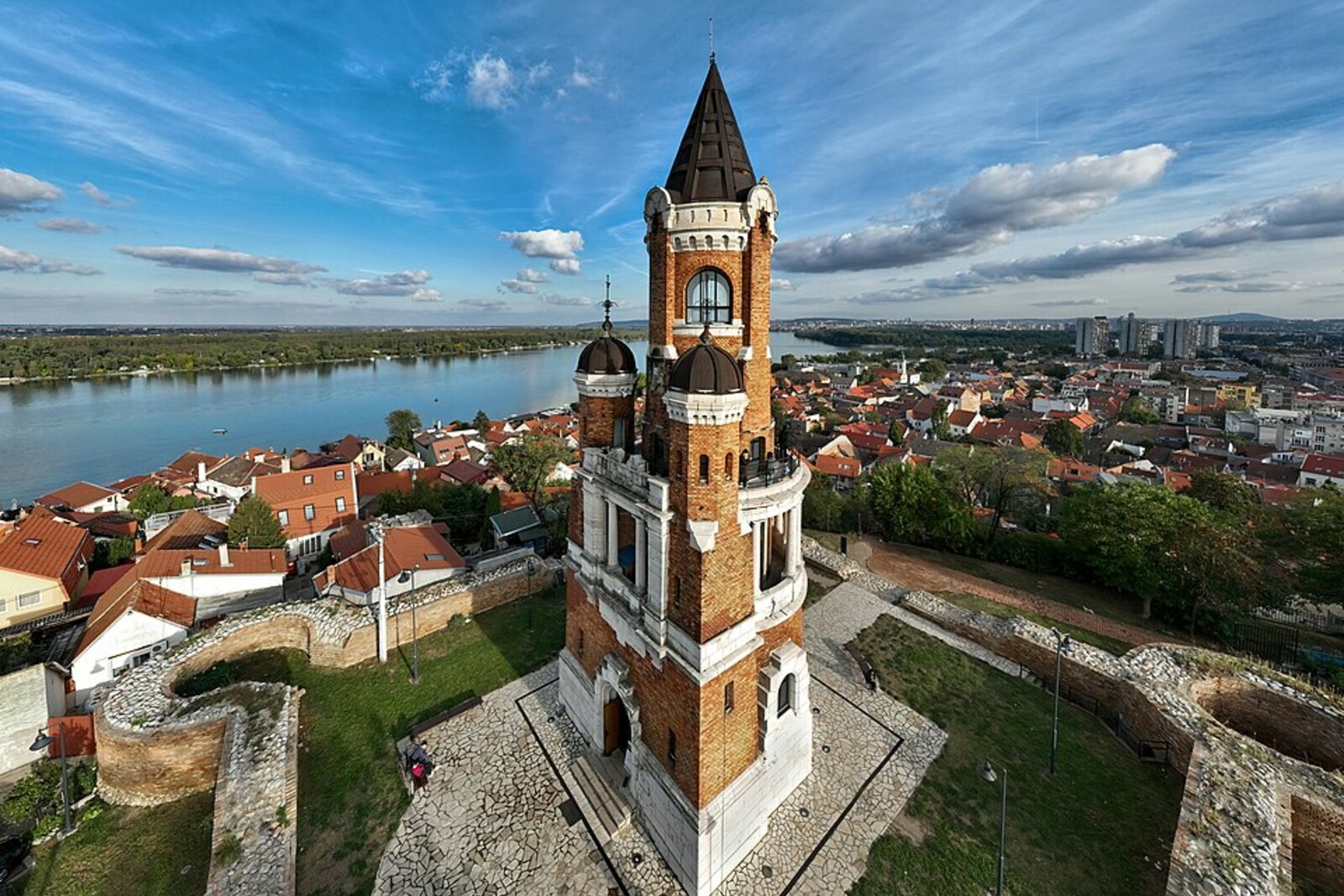
Look around first
What to notice
- Low fortress masonry
- The square outline of the citadel
- Foundations of four round towers
- The edge of the loess plateau
The story of the place
Above the Danube, at the edge of the loess hill, a quadrilateral of low stone masonry survives; the foundations of rounded towers are visible at the corners. The sides of this outline extend for approximately forty-five meters: it once enclosed a medieval citadel. From here, the garrison could watch the river, the road along the bank, and the approaches to Belgrade. The tall tower in the middle of the site appeared much later and did not belong to the old fortification.
In July fifteen twenty-one, Captain Marko Skoblić held Zemun Fortress here. The Ottoman sultan Suleiman I was advancing toward Belgrade, the main Hungarian fortress at the confluence of the Sava and the Danube. Skoblić had to block his way through Zemun and preserve the river connection with the Belgrade garrison.
Under Skoblić's command were the šajkaši. This was the name for the warriors of the border river flotilla: they served on small armed boats, transported detachments, and fought on the Sava and the Danube. Navigation and military service were their trade. During an earlier siege, aid arriving by river from the north had already saved Belgrade. Suleiman took this experience into account and ordered Zemun taken in order to seal off the siege completely.
The fortress occupied the edge of the loess plateau above the Danube. From here, the garrison watched the river, the road along the bank, and the approaches to Belgrade. Ottoman forces vastly outnumbered the defenders. After a fierce battle, they broke into Zemun; the entire garrison perished. Researchers cautiously suggest that the šajkaši made their last stand precisely on Gardoš, inside the medieval citadel.
Marko Skoblić was captured while severely wounded. A Christian chronicler of the sixteenth century reported that the warriors captured together with the captain were led to the Ottoman camp and killed before the ranks. Skoblić himself was brought before Suleiman. The captain said that he regretted only having been taken alive and refused to break his oath to the Hungarian king. According to the chronicler's account, the sultan ordered the prisoner thrown beneath an elephant's feet.
The last detail cannot be treated as a court record: it was written down by an author openly hostile to the Ottomans. The destruction of the Zemun garrison, Skoblić's death, and the fall of the fortress are confirmed by other evidence; execution by elephant remains the chronicler's version.
After Zemun was captured, the Ottoman army continued the siege from both banks. Belgrade surrendered at the end of August. The Zemun citadel remained intact for a long time: in an image from the early seventeenth century, it still had its roofs. Later, the fortifications were no longer maintained, and by the eighteenth century artists were already depicting them as ruins.
The stairs of Gardoš lead to a square outline approximately forty-five meters long. The low masonry and the foundations of four round corner towers belong to that very citadel. The tall tower in the center appeared much later; all that remained of Skoblić's fortress was the stone edge of the plateau, inside which the last defenders of Zemun most likely perished.
Useful on site
Open city hill, stairs, and scenic streets; take care after rain, in hot weather, and in icy conditions.
Checked: July 1, 2026. Check the official source before visiting.Walk without rushing and watch out for slippery steps. The Lagums are not an open route: do not look for entrances or enter closed cellars.