 Guide On Map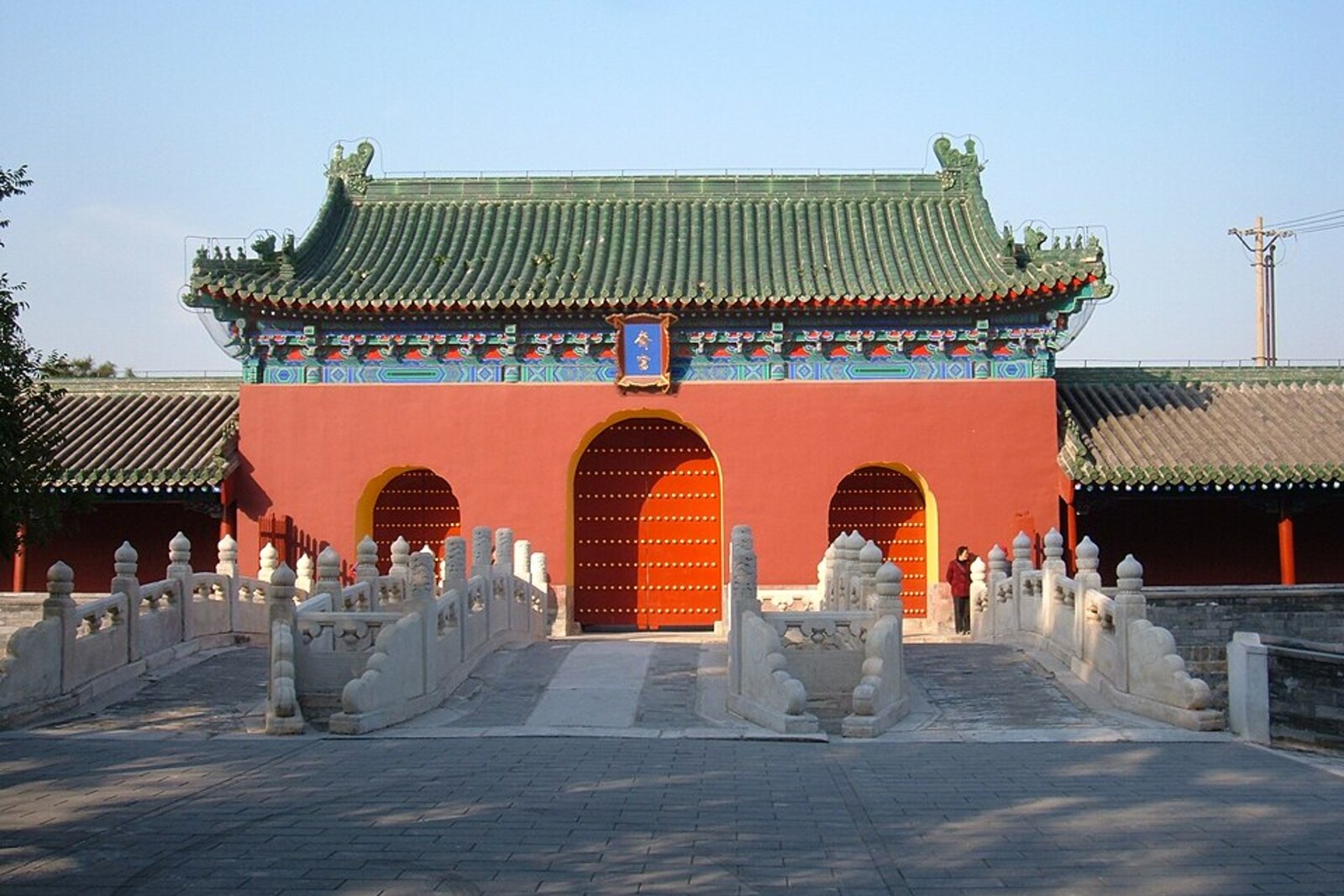
Look around first
What to notice
- Beamless Hall
- Rear Sleeping Quarters
- Enclosing Wall
- Moat
The story of the place
The Palace of Abstinence stands beside the altars, but is separated from them by its own wall and moat. Here the emperor or his appointed representative gave up ordinary palace life for three days while preparing for the sacrifice. The front Beamless Hall preserves the courtyard's early layout, while a separate five-room bedroom behind it was added later; guard quarters stood around it.
In late seventeen twenty-two, Prince Yinzhen—the fourth son of the Kangxi Emperor and one of the contenders for the throne—was urgently summoned from this courtyard. Kangxi had fallen ill and instructed his son to take his place at the winter sacrifice to Heaven. There was no designated heir at the time: the previous one had been removed, and court factions had already formed around the other sons.
Before the rite, Yinzhen was to spend three days here. Abstinence meant a strict regimen: no wine, meat or spicy food, music, funeral ceremonies, handling criminal cases, or meetings with wives and concubines. The emperor or his representative left ordinary palace life behind and prepared to answer before Heaven for the whole following year. That is why the Palace of Abstinence at the Temple of Heaven was built beside the altars, but within its own walls, with guard quarters and a moat.
Yinzhen lived in the Beamless Hall, which also served as a bedroom in the early Qing period. On the thirteenth day of the eleventh lunar month, an order arrived for him to leave immediately for the suburban Changchunyuan palace: Kangxi was dying. His father died that evening. According to the version later established by Yinzhen himself, Longkodo, commander of the capital guard, conveyed Kangxi's will to him: the throne was intended for the fourth son. Historians continue to debate the exact order in which the succession was passed on. The sequence of events is firmly known: Yinzhen was summoned during preparations for the sacrifice, and seven days later he ascended the throne as Yongzheng.
Victory did not end the struggle. Several of the new emperor's brothers lost their titles and their freedom. Longkodo, who had conveyed Kangxi's last will to Yongzheng and at first became one of his leading officials, later fell under Yongzheng's suspicion, was imprisoned, and died in confinement. The emperor himself feared leaving the Forbidden City for three nights: a palace without its sovereign could become the scene of a coup, while the remote Palace of Abstinence at the Temple of Heaven seemed insufficiently secure for an overnight stay.
In seventeen thirty-one, Yongzheng ordered another Palace of Abstinence built inside the Forbidden City. He now spent all three days of preparation there. The rite remained, but the Palace of Abstinence at the Temple of Heaven lost its occupant.
Yongzheng's son and successor, the Qianlong Emperor, wanted to restore the final night to the place prescribed by the old ceremonial order. In seventeen forty-three, he ordered this courtyard repaired and a separate five-room sleeping quarters added behind the Beamless Hall. After that, the emperor fasted in the Forbidden City for the first two days and came here on the eve of the sacrifice.
The front Beamless Hall belongs to the layout of the Palace of Abstinence from which Yinzhen was summoned to his dying father. The rear bedroom appeared only under his son. There, a Qing emperor spent only the final night; the two preceding nights were still spent within the walls of the Forbidden City.
Useful on site
Paid central areas, including the Palace of Abstinence, are usually 08:00–18:00 in the high season and 08:00–17:00 in the low season; closed on Mondays, except public holidays.
Checked: June 28, 2026. Check the official source before visiting.It is best to speak more quietly here and give yourself time after the open altar. If the interior rooms are closed, do not look for a way around it: the story can be concluded in the outer courtyard, without expecting to see the bronze figure.