 Guide On Map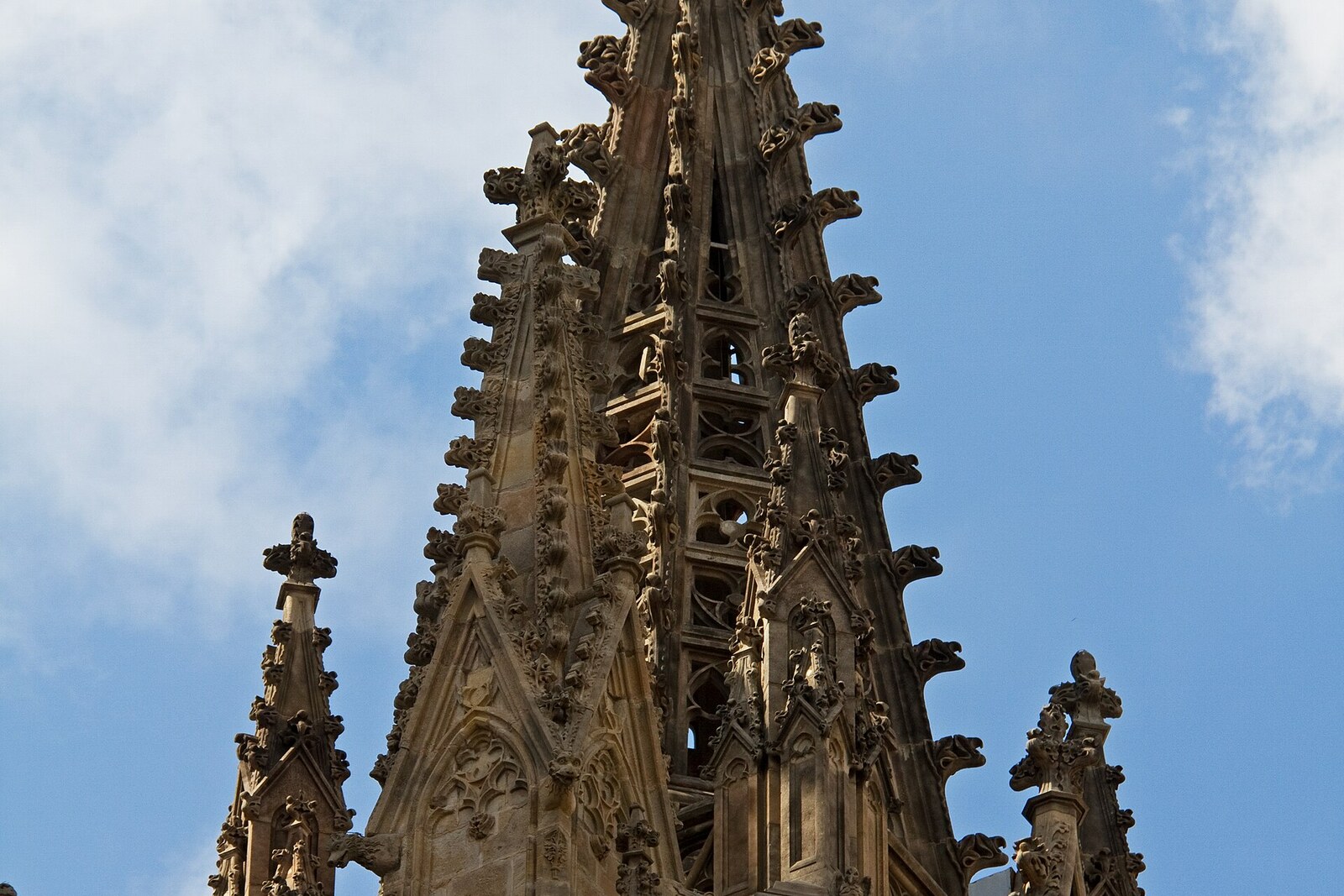
Look around first
What to notice
- The cathedral’s main façade
- The crypt beneath the main altar
- The alabaster sarcophagus
- The relief with the procession
The story of the place
The full name of this building is the Cathedral of the Holy Cross and Saint Eulalia. It is home to the see of the Archbishop of Barcelona: the Catalan name “La Seu” means the bishop’s seat. The Holy Cross is the cross on which, according to Christian belief, Christ was crucified. This dedication of Barcelona’s cathedral is recorded as early as a document from five ninety-nine. Eulalia’s name was added almost three centuries later, after a decision by Bishop Frodoi.
According to church tradition, Eulalia was a young Christian from Barcelona in the time of Emperor Diocletian. Her parents tried to keep her at home, but she went to the Roman governor Dacian, who was persecuting Christians, demanded that he stop the persecutions, and refused to renounce her faith. She was tortured and executed. Her age of thirteen and the details of her sufferings belong to tradition. Historians even dispute whether there was a separate Eulalia of Barcelona: her life is too similar to the earlier life of Eulalia of Mérida. Yet local veneration of the Barcelona martyr is documented long before the present Gothic building appeared.
Frodoi arrived here in eight sixty-one by direct appointment of Charles the Bald, King of the Franks. The new bishop sought to make the local clergy abandon the old Hispano-Visigothic liturgy and adopt the Roman, or Carolingian, rite. A royal letter alone was not enough for this. One priest is known to have administered sacraments and collected tithes while refusing to recognize the bishop; Frodoi had to bring this conflict before a church council.
The dispute also concerned very earthly matters. The bishopric’s expenses were covered by granted lands, a share of market duties, port fees, and income from minting coins. Frodoi needed to prove that his own see directed church life and its resources. Researchers link the search for the remains of a local martyr to this: it was easier to introduce the new rite in the name of a saint whom the townspeople considered their own.
Around eight seventy-eight, Frodoi organized excavations near the church of Santa Maria de les Arenes—“Saint Mary on the Sands”—which stood outside the city walls on the site of today’s Santa Maria del Mar. A stone coffin was found there. Church tradition calls the discovery miraculous; it is impossible to establish to whom the bones really belonged. The bishop declared them Eulalia’s relics and arranged a solemn transfer here, to what was then the Cathedral of the Holy Cross. Clergy and townspeople took part in the procession.
For Frodoi, this discovery became the chief confirmation of his position in Barcelona. For Eulalia, a new rise in her cult began: her name was added to the cathedral’s dedication, and her remains stayed with the see after later rebuilding. In thirteen thirty-nine, they were placed in an alabaster sarcophagus in the crypt of the present Gothic church.
The crypt lies directly beneath the main altar. Carved on the back of the sarcophagus are Frodoi’s search and the procession carrying the body to the cathedral. Behind it are preserved the old stone coffin that the bishop took from Santa Maria de les Arenes and a broken marble inscription about the discovery. So Eulalia’s name is established here not only on the sign: her supposed remains lie beneath the archbishop’s seat, where Frodoi ordered them transferred.
Useful on site
Mon–Fri 9:30–18:30 (entry until 17:45), Sat/eves of religious holidays 9:30–17:15 (entry until 16:30), Sun/religious holidays 14:00–17:00 (entry until 16:30); cultural visit 16 €.
Checked: June 28, 2026. Check the official source before visiting.This is an active church: observe silence and the dress requirements. Check access to the crypt and cloister on site.