 Guide On Map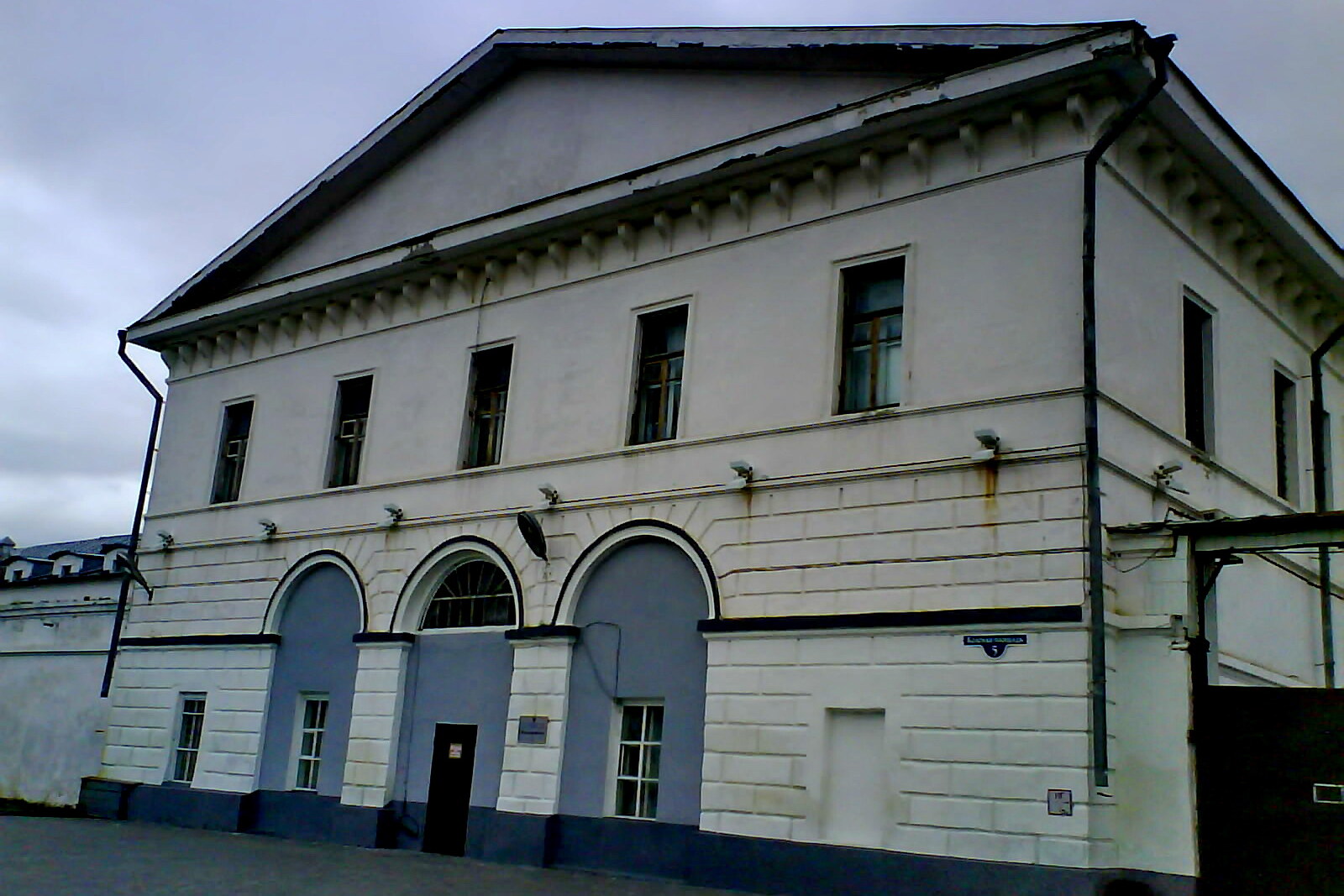
Look around first
What to notice
- Stone fence
- Prisoner blocks
- Disciplinary cells
- Exercise yards separated by walls
The story of the place
In the middle of the nineteenth century, this complex was created for defendants, penal-labor convicts, and prisoners in transit, whom Tobolsk received and sent farther east. The name “castle” here referred to an enclosed stone prison with separate blocks, a hospital, a church, and disciplinary cells. The stone fence and exercise yards separated by walls were part of its design: prisoners were kept apart. A museum is now housed in these blocks, and the enclosed space of the courtyards has survived without the gallows.
Thirteen gallows were erected in the courtyard of this complex in the spring of nineteen oh eight. Very nearby, a Holy Week service was underway in Sophia-Assumption Cathedral. Participants in the January revolt were executed in the courtyard of Tobolsk Prison Castle.
By then, the stone prison had been operating for more than half a century. It opened in eighteen fifty-five for defendants, penal-labor convicts, and prisoners in transit, who were sent farther east from here—to labor or settlement. That is why the castle was built near the main provincial offices: Tobolsk received, registered, and distributed a huge flow of exiles. The word “castle” meant an enclosed stone prison complex. Behind its wall stood separate prisoner blocks, a hospital, a church, disciplinary cells, and courtyards that did not connect with one another.
After the events of nineteen oh five, many political penal-labor convicts were brought here. They included former workers, peasants, and soldiers; some had already once received a death sentence, commuted to ten, fifteen, or twenty years of penal labor. They hoped to retain at least the concessions won by earlier prisoners and refused to comply with demands by prison officials that they considered humiliating.
Ivan Mogilev, the new head of the first penal-labor prison, sought strict obedience. His predecessor, Andrei Bogoyavlensky, had been killed in the summer of nineteen oh seven, and Mogilev understood his own risk well. He required prisoners to greet guards in military fashion, tightened the rules, and punished disobedience with disciplinary confinement. The prisoners responded with obstruction and passed information about prison conditions to newspapers and deputies.
Much was written in particular about the “hot” disciplinary cell. It was described as a room where people were deliberately driven to exhaustion by heat. Inspectors found a cell next to a stove: in winter it really did become hotter than the neighboring cells, but it had ventilation. Officials found Mogilev’s actions lawful and kept him in office. For the prisoners, this meant that publications had failed to secure his dismissal.
On January eighth, nineteen oh eight, the accumulated conflict turned into a revolt. Two prisoners and a senior guard died in the clash. A military court sentenced one-third of the participants to death by hanging. Thirteen people were executed here during Holy Week.
The consequences did not end there. On April twentieth, nineteen oh nine, the administratively exiled Socialist Revolutionary Nikolai Shishmarev, seeking retribution against the prison governor, shot Mogilev on a Tobolsk street. A proclamation was left nearby, linking the killing to Mogilev’s treatment of the penal-labor convicts. Shishmarev was sentenced to death, but he took his own life before the execution.
The prison closed in nineteen eighty-nine. The disciplinary cells and the exercise yards separated by walls became the first museum displays. There are no gallows in the courtyard; the blocks, cells, and enclosed space in which the January revolt took place have survived.
Useful on site
Tuesday–Sunday 10:00–19:00, closed Monday; combined ticket 350 rubles, ticket office until 18:30.
Checked: June 24, 2026. Check the official source before visiting.The account contains difficult episodes involving penal labor, illness, and deprivation of freedom. To enter the museum complex, follow its current rules and do not count on free admission.