 Guide On Map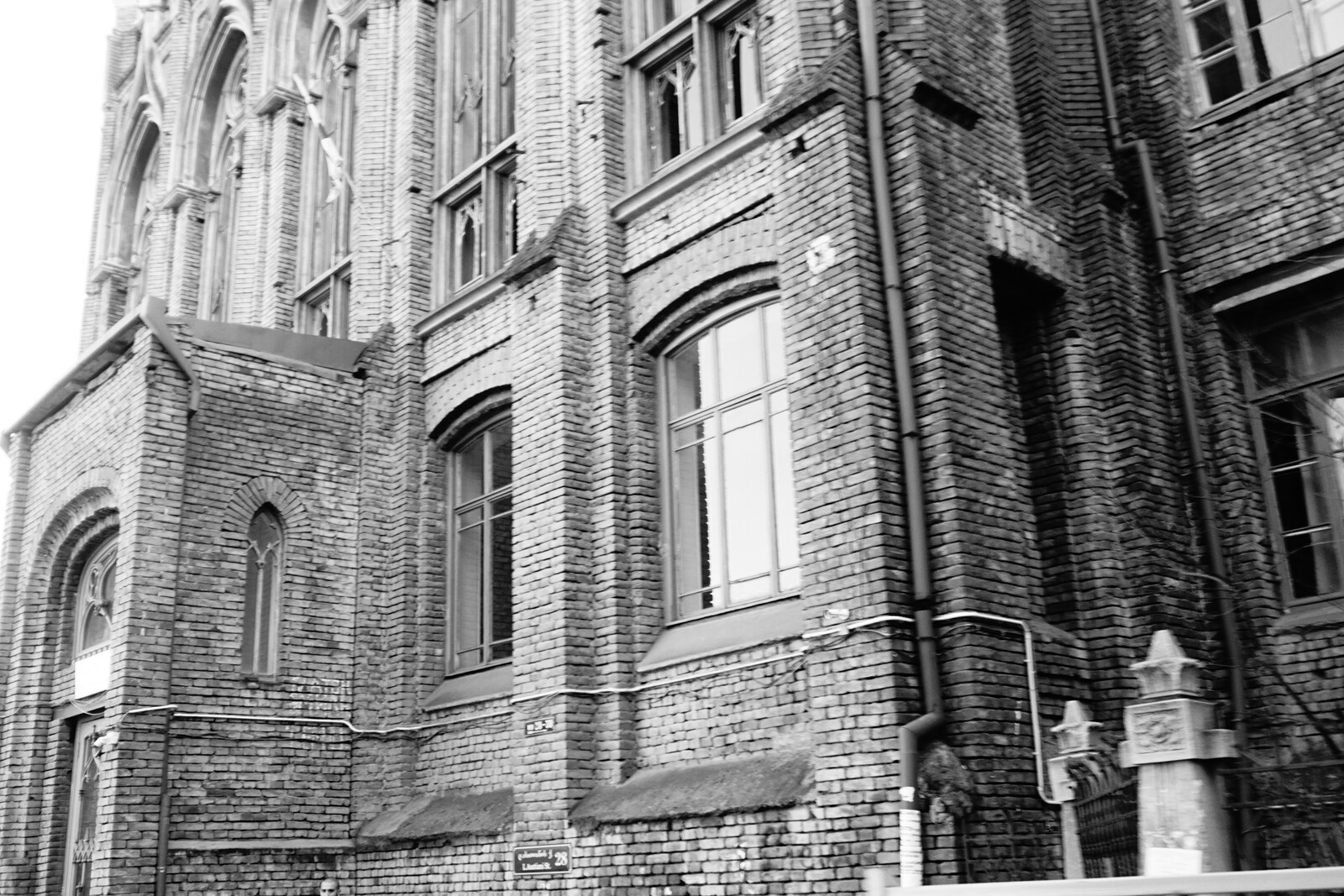
Look around first
What to notice
- Red-brick facade
- Pseudo-Gothic details
- School entrance
The story of the place
Lessons are still held behind this pseudo-Gothic facade. The school itself is almost twenty-five years older than the building: Madame Serpine opened a private girls' school in eighteen eighty-one and gradually developed it into a full gymnasium course.
The school had no building of its own. Its pupils and boarders moved from one rented mansion to another. In eighteen eighty-eight, the institution became a seven-grade girls' gymnasium, and six years later it received an official state number—Third Tiflis Women's Gymnasium. By the end of the century, the boarding school occupied the middle and upper floors of someone else's building. The gymnasium paid for a major extension there, although the agreement allowed it to use the premises only until nineteen oh six.
The board of trustees, the people responsible for the gymnasium's finances and operations, decided to stop investing in someone else's property. In nineteen hundred, the board began seeking a loan for a building of its own. Two years later, the gymnasium was granted one hundred thousand rubles. That was not enough. The board then requested another one hundred fifty thousand and offered the bank the plot together with the future school as collateral. If the calculation had not added up, the lender would have received precisely what the money had been borrowed for.
The plot stood on Bebutovskaya Street, as today's Lado Asatiani Street was then called. The foundation was laid here in April nineteen oh three, and the new building opened in January nineteen oh five.
In city stories, the role of the person who paid for the entire construction is often given to Maxim Ananov (Hovnanyan), a winemaker and industrialist of Armenian origin. His real surname was Hovnanyan. He lived on the income from Imeretian vineyards and factories producing wine, brandy, and sparkling wine; such a benefactor really could afford a large school. That is why the gymnasium was called the Ananov Gymnasium.
But the surviving construction papers show a more complicated arrangement: the board of trustees received the loans, while the school land and building served as collateral. The exact extent of Ananov's contribution has not yet been established. The story of him as the sole payer remains an urban tradition, whereas the debt and proposed collateral are recorded in the documents.
The Third Women's Gymnasium was abolished in nineteen twenty-one. The plot its trustees had been ready to risk for a building of its own did not change its purpose: the private Sixth Author's School operates at twenty-eight Lado Asatiani Street, and the original red-brick facade has survived almost entirely intact.
Useful on site
City route point; access to private entrances, museums, and courtyards varies, so check the rules on site and do not enter residential spaces without an invitation.
Checked: date not specified. Check the official source before visiting.This is an operating school, so limit yourself to viewing it from outside and do not try to enter to see the former prayer room or the place where the organ stood.