 Guide On Map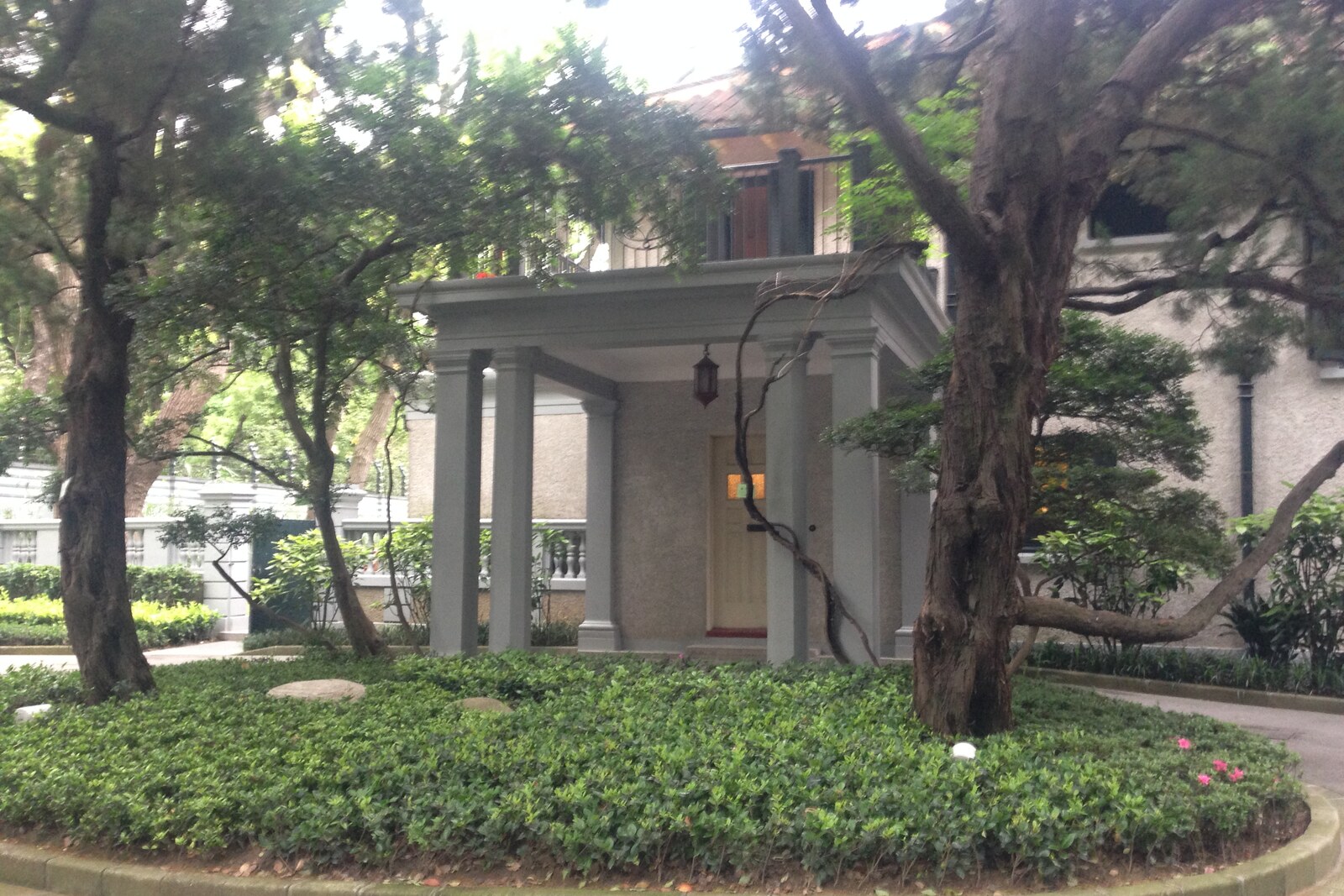
Look around first
What to notice
- White facade
- Red-tiled roof
- Copies of two handwritten letters
The story of the place
The white house with its red-tiled roof was never the family home of Soong Ching-ling and Sun Yat-sen. The widow of the founder of the Republic of China moved here twenty-four years after her husband's death—in the spring of nineteen forty-nine.
The villa was built for a foreign shipowner, then resold several times and turned into a government guesthouse. In January nineteen forty-nine, Chiang Kai-shek, head of the Kuomintang government and the husband of Soong Ching-ling's younger sister, ordered that she be offered several houses that had passed to the state. She chose this one. On March twenty-second, the villa and its plot were officially transferred to Soong Ching-ling, and she moved in soon afterward.
At the same time, Mao Zedong and Zhou Enlai, leaders of the Chinese communists, were inviting her north, where an assembly was being prepared to establish a new state. They did not need an honored guest. Soong Ching-ling had been Sun Yat-sen's political ally and, after his death, publicly spoke out against Chiang Kai-shek, accusing him of departing from her husband's program. Her participation linked the republic being prepared with Sun Yat-sen's unfinished cause.
In January, Soong Ching-ling refused to go. She decided to stay in Shanghai and wait here for the outcome of the civil war. Her hypertension and severe hives had also worsened: work made her dizzy, and the medicine left her sluggish. A journey lasting several days would have been a physical ordeal for her. There was a family choice as well: the government leaving the mainland was headed by her sister's husband.
After Shanghai came under communist control, Zhou Enlai sent his wife and fellow activist Deng Yingchao here. Deng Yingchao was tasked with obtaining Soong Ching-ling's personal consent. On June twenty-eighth, Deng Yingchao brought two handwritten letters by Mao Zedong and Zhou Enlai to this house. Both asked Soong Ching-ling to come and take part in forming the new government.
She read the letters but gave no immediate answer. Deng Yingchao stayed in Shanghai, met with her several more times, and accompanied the ailing Soong Ching-ling to public events. By July fifth, she was already able to report to Beijing: consent had been obtained. A separate sleeping car, along with a dining car and security, was prepared for her. On August twenty-sixth, Soong Ching-ling left this house for the railway station.
In Beijing, she took part in the first session of the Chinese People's Political Consultative Conference—an assembly that elected the central government—and became one of its six deputy chairpersons. On October first, Soong Ching-ling stood on the Tiananmen rostrum during the proclamation of the People's Republic of China. She returned here on October seventeenth. After that, the villa served both as her Shanghai home and as a venue for state receptions.
Soong Ching-ling placed both letters brought by Deng Yingchao in the document cabinet here. They were found only after her death and transferred to the Central Archives in nineteen eighty-two. Copies are now displayed in the museum exhibition; the originals left the house by the same route through which they had once entered—as state papers in private hands.
Useful on site
Tue–Sun 09:00–17:00, entry until 16:30; closed Mon. Regular adult ticket — 20 yuan; purchase through the official channel, capacity controls may apply.
Checked: June 28, 2026. Check the official source before visiting.Check the entry conditions for the memorial section separately; even without visiting, do not try to view the interior through staff passageways and closed sections of the garden.