 Guide On Map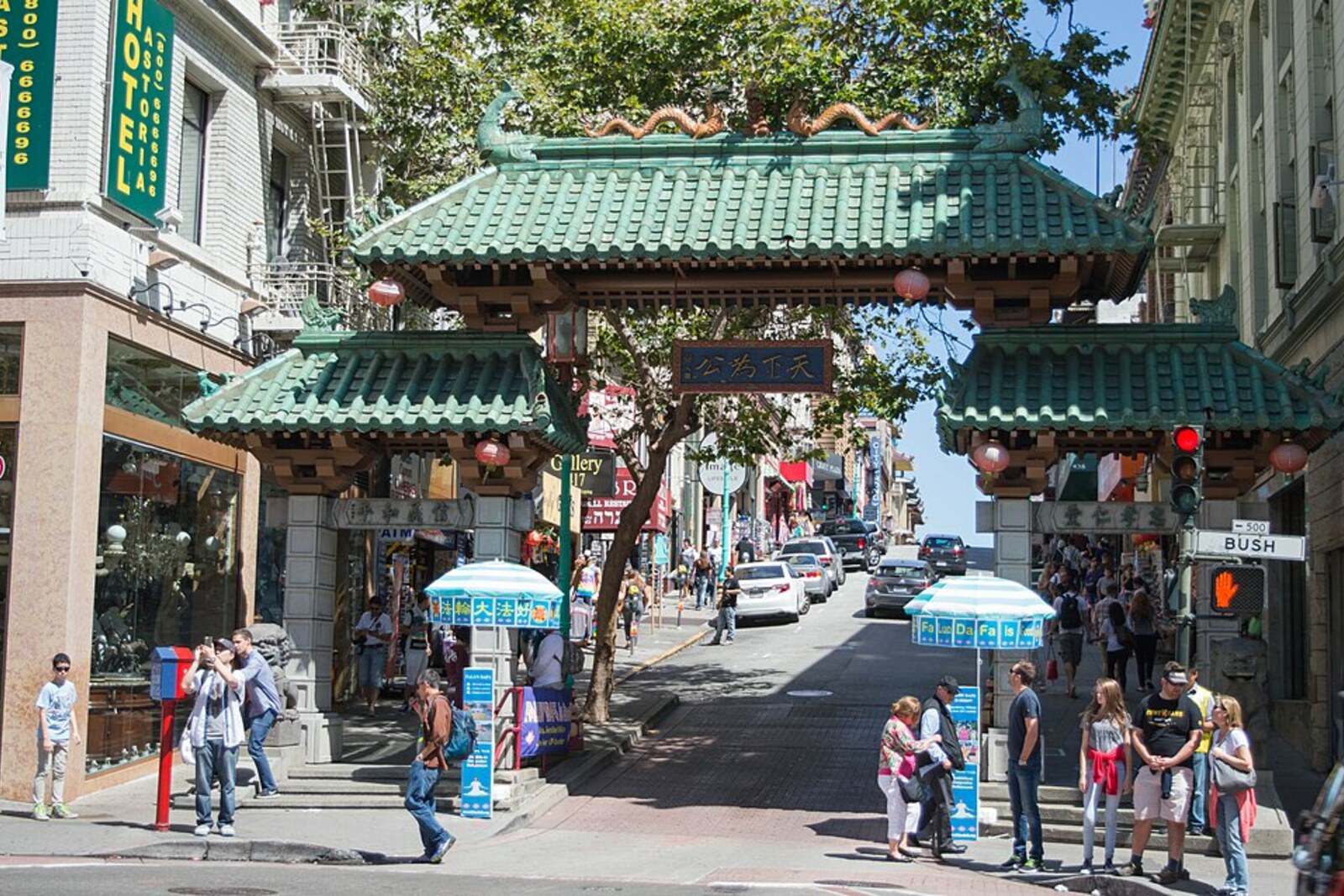
Look around first
What to notice
- Three openings in the gate
- Green roof tiles
- Stone lions
- Pagoda turrets on the corner buildings
The story of the place
A green roof runs above the three openings of Dragon Gate, but the street passes straight through them: behind the arches, Chinatown's commercial facades remain visible. The gate serves as a ceremonial entrance to the neighborhood and is designed not to hide its street. Fish and dragons run along the roof ridges, giving the gate its name, while stone lions stand beside the passageways. The tiles and lions were sent from Taiwan; farther on, pagoda turrets rise above the corners of ordinary four-story buildings.
In April nineteen oh six, a fire destroyed the Chinese quarter. North of Bush Street, what is now Grant Avenue was then called Dupont Street. In its place remained burned-out lots beside the business district—too valuable, in the city leaders' view, to return to the former residents and merchants. A special committee proposed moving Chinatown to the muddy outskirts by the bay.
Chinese associations began signing new lease agreements and clearing the lots again without waiting for permission. The consulate announced that it would return to its former location. Merchants reminded the city of taxes and trade with China, and also warned that their businesses could move to Oakland or Seattle. San Francisco risked losing the income for which it had cleared the land. The relocation project was postponed, and the Chinese quarter was allowed to be rebuilt here.
For the merchant Look Tin Eli, simply returning was not enough. He managed the Sing Chong market and made his living from trade in imported goods; the fire had deprived him of his store, and moving the quarter would have deprived him of regular customers and business connections. Look secured large loans from partners in Hong Kong and Canton and hired two American designers who had never been to China. He asked them to make the new Sing Chong so that Western audiences would immediately recognize China in it.
At the corner of Grant Avenue and California Street, they built an ordinary four-story commercial building, but added pagoda turrets, upturned eaves, and red-and-green decor. The pagodas here supported nothing and did not indicate a temple: they were meant to bring in customers. Across the street, Sing Fat appeared, decorated in the same way. Other owners followed Look's example. By the end of nineteen oh eight, at least one hundred seventy-five buildings had been rebuilt in Chinatown; the neighborhood kept its original location, and Grant Avenue became its street for visitors. Both corner buildings with pagodas still stand.
Dragon Gate cemented this role much later. In nineteen fifty-six, the Chinatown Improvement Committee conceived a ceremonial entrance to increase the flow of visitors to the shops. Eleven years later, a Chinese American team led by architect Clayton Lee won the competition: three openings left the street and commercial facades visible right through them. Ceramic roof tiles and stone lions were sent from Taiwan; fish and dragons appeared along the roof ridges, giving the gate its name. After it opened in nineteen seventy, people really did start coming here to have their pictures taken. The gate's green roofs and the pagodas of Sing Fat and Sing Chong in the next block mark two stages of one commercial route laid out here by people.
Useful on site
The gate can be viewed from the street and does not require separate admission. Watch traffic at the intersection and choose a place to listen without blocking the way.