 Guide On Map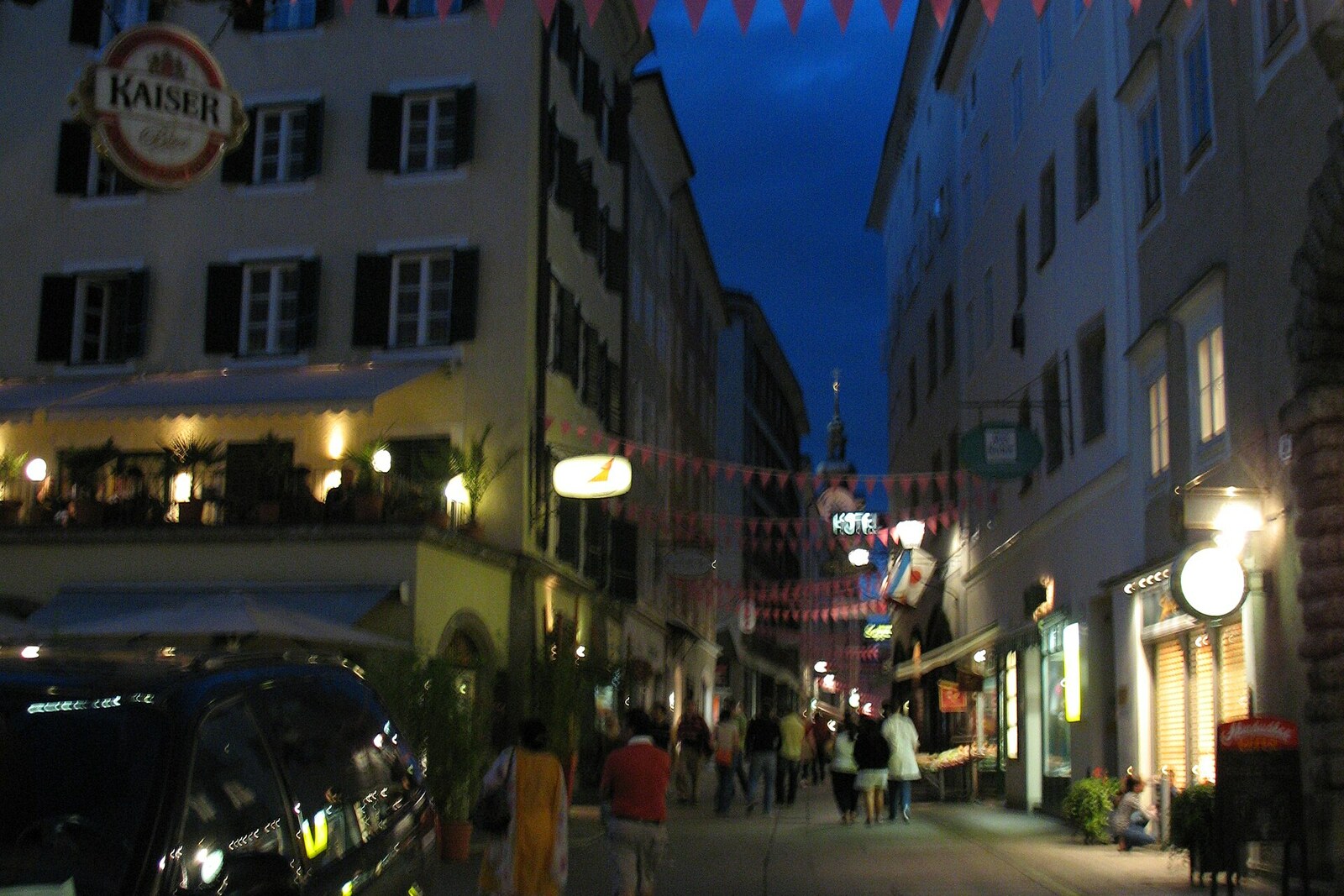
Look around first
What to notice
- House number 5
- The house number on the façade
- The ground-floor display window
- The upper residential floors
The story of the place
The name Linzer Gasse served as a road sign. Through the Linz Gate, which stood at the end of the street, people leaving Salzburg traveled east, toward Linz and Vienna. The flow of travelers supported the local workshops, shops, and inns. Many houses combined a commercial space on the ground floor with living quarters and storage on the upper floors.
In March eighteen ninety-two, a house like this at number five was bought by the married couple Rudolf Fürst and Elise Fürst. They traded wholesale in haberdashery, knitwear, and sewing supplies, and lived here with their four children. In December, Rudolf died—he was forty years old. Elise had to keep the business going to support the family. She ran it for almost three decades, and then the shop passed to her eldest son, Arthur.
During the global economic crisis, the firm came close to bankruptcy. Arthur reached an agreement with the creditors, and his wife Irene opened a retail business selling leather goods, perfumes, and souvenirs on the ground floor. They kept both the shop and the house. Above the display window, the founder's name still stood: “Rudolf Fürst.”
On the night of November ninth to tenth, nineteen thirty-eight, a pogrom against Jews began in Salzburg. A tenant of house number eight fired a rifle across the street at the Fürst house. The bullet pierced the display window, and the goods were looted. In an archival photograph, you can see the bullet hole, the raised protective shutter, and the family name above the shop.
In the morning, the Gestapo arrested Arthur. He was sent to Dachau concentration camp. Jewish prisoners were released only after agreeing to immediate departure and “Aryanization”—the term the Nazis used for the forced transfer of Jewish property to a new owner. On December twentieth, Arthur returned from the camp, and already on December twenty-fourth, he, Irene, and their two daughters left Salzburg with suitcases. In March nineteen thirty-nine, officials registered the house to another owner.
The family managed to secure places on a steamship and reached the United States. In Charleston, Irene earned money as a cook and saleswoman; Arthur died there in nineteen forty-seven. Two years later, the heirs demanded the return of the house on Linzer Gasse. The building was not returned to them, and some of their claims were settled by a monetary agreement.
House number five stands on its original plot. The shop with the sign “Rudolf Fürst” is no longer here, and the building was never returned to the family.
Useful on site
The pedestrian street is accessible as urban space; shops, the pharmacy, the cemetery, and the ascents have separate hours.
Checked: June 26, 2026. Check the official source before visiting.Walk slowly along the accessible pedestrian section and look not only at the display windows, but also at the walls and pavement; memorial markers should not be blocked or stepped on for a photograph.