 Guide On Map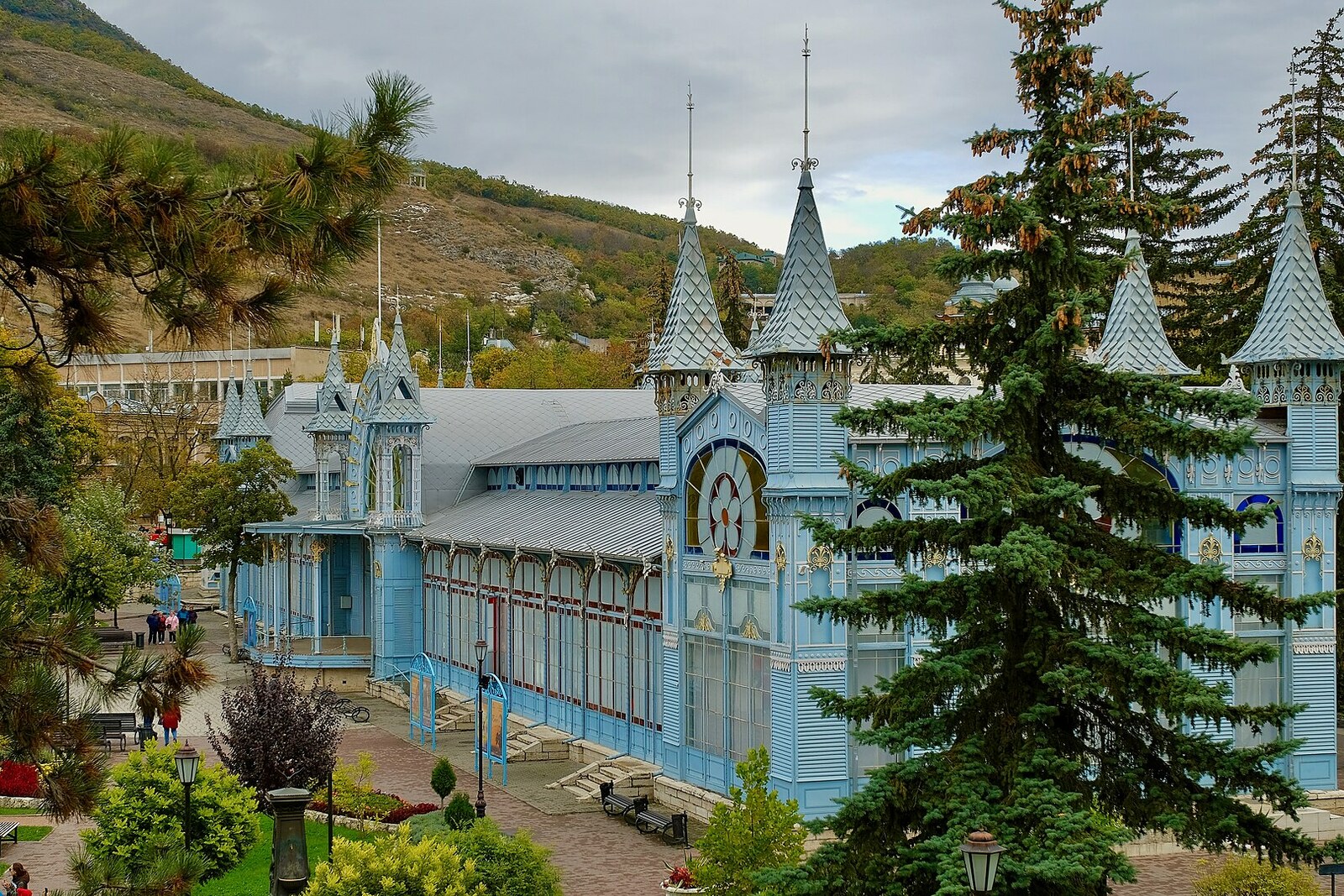
Look around first
What to notice
- Blue metal framework
- Glass bays
- Wing for strolling
- Theater hall
The story of the place
Vladimir Khvoshchinsky, director of the Caucasus Mineral Waters, commissioned this pavilion so that vacationers would not be limited to treatment alone. The blue metal framework and glass bays connect the wing for strolling with the theater hall. Pipes from the baths and unstable ground delayed the work. The gallery received Lermontov's name in memory of the poet whose life was cut short in a duel near Mount Mashuk.
On August thirty-first, nineteen twenty-three, Isadora Duncan danced on this stage—an American artist who replaced ballet pointe shoes with the free movement of bare feet. By then, her Moscow school had lost its state funding. Forty female students remained at the boarding school; to feed them and continue the classes, Duncan gave paid performances and went on tour.
She set off for the Caucasus with her adopted daughter Irma. Isadora's husband, the poet Sergei Yesenin, promised to join them a few days later. She waited for him and hoped to show him Pyatigorsk: Yesenin held Lermontov in high esteem. But news arrived from Moscow that the poet was busy with matters related to a new magazine. In fact, he had already decided to leave his wife.
Duncan came here ahead of him anyway, visited places associated with Lermontov, and prepared a separate dance for the Pyatigorsk evening in memory of the poet, to Schubert's Unfinished Symphony. Through movement, she conveyed a mortal wound and an attempt to break free from it. Witnesses remembered the dancer rushing between the edges of the stage. For an audience that knew Lermontov had been killed near Mount Mashuk, the meaning required no words. The number was a tremendous success.
Lermontov himself never saw this gallery. It was built sixty years after his death. Vladimir Khvoshchinsky, director of the Caucasus Mineral Waters, wanted vacationers to stay in Pyatigorsk for more than treatment alone: they needed concerts, performances, balls, and a covered place to stroll in bad weather. He commissioned a pavilion of iron and glass, with a wing for strolling and a theater hall. Pipes from the baths and unstable ground hindered the builders, so the opening had to be postponed. Khvoshchinsky set a new date for the anniversary of Mikhail Lermontov's death—the poet and officer who spent the last months of his life in Pyatigorsk and died here in a duel. The gallery received his name at the same time.
Twenty-two years later, Duncan turned this commemorative name into the content of her performance. Her evening ended in applause, but her trips to the train station while waiting for Yesenin proved futile. Before leaving the Caucasus, she received a telegram from him about their breakup and continued touring alone.
The blue metal framework has changed very little, and concerts and exhibitions are still held inside. The dance itself was not filmed. A playbill bearing the date of Isadora Duncan's performance has survived; it is now kept in the storage collections of the Philharmonic's theater museum.
Useful on site
Exterior viewing is free. Admission inside is according to the Philharmonic’s program and ticket; there is no regular schedule for freely viewing the hall.
Checked: July 12, 2026. Check the official source before visiting.Viewing the facade is enough for this story. Do not count on free admission: access inside may depend on the program and events in progress.