 Guide On Map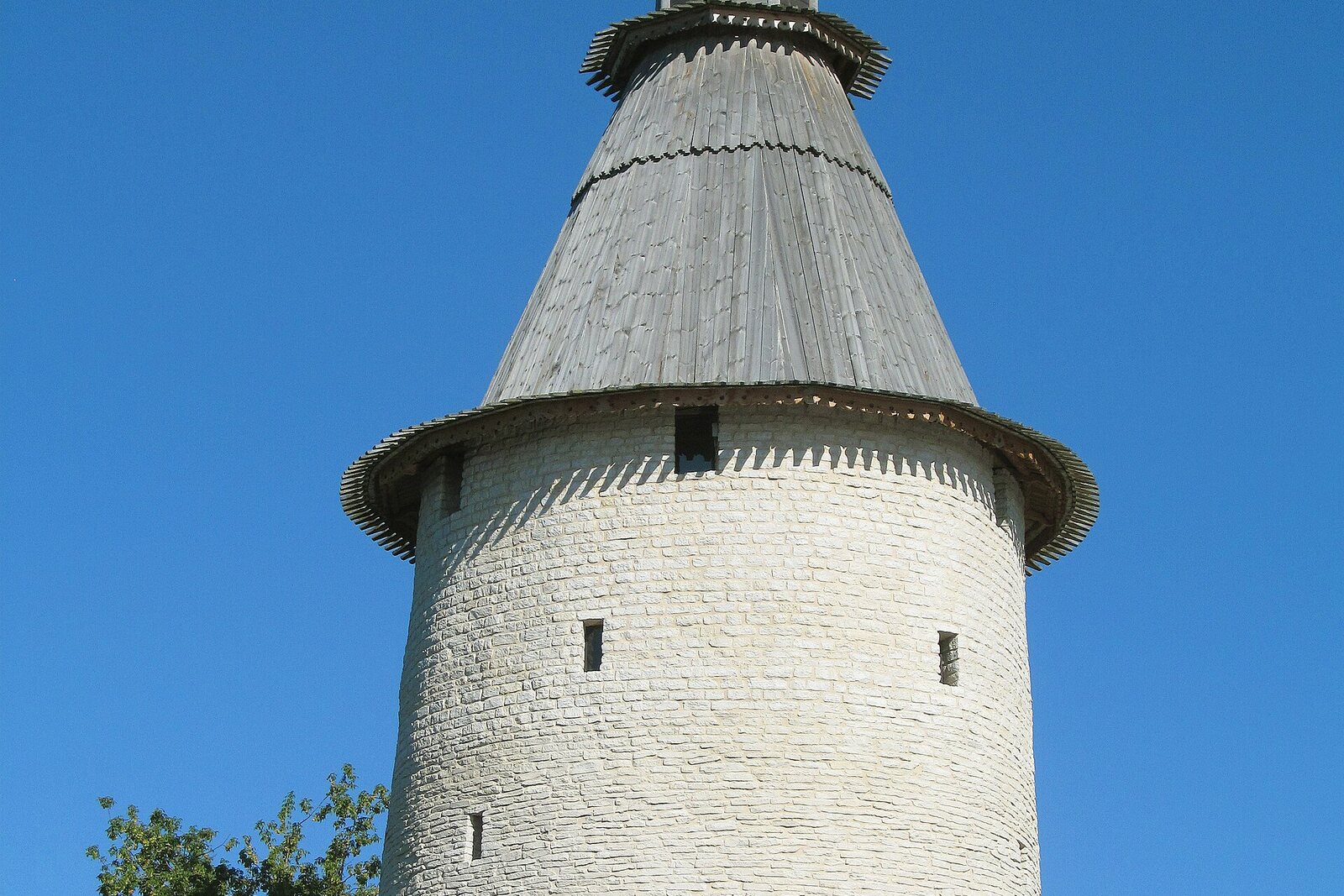
Look around first
What to notice
- High Tower
- Flat Tower on the opposite bank
- Open span between the towers
- Mouth of the Pskova River
The story of the place
On October ninth, sixteen fifteen, Swedish rafts carrying soldiers set off from the left bank of the Velikaya River. They made for the narrow mouth of the Pskova River, between High Tower and Flat Tower. From Ivanovsky Monastery, occupied by the Swedes, cannons fired across the river at the city's walls and defenders.
Swedish King Gustav II Adolf had already been besieging Pskov for a third month and was seeking a quick outcome. He needed the city before peace negotiations began. Most soldiers in the royal army served for pay; the men had to be fed, while supplies and money were dwindling. By autumn, the thinned-out army could still launch an assault, but the king could no longer remain outside Pskov for long.
The rafts were sent here specifically because of the Lower Grilles. In fifteen thirty-eight, Pskov carpenters, led by an Italian master sent from Moscow, built a wooden wall across the mouth with two water gates. The openings were closed by grilles made of iron-banded logs, raised and lowered on ropes. Water could pass through, but a vessel carrying people could not. The grilles were called Lower because farther upstream there was another such barrier, the Upper Grilles. High Tower protected one end of the wall, and Flat Tower the other. High Tower's seven battle levels gave it its name; it was also called Resurrection Tower after the neighboring Church of the Resurrection from Stadishche.
Here, the raft carrying soldiers was an open platform under fire from the towers. The people of Pskov fired from the walls and threw stones and logs down on the attackers. The battle lasted almost the whole day. The Swedes never got through the Lower Grilles, and the overall assault failed. Two days later, Gustav Adolf ordered the siege guns taken away, and several days after that he lifted the siege. The mercenaries left without the promised loot, while the defenders held the entrance to the Pskova River.
The wooden wall was later replaced with a stone one, but it too had almost disappeared by the nineteenth century. Now High Tower and Flat Tower are again separated by open water. The Lower Grilles stood precisely in this empty span between them.
Useful on site
Daily: from 10:00 to 18:00 from November through April, from 10:00 to 20:00 from May through October; the last Thursday of the month is a sanitation day.
Checked: July 2, 2026. Check the official source before visiting.All the main features are visible from outside; treat any possible entrance into the tower as a separate addition. Compare both sides of the mouth and mentally draw a wall between them with arched water gates.