 Guide On Map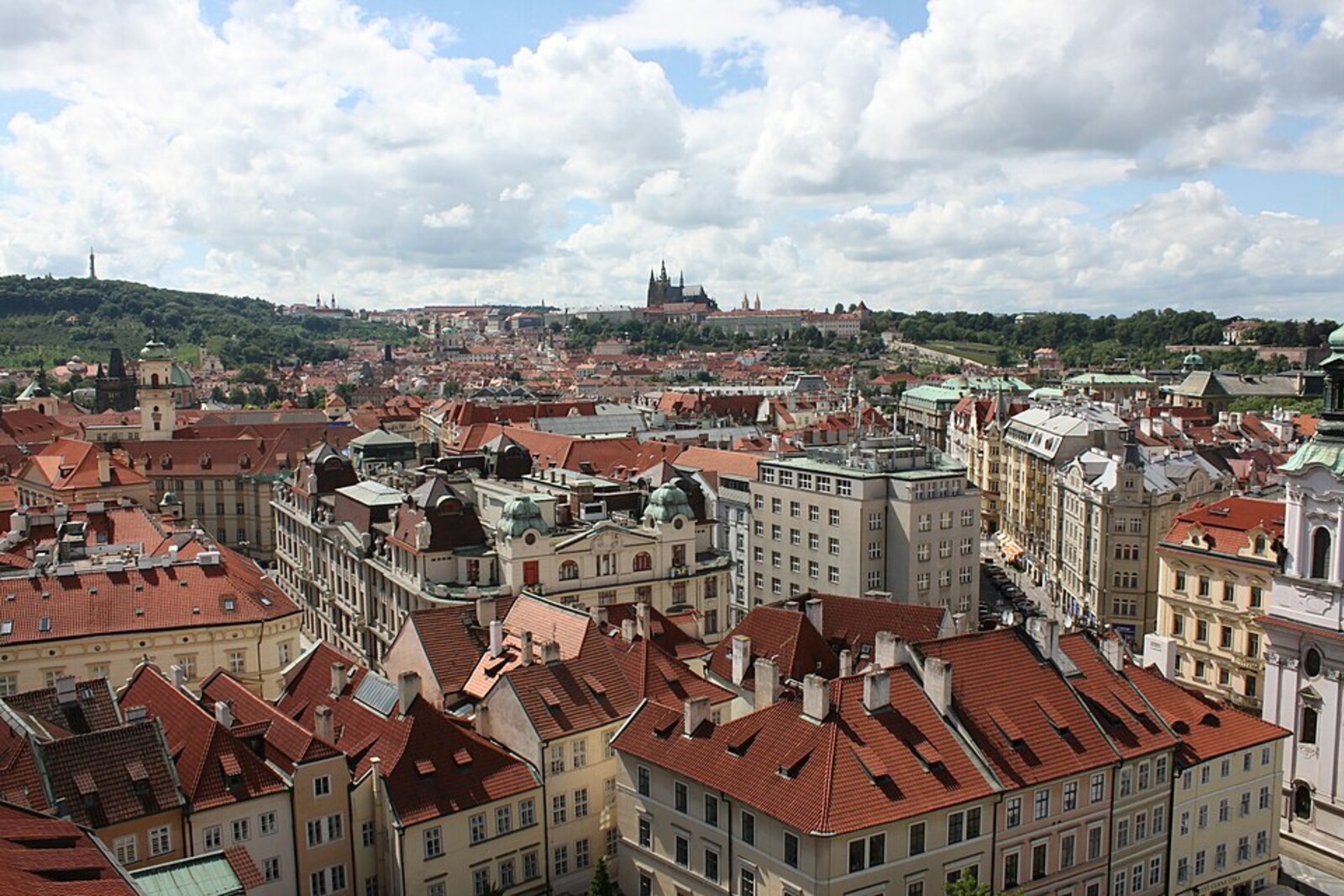
Look around first
What to notice
- Old Royal Palace
- Window of the Bohemian Chancellery
- Wall of the castle moat
- Garden on the Ramparts
The story of the place
On May twenty-third, sixteen eighteen, Protestant nobles went up to the Bohemian Chancellery at Prague Castle. The chancellery occupied rooms in the Old Royal Palace. Here, governors administered the Kingdom of Bohemia while the king was away from Prague. The nobles came to precisely those people who spoke and signed on his behalf.
Nine years earlier, King Rudolf II, under pressure from the Bohemian estates—representatives of the nobility and towns—had issued a charter on religious freedom. But it retained one dangerous ambiguity. Protestants believed they could build their churches on lands belonging to the Catholic Church, because those holdings lay within the kingdom. Royal officials replied that the guarantee did not extend to church lands. One new church was closed, another was demolished, and the inhabitants of Broumov, who resisted the closure, were placed under arrest.
Jindřich Matyáš Thurn, one of the leaders of the Protestant estates, wanted to end the dispute with an act after which reconciliation with the king would become impossible. The expedition to the chancellery was prepared in advance. Four governors were in the room. The nobles let two of them go. They accused Jaroslav Bořita of Martinice and Vilém Slavata of Chlum of violating the royal charter. Both were Catholics, represented the absent monarch, and pressed for strict enforcement of his decisions.
Martinice asked to be allowed to confess. He was refused. Five men seized the governor and threw him out of the window. Slavata managed to cling to the windowsill; his hands were struck with a knife hilt, and he fell after him. Then the secretary Filip Fabricius, who served in the royal chancellery, was pushed out of the same window. This method of punishment is called defenestration—throwing someone out of a window.
All three survived. Exactly why the fall from such a great height did not kill them is unknown. Catholics saw the Virgin Mary's intercession in their survival; their opponents spoke of a heap of manure or rubbish. Researchers also point to the sloping wall of the castle moat, down which those falling may have slid, losing speed. Slavata was injured, but later escaped and, after the defeat of the revolt, returned to royal service. Fabricius reached Vienna and was the first to inform the court of what had happened. As a reward, “Hohenfall”—“High Fall”—was added to his noble name.
The next day, the participants in the attack formed their own council, then raised an army and refused to recognize the new king, Ferdinand. Allies of both sides entered the conflict. Thus began a war that lasted thirty years. Two and a half years later, the army of the Bohemian estates was defeated at White Mountain; Thurn lost his estates and remained in exile, while Vilém Slavata later took the post of High Chancellor of the Kingdom of Bohemia.
The rear room of the former Bohemian Chancellery has survived in the Old Royal Palace. Its window has survived as well. Below, where the three officials fell, is now the Garden on the Ramparts.
Useful on site
The Prague Castle complex is open daily 6:00—22:00. Historic buildings: April—October 9:00—17:00, November—March 9:00—16:00. St. Vitus Cathedral is open in summer Monday—Saturday 9:00—17:00, Sunday 12:00—17:00; last entry is usually 20 minutes before closing. The basic ticket as of the verification date is 450 Czech crowns, valid for 2 days with one entry to each building. Check current closures. Verified 2026-06-29.
Checked: June 29, 2026. Check the official source before visiting.You can conclude the main thread of the story in the courtyards; plan the cathedral, palace, and exhibition spaces as a separate program, checking access.