 Guide On Map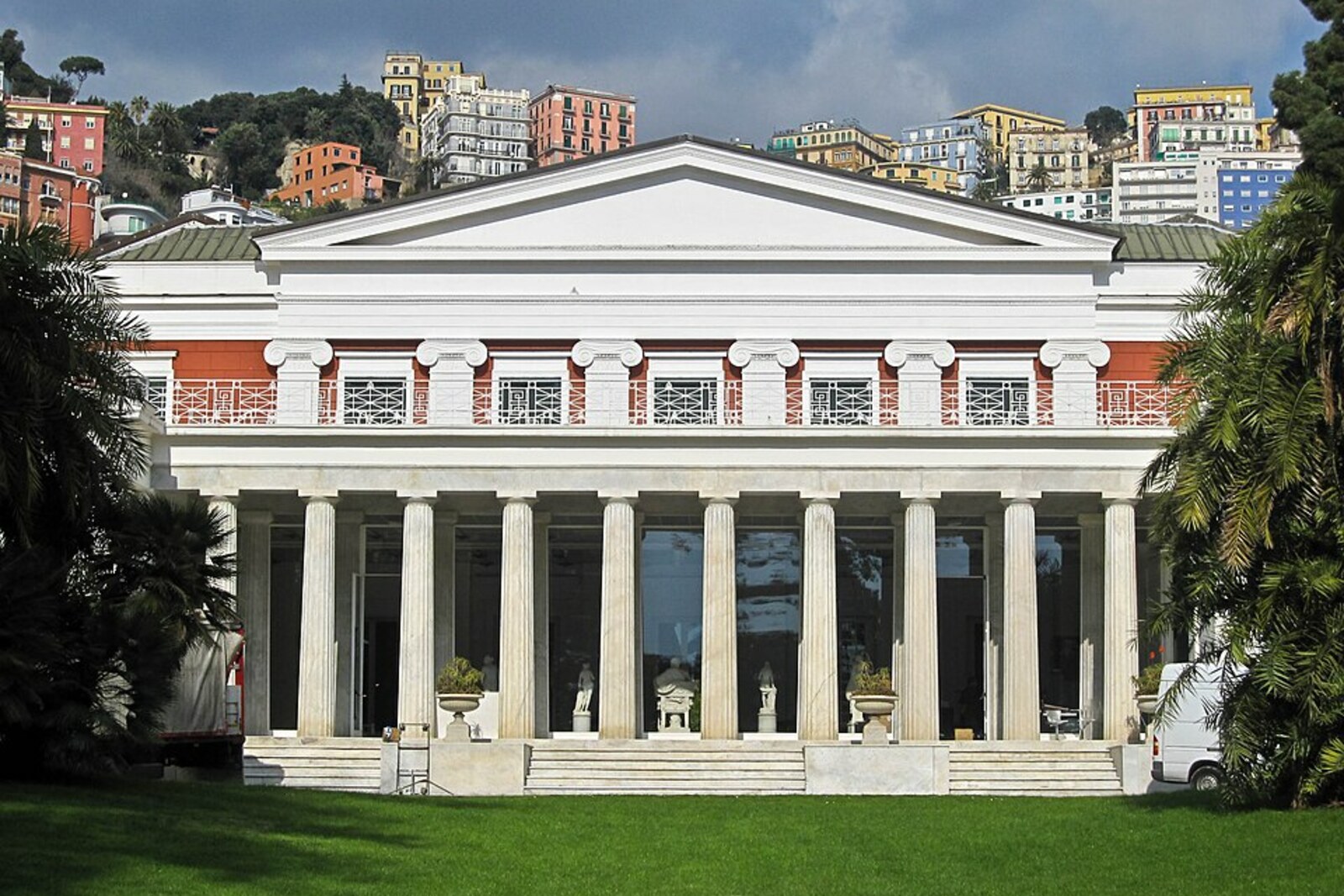
Look around first
What to notice
- Red Drawing Room
- Blue Drawing Room
- Family photographs
- Porcelain and books
The story of the place
The villa was built in eighteen twenty-six as the private home of Ferdinand Acton, the son of the first minister of the King of Naples. The Rothschild family then lived here. The Pignatelli name appeared later: in eighteen sixty-seven, the house was bought by Prince Diego Aragona Pignatelli Cortes, Duke of Monteleone.
His nephew and namesake inherited the villa. The present museum is dedicated to this younger Diego. But it was his wife, Rosina Fici, the last owner of the house, who preserved his name by seeking to ensure that after her death the villa would not be divided into a building and separate museum exhibits.
Rosina received her surname through a decision made by her relatives. At fifteen, she was married off to her cousin Diego, who was twelve years older; because of their close kinship, a special dispensation from the Pope was required. By twenty-one, she had borne five children. In eighteen ninety-six, Diego inherited the villa from his uncle, and the family moved here.
Rosina managed an already established aristocratic household: she held receptions and concerts in these rooms, received members of European royal families, and collected books, porcelain, and musical recordings. The house served her at once as a home, a place for family life, and a salon. Photographs bearing guests' inscriptions in the Blue Drawing Room remain from those gatherings.
Diego died in nineteen thirty. Twenty-two years later, Rosina drew up a public will: she transferred the villa to the Italian state together with its furnishings and required that the rooms be kept unchanged. The museum was to be named after her husband. She continued to live here until her death in nineteen fifty-five; only then did the house pass permanently to the state.
That is why the lower floor does not display a collection of palace furniture assembled later. The Red Drawing Room preserves the furnishings from the Rothschild family's time, the dining room displays Pignatelli plates and tableware, and the rooms retain family photographs, porcelain, and books. The villa's name recalls the family that owned it last, the museum's name recalls Diego, and the preserved arrangement of the rooms fulfills Rosina's decision.
Useful on site
Accessible from outside as a city site; to visit the museum, check the official MiC / Musei Italiani schedule.
Checked: date not specified. Check the official source before visiting.The façade and garden can be partly seen from outside; the villa's rooms and the carriage museum require a separate visit, whose availability should be checked in advance.