 Guide On Map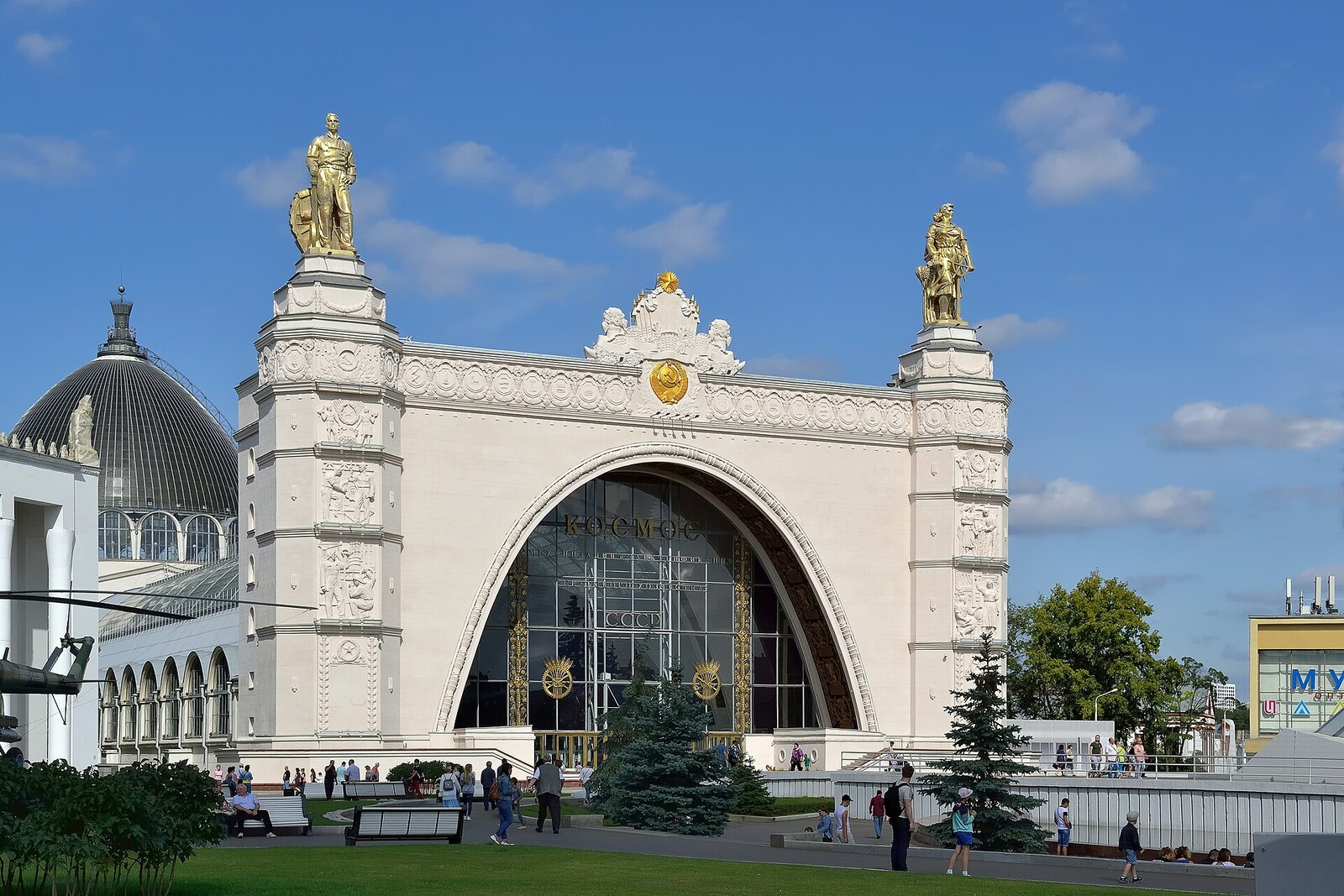
Look around first
What to notice
- The pavilion dome
- The circular panel showing Gagarin and the dove
- Spacecraft
- The large exhibition hall
The story of the place
The enormous hall beneath the dome was originally designed for agricultural machinery, which required plenty of space and height. Later, satellites, engines, and parts of orbital spacecraft appeared alongside the machines: the exhibition pavilion acquired a space-related purpose. The spacecraft of the Cosmonautics and Aviation Centre are now assembled here once again, and above them hangs a circle bearing the face of the first cosmonaut and a white dove.
On December fourteenth, nineteen ninety-one, the young Moscow entrepreneurs Ivan Salmaksov and Yevgeny Birman held Moscow's first major rave here—a nighttime dance party with electronic music. They made money organizing events for foreigners, but now they wanted to bring the new club culture out of cramped apartments and houses of culture. To do this, they invited artists, musicians, and DJs from St. Petersburg and came up with the name Gagarin Party.
They chose the venue because of its actual intended purpose. The pavilion was built to display agricultural machinery, so there was room inside for large machines. In nineteen sixty-seven, the exhibition organizers gave part of the enormous hall to the Cosmos Exhibition: they installed satellites, engines, and parts of orbital spacecraft, and later hung a circular portrait of the first cosmonaut, Yuri Gagarin, with a white dove beneath the dome. By the early nineteen nineties, it was still an operating museum. The dancing would take place among pedestals displaying space technology.
The organizers expected an unusual party, but they were not prepared for the result. Almost three thousand people came. The pavilion was not heated, so promoter Alexei Haas set up a long row of heaters in the hall. They forgot to hire cloakroom attendants, so DJ and co-organizer Mikhail Vorontsov spent about two hours hanging up other people's coats himself. Even with a sponsor's support, the organizers lost money.
They nevertheless returned a few months later and held a second Gagarin Party here, this time on Cosmonautics Day. Clubs then began opening and new mass raves began taking place in Moscow; participants in the first party became DJs and promoters on this scene. The French DJ Joachim Garraud, who played here that night, later named his son Yuri in honor of Gagarin.
Spacecraft are now displayed in the pavilion again: the Cosmonautics and Aviation Centre is housed here. In twenty twenty-one, the ten-meter circular panel showing Gagarin and the dove was returned beneath the dome. It is the very same image that hung above the satellites, the heaters, and Moscow's first rave.
Useful on site
Tue–Sun 11:00–22:00, ticket sales and admission until 21:15; Mon closed.
Checked: date not specified. Check the official source before visiting.The agricultural details can be seen from outside. The dome, spacecraft, and portrait of Gagarin are accessible only with a separate visit to the museum exhibition.