 Guide On Map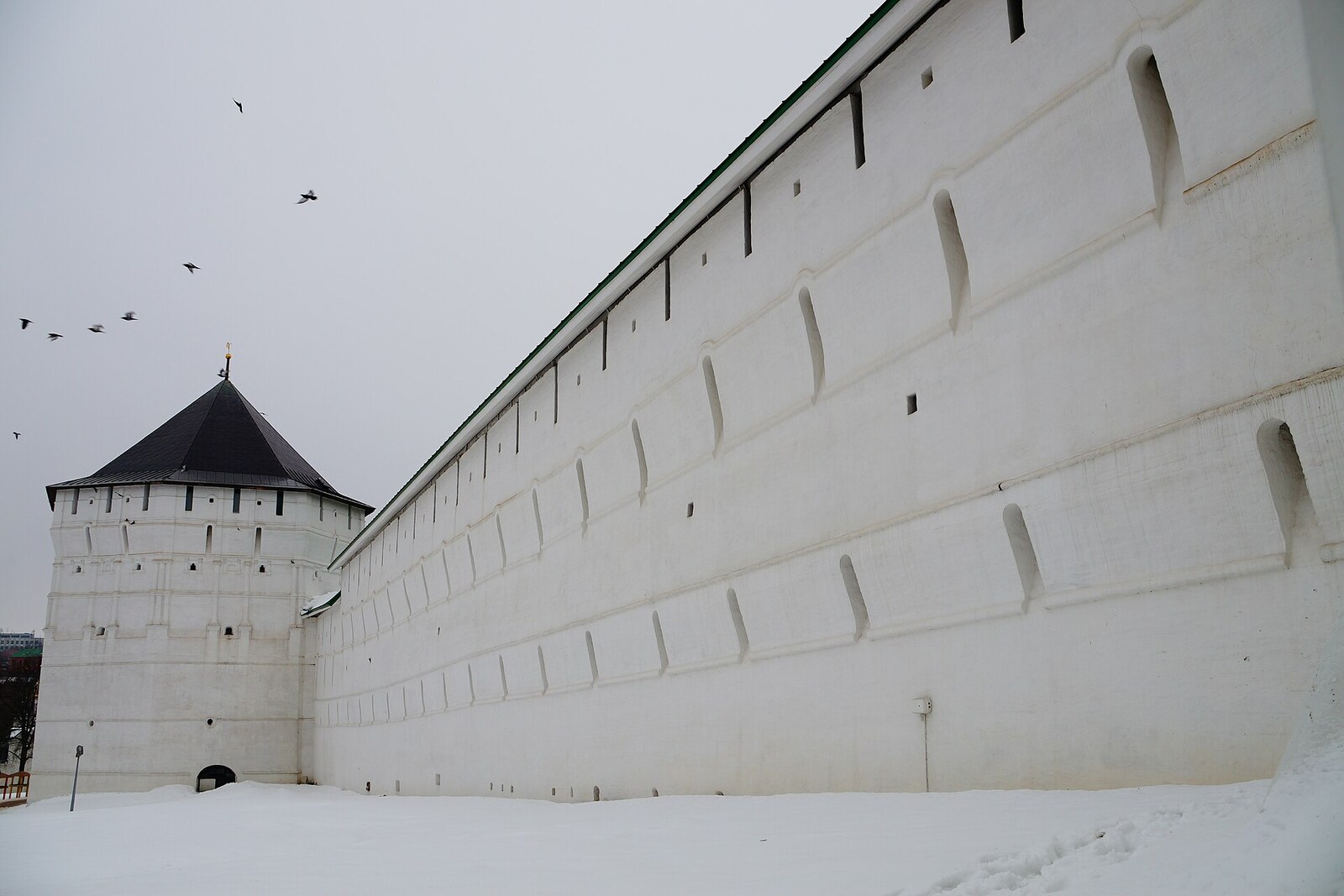
Look around first
What to notice
- Octagonal tower
- Tower tiers
- Rows of embrasures
- Junction of the southern and eastern walls
The story of the place
Pyatnitskaya Tower was placed at the corner where the monastery's southern and eastern walls meet. Its name came from the Church of the Great Martyr Paraskeva standing below. The Greek name Paraskeva means Friday, so the church was called Pyatnitskaya, and the tower was named after it.
In the autumn of sixteen oh eight, what is now the Trinity Lavra of St. Sergius was still called the Trinity Monastery of St. Sergius. The Time of Troubles was underway. False Dmitry II was seeking the Moscow throne, while his commanders Jan Piotr Sapieha and Aleksandr Lisovsky wanted to capture the monastery, which remained loyal to Tsar Vasily Shuysky. Behind its walls were the treasury and food stores; the fortress protected the road from Moscow to the northern cities.
The artillery did not breach the wall, and Sapieha's men began to dig. From a mill at the foot of the hill, they drove a covered trench to the corner tower, then led an underground gallery onward. A charge beneath the foundation would have brought down the tower and opened a passage right at the junction of the two walls.
The defenders learned of the mine from a prisoner, and its exact location was indicated by a Cossack who crossed over from the besiegers' camp. The garrison commanders ordered a second wall of oak to be built behind the threatened section: if the stone corner collapsed, another barrier would remain behind it. But first they decided to destroy the mine itself.
In a sortie before dawn, two peasants from nearby Klementyevo broke through to its mouth—Nikon, known as Shilov, and Slota. They were not professional soldiers. Lisovsky's detachment had burned their village on the Moscow Road even before the siege began, and both men had taken refuge in the monastery with other residents of the devastated surrounding area.
Shilov and Slota descended into the underground gallery, set fire to tar and a combustible mixture there, then sealed its mouth. The mine exploded and collapsed; both peasants died inside. The besiegers did not get their breach. That same day, the defenders captured eight enemy guns and destroyed the nearest siegeworks. Sapieha had to continue the blockade for more than a year. In January sixteen ten, when a relief force reached the monastery, he lifted the siege.
The tower before us was built in sixteen forty: the former corner tower did not survive after the siege. The new one was made octagonal and six-tiered, with seventy-seven embrasures cut into it; the nearby walls were later raised and thickened. Shilov and Slota died beneath the former tower, which stood at this same corner.
Useful on site
The tower can be viewed from outside from publicly accessible approaches; climbing inside is not part of the usual self-guided route.
Checked: date not specified. Check the official source before visiting.View the fortifications from the accessible path, and do not attempt to enter closed service areas.