 Guide On Map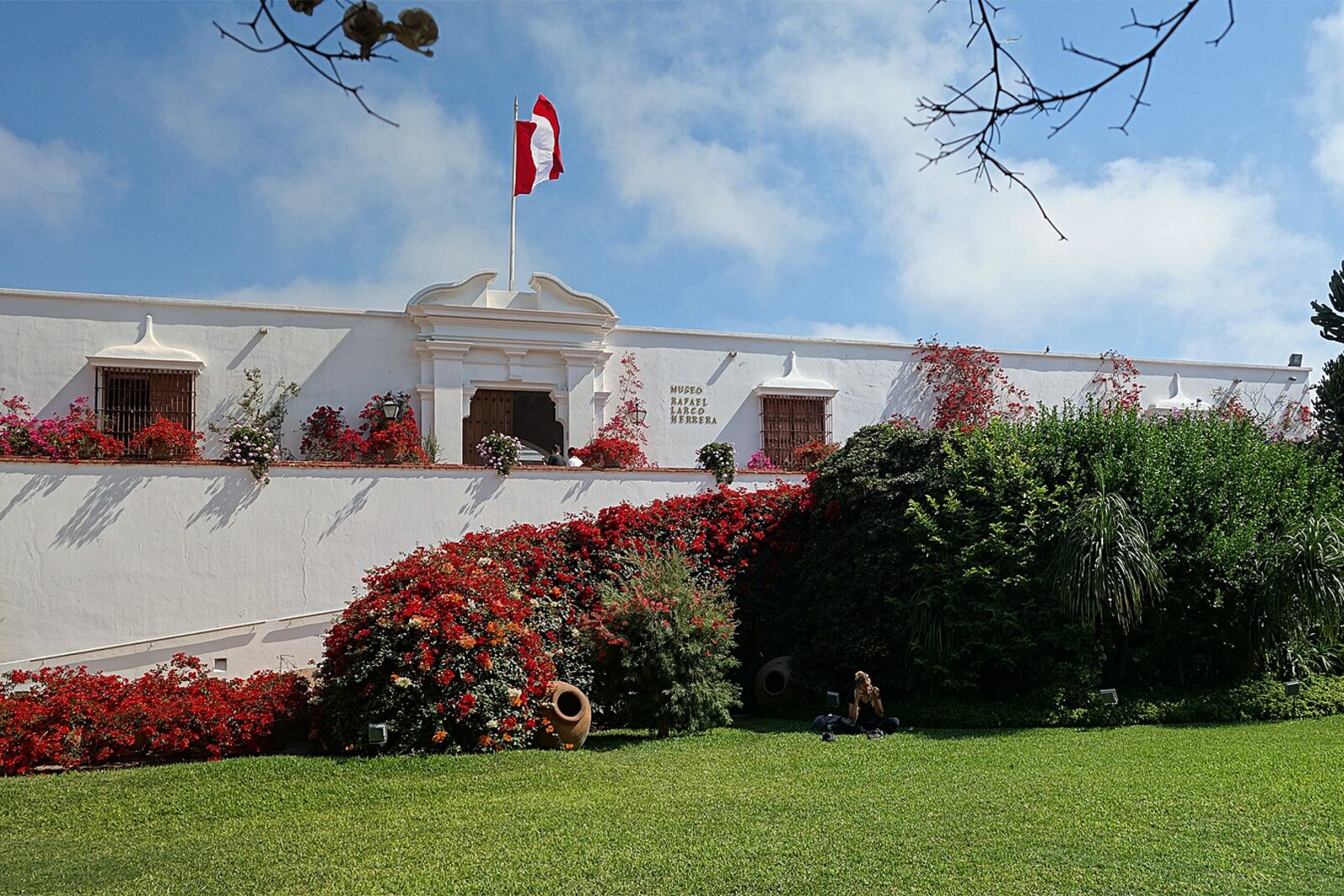
Look around first
What to notice
- Bougainvilleas
- Garden paths
- Café terraces
- Courtyards of the casona
The story of the place
The museum route begins precisely in the gardens: this is where the video room is located, from which visitors are directed to the permanent exhibition. The café terraces face the flowerbeds, while the gardens themselves are described in the museum rules as a landscaped area—playing among the plants is prohibited. Even the gardeners are counted among the staff who first greet the public, alongside administrators, security guards, and tour guides.
This arrangement appeared after a decision by Isabel Larco, the founder's daughter and the museum's director. In nineteen sixty-six, Rafael Larco Hoyle suddenly died of a heart attack. Thirty-three-year-old Isabel took over the museum, with which she had been connected since childhood: her father took her to excavations and explained how the age of finds is determined from layers of earth. For the next half century, this collection became her daily work.
At first, she had to preserve the legacy itself. After the military coup, the family's Chiclín Hacienda was occupied, and an attempt was made to nationalize the collection of antiquities. According to the recollections of her son Andrés Álvarez-Calderón, the family lost almost everything, and Isabel defended the museum as her father's last great undertaking. No one else sat at the master’s desk in his study. She worked at the neighboring one—among ceramic vessels, family photographs, and crucifixes.
By the late nineteen eighties, the right of private museums to own historical collections had received legislative protection. Isabel faced a different task: the museum had been saved, but it remained as her father had left it. She feared that renovating the halls and continuing the research would violate his vision. Archaeologists convinced her otherwise: Rafael Larco's work could be continued only if new finds were allowed to be interpreted freely, even if the conclusions differed from his own.
Isabel agreed. Her husband Augusto Álvarez-Calderón helped begin the reconstruction; then their children and museum specialists joined the work. The private family collection was adapted for a constant flow of visitors: the exhibition was changed, access to the storerooms was opened, and the courtyards and gardens were included in the visit as separate museum spaces.
In two thousand nine, the garden received first prize in the competition for Lima's most beautiful garden among businesses and educational institutions. Flowering bougainvilleas, paths, and terraces now marked not the old estate, but the result of a change Isabel had long hesitated to make. Her father's desk remained unoccupied inside, while the museum created under her welcomed people even before they entered the first exhibition hall.
Useful on site
As part of a visit to Museo Larco: daily 09:00–19:00; check the museum website for holiday reductions.
Checked: June 26, 2026. Check the official source before visiting.Linger outside after the halls: this stop requires no new ticket or separate detour if you are already on the museum grounds.