 Guide On Map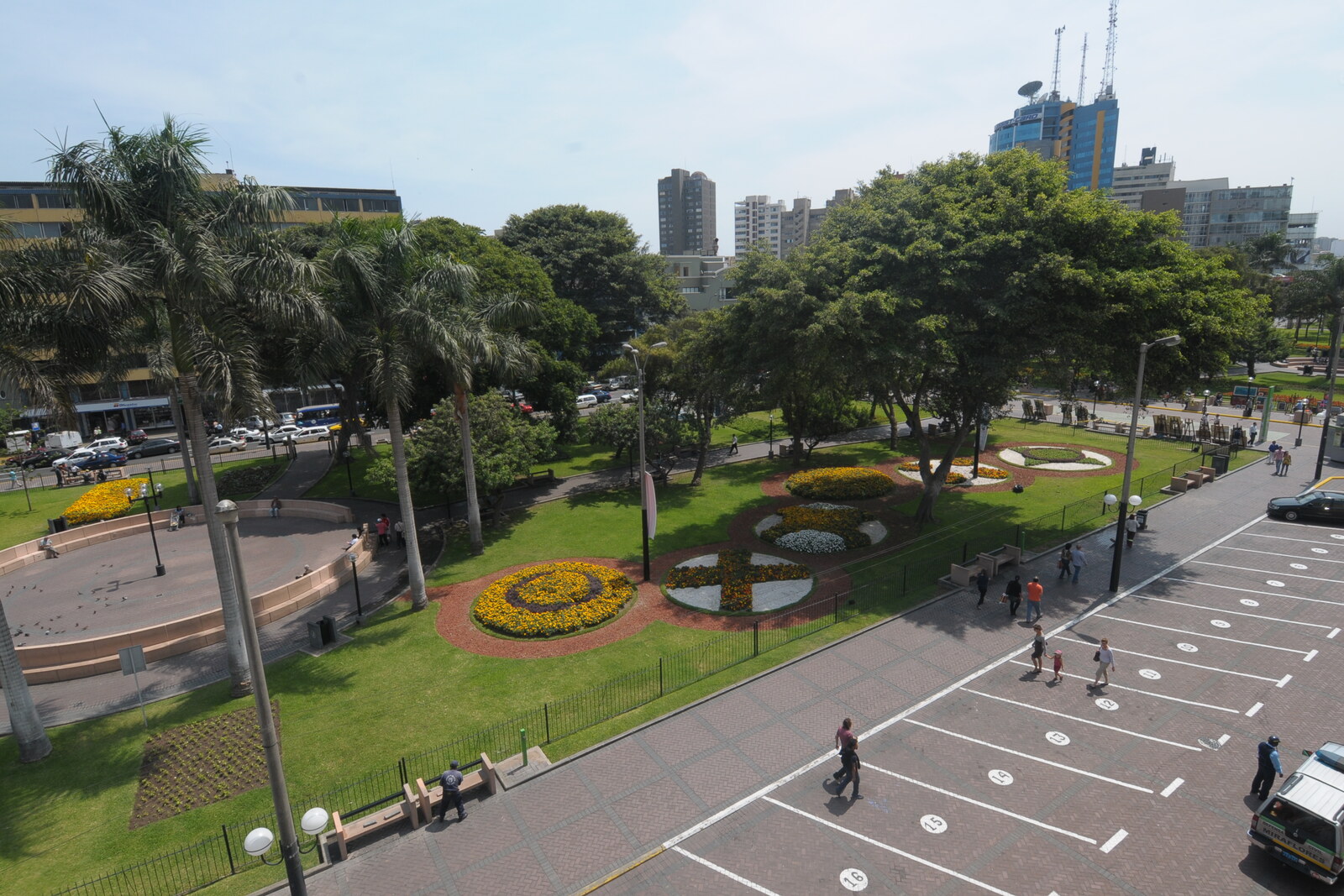
Look around first
What to notice
- Pasaje de los Pintores
- Paintings on display stands
- Bust of John F. Kennedy
The story of the place
Among the blocks of Miraflores, this green complex serves as a city park: people stroll along its paths, and a separate passage has been set aside for artists. The display stands along it feature changing landscapes, portraits, and city scenes sold by the artists themselves; for some of them, this is their main source of income. The park’s official name is Central Park, but Kennedy Park has long been established in the city’s everyday speech. The bust of the American president appeared here much later than the name itself, when Miraflores became a sister city to Pensacola.
On May thirty-first, nineteen seventy, an earthquake destroyed cities in the Peruvian region of Ancash. Ice, rocks, and earth broke loose from the northern summit of Huascarán; the avalanche buried Yungay. Tens of thousands of people died, and about one hundred eighty thousand were left homeless.
Soon afterward, about fifteen Peruvian artists brought their paintings to the main park of Miraflores. They held an exhibition and sale and gave the proceeds to those affected. Each contributed what they had made with their own hands and would normally have expected to sell.
After the fundraiser, the artists did not disperse forever. Ernesto Aramburú Menchaca, then mayor of Miraflores, allowed them to continue exhibiting in the park. From the first group grew an association that later brought together more than one hundred fifty artists. The participants pay for their own materials and space; for some, selling paintings remains their main source of income. That is why the rows of landscapes, portraits, and city scenes here did not appear because the organizers of a tourist fair planned them. The artists received this place after the charitable sale of nineteen seventy.
Officially, the entire green complex is called Kennedy Park. In the nineteen sixties, its southern section was given the name of John F. Kennedy, president of the United States, during whose presidency the Alliance for Progress, a program to aid Latin American countries, began. Gradually, Lima residents extended this name to the entire park. The bust of Kennedy was installed much later, in two thousand three, when Miraflores established sister-city ties with the American city of Pensacola; by then, the name had long been established in the city’s everyday speech.
A separate passage was set aside here for exhibitions. On municipal posters, it still has its own address: Pasaje de los Pintores—the painters’ passage.
Useful on site
Open city park; access is effectively around the clock, but it is more comfortable and safer during the day and in the evening when people are around.
Checked: June 29, 2026. Check the official source before visiting.Observe animals from a distance and do not feed them without approval from those who care for them. Pets may not be left here.