 Guide On Map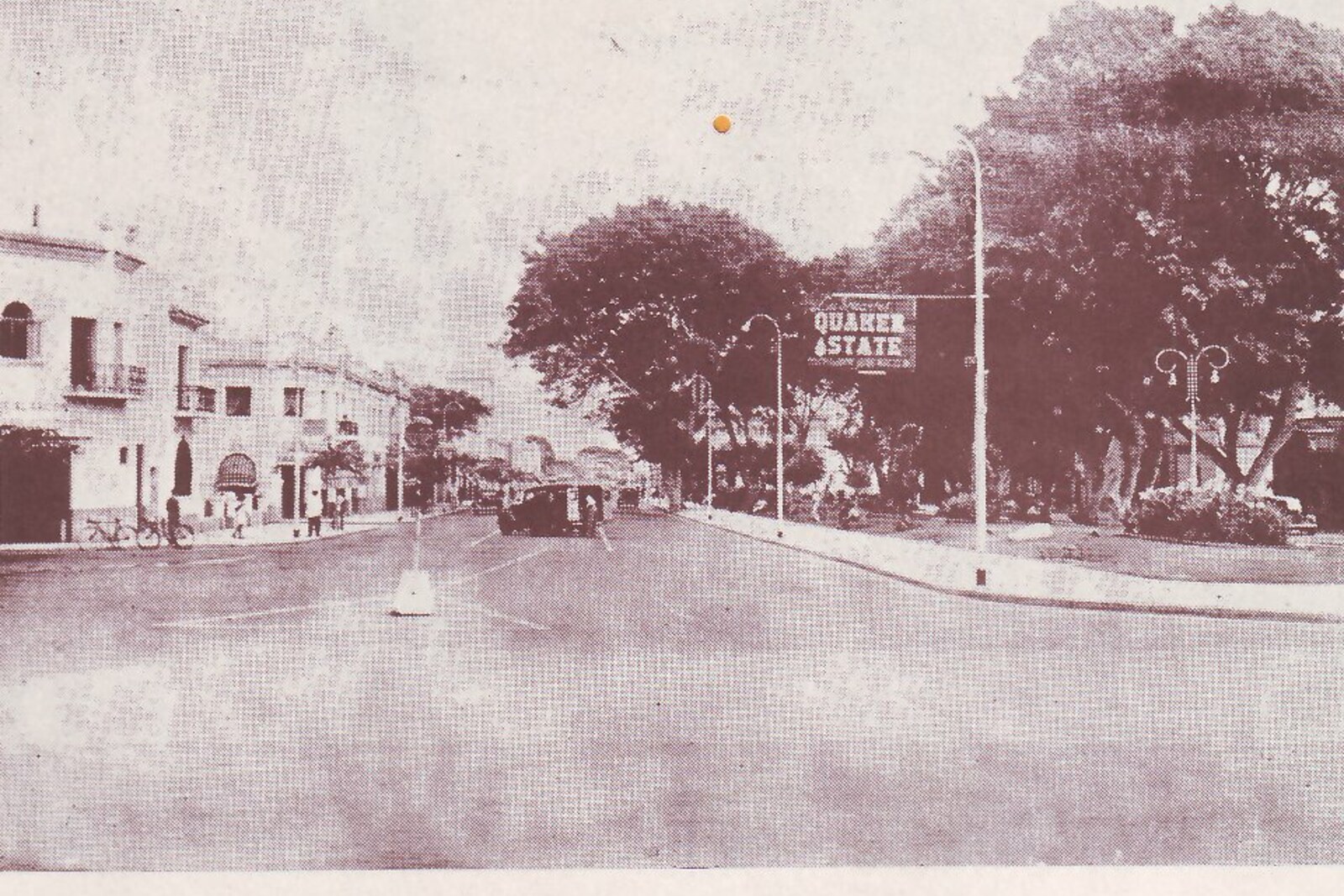
Look around first
What to notice
- Pedestrian passage
- Granite monument
- Plaque with names
The story of the place
The name Larco on the street sign belongs to José Alberto Larco, an Italian merchant who began his career in Lima at the commercial house of his uncle Francisco. In eighteen eighty-nine, Larco became one of the founders of the Italian Bank and its first president. He was then elected mayor of Miraflores. The avenue was named after the former mayor, banker, and trustee of the Italian Hospital.
In late nineteen forty-one, the Italian Bank received a new name: Banco de Crédito del Perú. Half a century later, one of its branches occupied a site on José Larco Avenue: the main entrance was on Schell Street, while the rear of the building faced Tarata Street. It was this bank that Carlos Mora La Madrid, known as Daniel, commander of the twelfth special unit of the Maoist organization Shining Path, chose as a target. The organization's leaders sought to shift the armed campaign to the capital, and Mora was to prepare an attack on a financial institution in central Miraflores.
On July sixteenth, nineteen ninety-two, members of the unit loaded about four hundred kilograms of explosives into a burgundy Datsun. They planned to leave after the attack in a second car. At about nine in the evening, both cars approached the bank. A private security guard did not allow the Datsun to be parked in front of the entrance.
The attackers could have called off the operation, but they turned onto Tarata Street. The driver slowed down, jumped out, and left the booby-trapped car rolling driverless between residential buildings. It exploded at about twenty minutes to ten. Twenty-five people were killed and one hundred fifty-five were injured.
At one corner of Tarata Street, Vanesa Quiroga was with her mother, who earned a living as a street vendor. After the explosion, the mother picked up her daughter and carried her away. One of the girl's legs could not be saved; several months later, doctors fitted her with a prosthesis.
Investigators did not establish the identities of the perpetrators immediately. Four years later, they detained Juanito Orozco, a unit member who had helped prepare the explosives. His testimony made it possible to find most of those involved. Orozco was sentenced to twenty-eight years in prison, and Carlos Mora to twenty-five. In nineteen eighteen, ten leaders of Shining Path, including Abimael Guzmán, received life sentences for organizing the attack.
Two years after the explosion, the second section of Tarata Street was opened as the pedestrian Paseo de la Solidaridad—the Paseo de la Solidaridad—with a granite monument. A plaque bearing the names of all twenty-five victims was added later. Cars no longer travel along the stretch where the driver sent the rolling Datsun.
Useful on site
Open city street; the memorial plaque is accessible from outside. Shops and establishments keep their own schedules.
Checked: June 29, 2026. Check the official source before visiting.These are active streets with heavy traffic, residences, and establishments. Stop without blocking entrances or the sidewalk, and cross the road only at permitted places.