 Guide On Map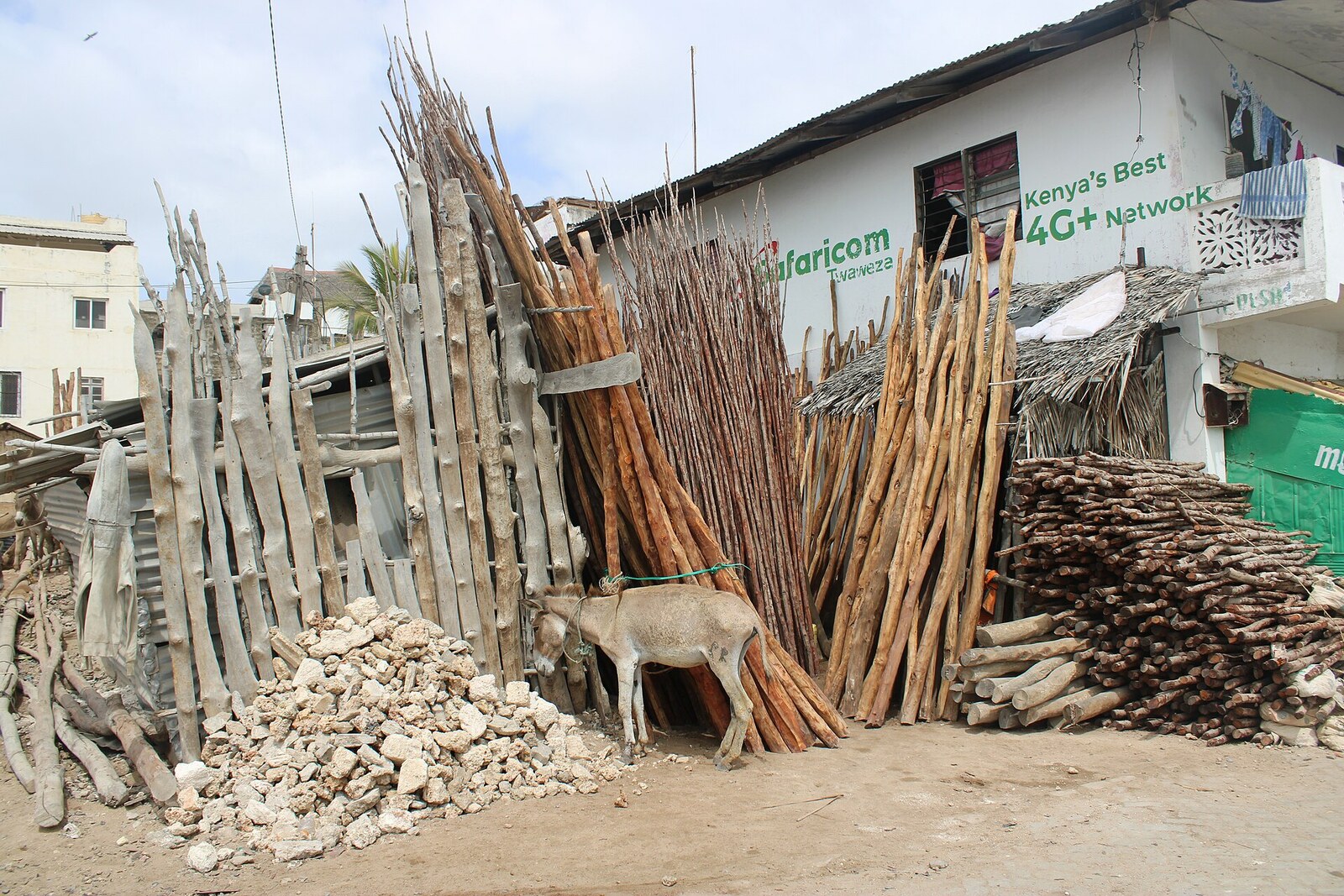
Look around first
What to notice
- Cargo dhows
- Lamu Channel
- Bundles of mangrove poles
- Narrow house façades
The story of the place
The Southern Waterfront runs along Lamu Channel as a working shore: cargo dhows moor by the water, while bundles of mangrove poles, known here as boriti, lie on land. Local builders lay the round trunks in tight rows, then cover them with coral stone and lime mortar. The length of a pole limits a room's width to about three meters. So the channel does not end at the quay but continues in the narrow rooms of Lamu Old Town, where these beams hold up ceilings behind the façades of houses.
Iranian and Arab merchants ordered construction timber in Lamu several months before their ships arrived. Cities of the Persian Gulf lacked trees suitable for ceilings, while the Lamu Archipelago had straight mangrove trunks. Buyers left a deposit, and local traders had to harvest and gather the agreed number of beams by the water.
One such trader was Ahmed Hassan. His family earned money from mangrove poles, clothing, and coastal transport. Hassan gradually acquired seven jahazi—cargo dhows able to enter shallow channels. Family members used them to reach the archipelago's mangrove forests, carry out the felled trunks, and stack them by the Lamu waterfront. The same vessels traveled along the coast with firewood, fruit, and passengers: there was no good road to the island town.
Once they had received a deposit, the Hassans depended on the sea's calendar. Large dhows arrived from December; by the time they appeared, straight beams had to be waiting on the shore. Ahmed's son Said, who continued the family business, recalled that visiting crews had to leave again by April: later, wind and currents hampered the return even of motorized vessels. The beams were sent to Aden, Mukalla, Iran, and Kuwait. The seven jahazi earned the family money for land, a farm on the mainland, and a small hotel in Lamu. All three of Ahmed's sons began in the mangrove-timber trade; Said continued it until the end of the eighties, Jamal moved into the hotel business, and Abdallah into academic work.
Mangrove poles are still sold on the Lamu waterfront, now mainly for Kenyan construction and repairs to old houses. Here they are called boriti. Builders laid the round trunks in tight rows, covered them with coral stone, and poured lime mortar over them. The length of a beam determined the width of a room—usually no more than three meters. So the channel in front of the waterfront continues inside Lamu Old Town: behind carved doors, narrow rooms crossed it, their ceilings supported by trunks once brought here on dhows.
Useful on site
Public waterfront; choose daylight hours to read the details and move safely.
Checked: date not specified. Check the official source before visiting.The waterfront remains a working place: do not interfere with loading, do not climb aboard vessels without an invitation, and keep to the stable edge of the walkway.