 Guide On Map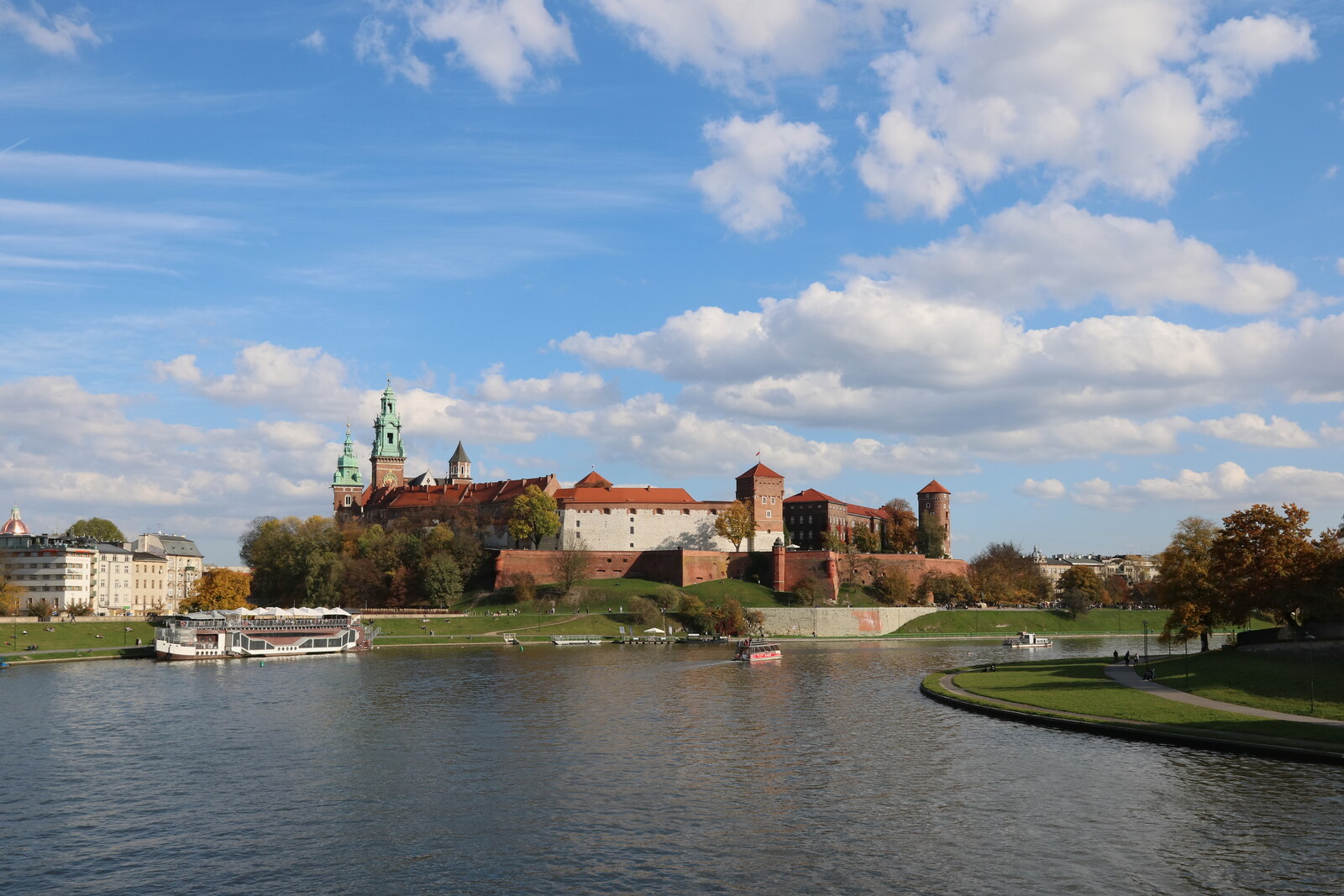
Look around first
What to notice
- Wawel Cathedral
- Wawel Royal Castle
- Gates of the royal residence
The story of the place
Wawel is arranged as a royal hub: beyond the gates of the residence stand the castle and cathedral. The castle gave the ruler and her court protected accommodation, while the cathedral received the rites after which authority was publicly recognized. Access to the monarch could be controlled at the gates, while a decision about power could be made beneath the cathedral vaults. Between these stone walls, the court's everyday life and the most solemn state ceremonies came together.
On February fifteenth, thirteen eighty-six, the ruler of the Grand Duchy of Lithuania, Władysław II Jagiełło, was baptized at Wawel Cathedral and received the name Władysław. Three days later, he married the Polish ruler Jadwiga here. On March fourth, he was crowned in the same cathedral. In less than three weeks, one man changed his faith, name, and marital status and received the Polish crown.
This sequence could take shape precisely at Wawel. Jadwiga and her court lived in the castle, while the neighboring cathedral served as the site of coronations. Access to the underage ruler could be blocked at the gates of the residence; the new king was to be recognized in the cathedral, through baptism, marriage, and coronation.
Jadwiga was about ten years old when Polish nobles brought her from Hungary and crowned her here as an independent monarch in October thirteen eighty-four. After the death of her father, Ludwik I of Hungary, they did not want Poland to be ruled from Hungary again. Yet Jadwiga had been betrothed in childhood to the Austrian duke Wilhelm Habsburg. For Wilhelm, this marriage meant the Polish throne. The Krakow nobles did not allow it to be concluded: they considered the young and inexperienced Habsburg a weak ally.
They found another groom in Lithuania. Władysław II Jagiełło was seeking support against the Teutonic Order, whose knights attacked his lands on the pretext of converting pagans to Christianity. In exchange for Jadwiga's hand and the Polish crown, he promised to receive Catholic baptism, baptize his relatives and subjects, free Christian captives, and seek the return of lost Polish lands. The terms were set down in Kreva in August thirteen eighty-five. Jadwiga initially resisted the new marriage, but then agreed.
After the Wawel ceremonies, she retained her position as an independent ruler: documents continued to be issued in her name. Władysław II Jagiełło received the crown and, in thirteen eighty-seven, began the baptism of Lithuania; a Catholic bishopric was established in Vilnius, and baptized Lithuanian nobles received the right to inherit land. When Jadwiga died in thirteen ninety-nine, soon after her newborn daughter, Władysław II Jagiełło remained King of Poland and ruled for another thirty-five years.
The small parchment bearing the terms of their marriage was written in haste, with deletions and corrections. After the alliance was concluded, it was placed in the Wawel Cathedral Treasury. It is now kept in the Wawel Cathedral Chapter Archives on the same hill.
Useful on site
The hill is accessible until 21:00. On the date checked, most museum routes operated roughly on this schedule: Monday 10:00–16:00 for some exhibitions with limited free tickets, Tuesday–Sunday 9:00–17:00; the gardens and Dragon's Den are seasonal, with separate tickets. On the date checked, the official website separately warned of reduced hours for the arcaded courtyard on certain days from June 13–28.
Checked: June 16, 2026. Check the official source before visiting.An open walk around the hill does not replace a visit to the palace: the treasury, exhibitions, and cave have separate access conditions. Choose one additional stop rather than trying to take in everything at once.